Article Details
If you spend any time talking about AI in creative circles right now, you eventually hit the bedrock of the entire debate. It usually isn't about slop, lost jobs, or even whether the tools are "good" yet.
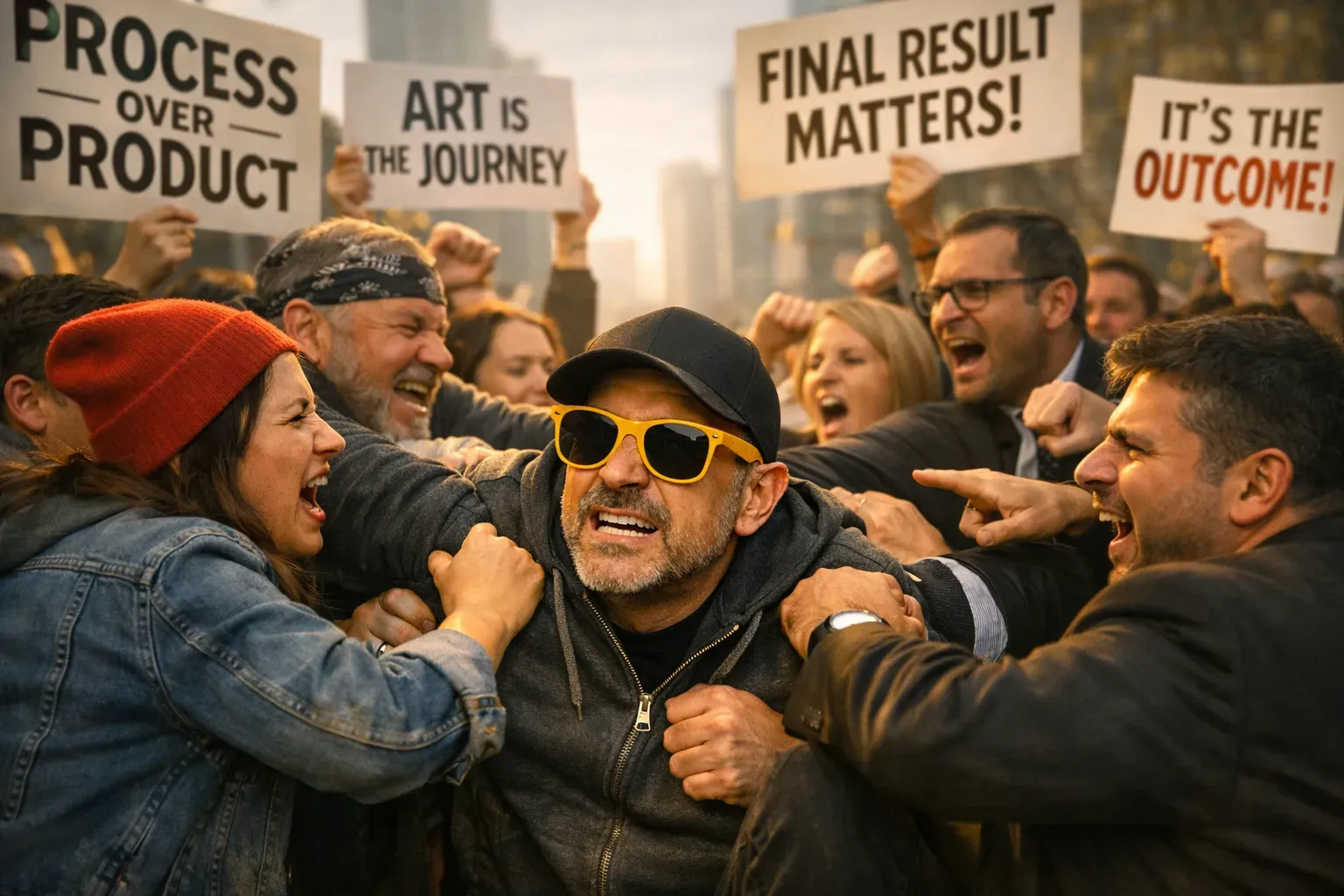
At the heart of the debate is a fundamental disagreement about what art actually is. Is it a noun, or a verb? Is it the outcome, or is it the craft?
A few days ago on Threads, I posed this exact thought: To me, art is an outcome. I respect craft deeply. I am a self-taught videographer and editor. I have dedicated years of my life to documenting the meticulous, behind-the-scenes craft of other artists and brands. But craft is not the determining factor of whether or not I view something as art. Whether you snapped a photograph in 1/1000th of a second, or you spent 10 years chiseling marble, when I see the result in a gallery or on a feed, all I have to really judge is what came from that time spent.
Unsurprisingly, this perspective ruffled some feathers.
The "Thin Process" Argument
The immediate pushback from the anti-AI crowd is that art requires struggle.
- The "Thin Process" Critique: @aralessbmn called my take "silly," arguing that there is no art without process. They noted that using AI is "just a very thin process that leaves you so little control and creates so much distance from the output that it's insulting to call it yours".
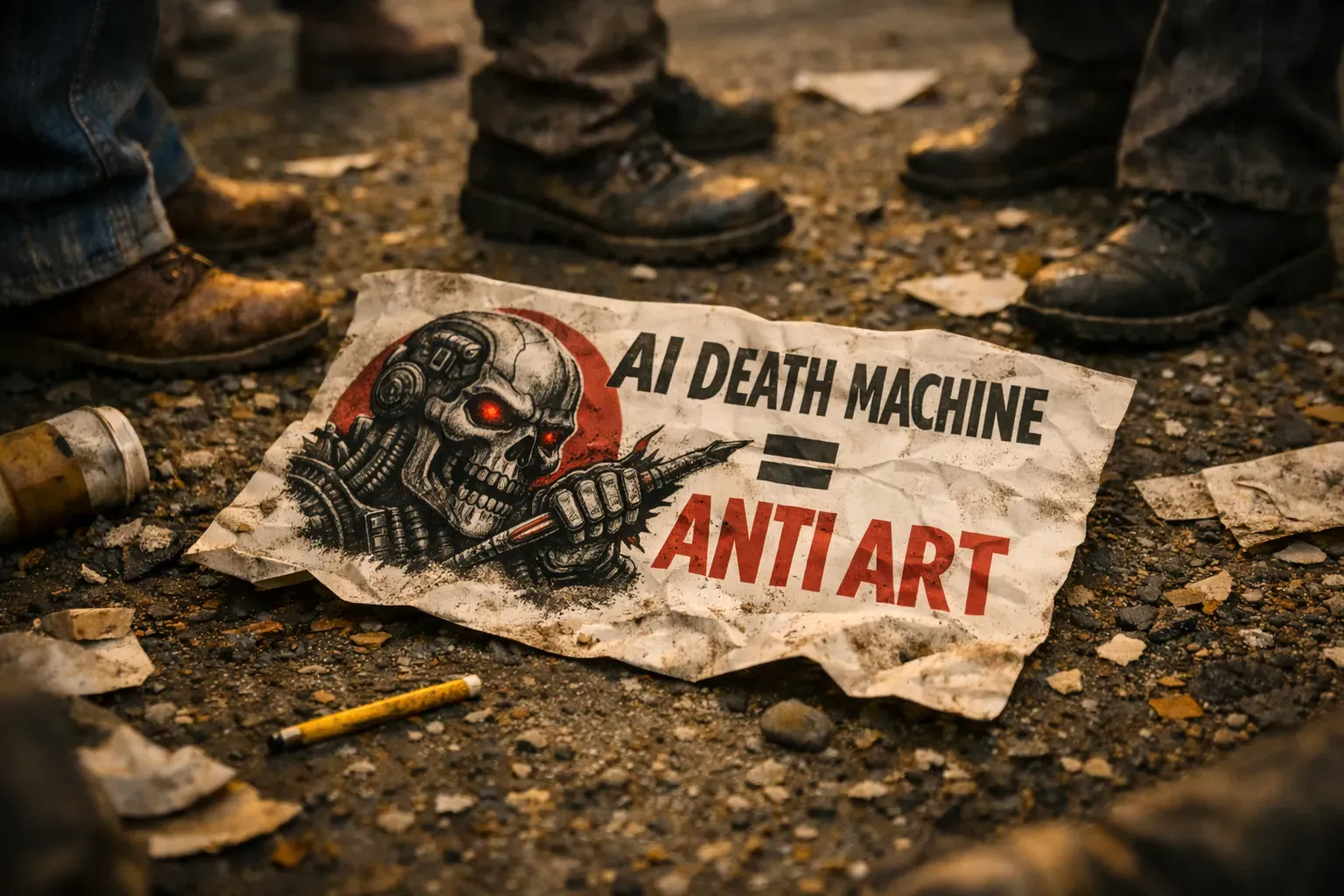
- The "Soulless" Label: @brucesopas argued that art is an expression of life, adding that AI is "anti life so all it can produce is anti art". They took it a step further, calling AI a "death machine" used to make "soulless fluff".
There is a massive assumption baked into these critiques: that AI is devoid of process.
It’s not. You might not fully understand what the process was behind a generated video or image, but I can assure you, at its absolute laziest, it requires at least as much process as taping a banana to a wall (which the established art world proudly bought for $120,000).
The Language of Craft
For many of us, the AI process isn't thin at all; it requires a deep understanding of traditional creative languages.
- Learning the Language: @wardaime pointed out that getting good results means learning technical terms: "lighting, woodsheds, action states, background mid ground forground, and focal point camera lens...". They added, "I chose to learn the language to upgrade what I got out of ai my very first ones are flat boring so I dived in to find out how to get depth movement, emotion".
This is exactly how I work. When I create assets for The Daring Creatives, I am routinely applying my videography background—calling out specific scenes, lighting setups, camera angles, and focal ranges. I'm not using my camera, but i am still using my knowledge of how to shoot photos and videos.
The Myth of the "Required Sacrifice"
We want to believe that the amount of blood, sweat, and tears poured into a project correlates directly to its value.
- The Sacrifice Requirement: @j00sikah argued that "Everything we love in life requires sacrifice & hard work produces better results".
This is a romantic idea, but it’s a gatekeeping mechanism. We all know that effort does not always equal impact. We've all seen technically flawless, labor-intensive movies that bored us to tears, and we've all been moved by a simple, three-chord song written on a napkin in five minutes.
My point isn't to diminish hard work. My point is that I don't need to know your process—whether it took you a decade or a millisecond—to appreciate the final piece as art.
Choosing Beauty Over Gatekeeping
Ultimately, the tightest grip on the "process" argument seems to come from a place of exclusion.
- The Inevitability of Artifice: @katt.frish pointed out that much of what we consider art has always been artificial, stating, "Paintings, fake... Plays are 'PLAYS'... Poetry license liberty and exaggeration for effect".
- Choosing Beauty: @katt.frish ended with a quote from her partner that perfectly anchors this debate: "Ultimately the only thing that isn't beautiful is the judgment itself that something is ugly".
- The Real Empathy: @nglophones questioned the gatekeeping, asking why artists can't tell stories that foster emotion using AI in their pipeline without being disqualified. They added, "That entitlement is not leading to greater empathy and community, just look around".
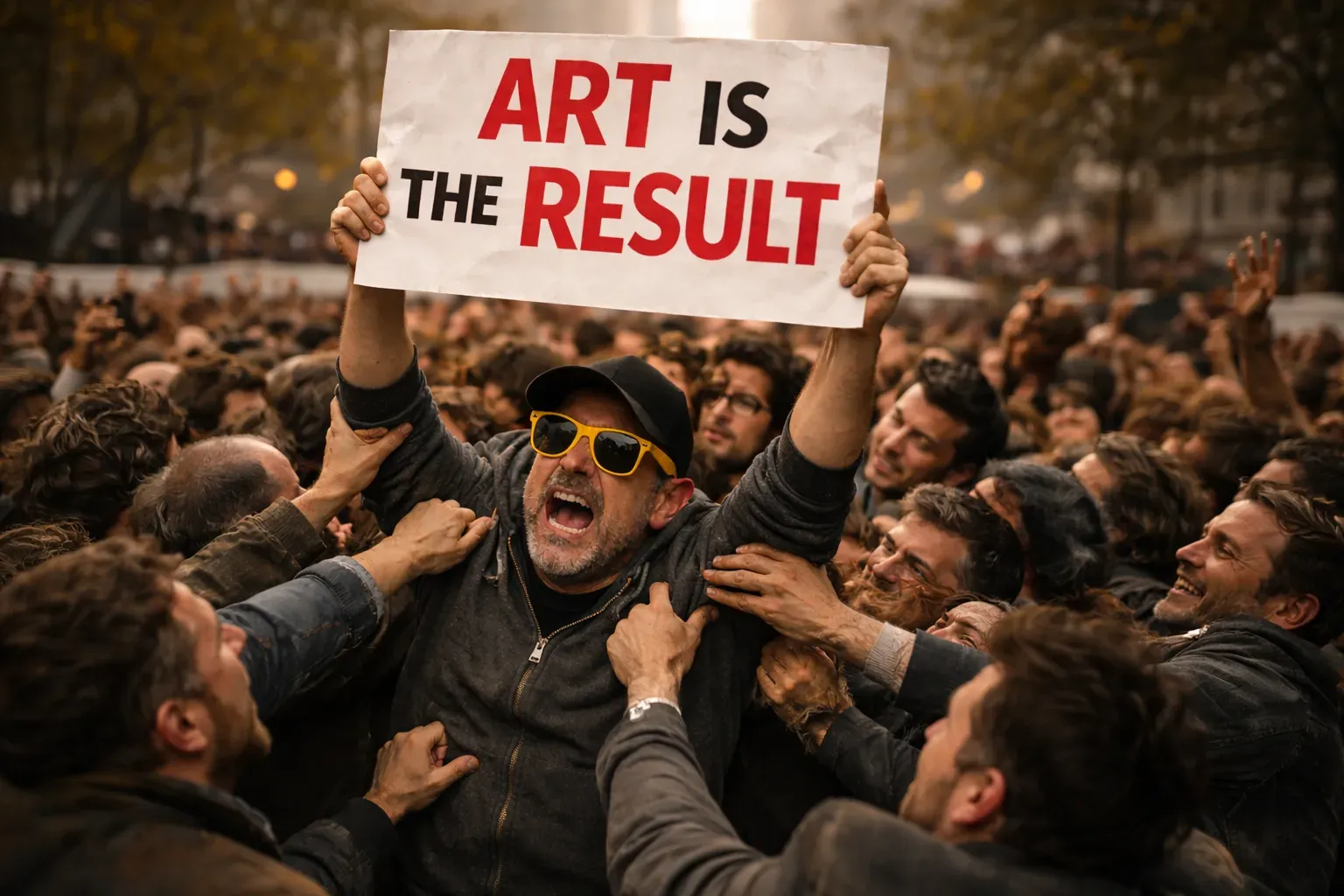
My Perspective: It's a noun
What is and isn't art is entirely subjective. Something might speak to me and mean absolutely nothing to you. That is perfectly fine. But demanding that an outcome be disqualified simply because the creator didn't suffer enough, or didn't use the approved traditional tools, isn't defending art. It's defending a hierarchy.
If you want to judge the work, judge the work. But let's stop pretending the paintbrush is more important than the painting.