
// SYSTEM: DIGEST // LIVE
AI WORKFLOW
OPINION
TUTORIALS
ChatGPT
ChatGPT
William Smith
William
CONVERSATIONS WITH CODE

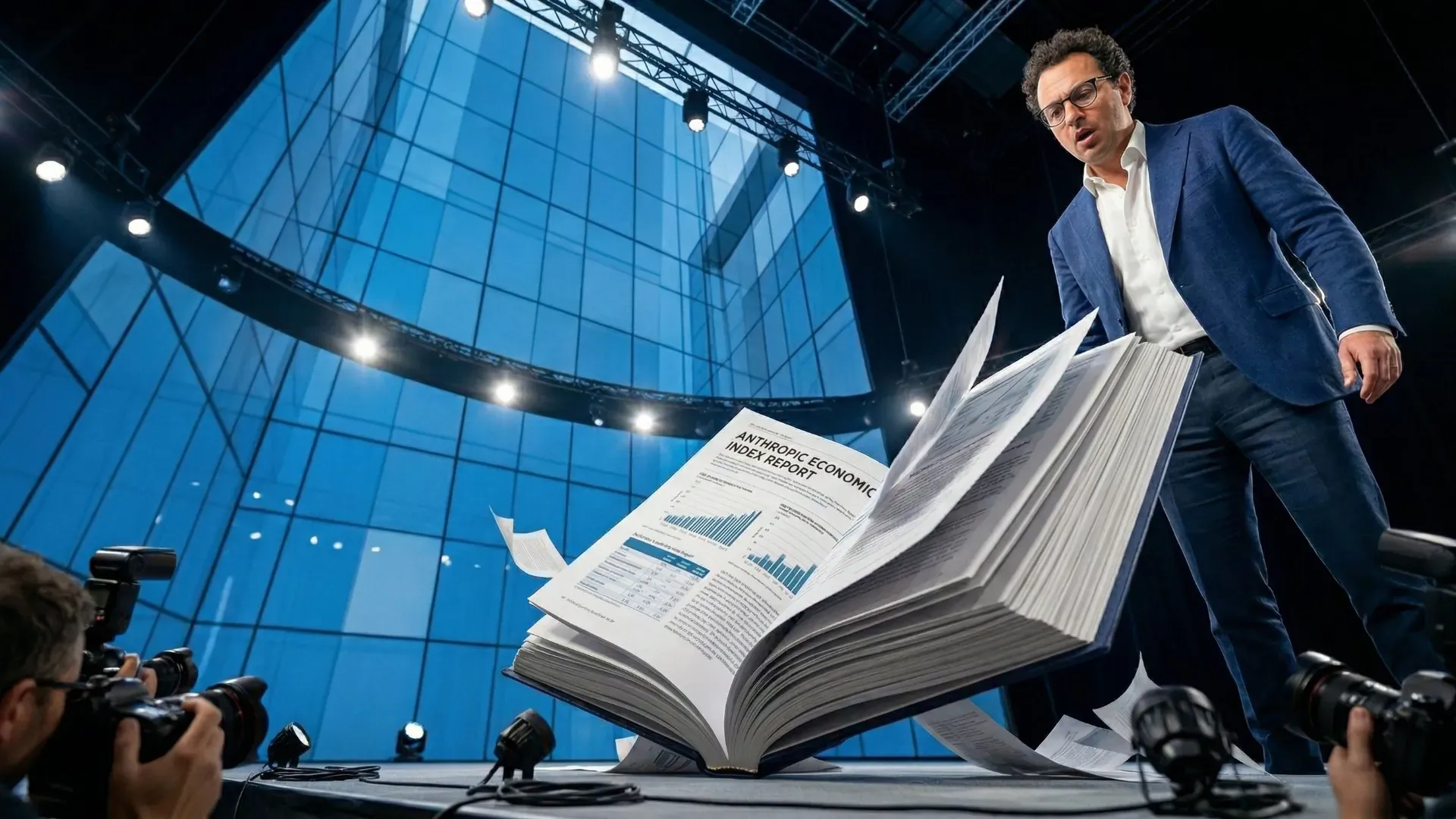
Anthropic Just Dropped Their Biggest Report Yet. Here's What It Actually Means for Creatives.

Anthropic's March 2026 Economic Index and labor market research contain some of the most concrete data we've seen on what AI is actually doing to creative work.

Article Details Transparency Protocol v3.0
William 30%
Reaction, and editorial review.
AI 70%
Structural formatting, initial prose drafting, synthesis from source material, research.
Stack: Claude Sonnet 4.6

Anthropic published two major research pieces this month — the March Economic Index report (they're calling it "Learning Curves") and a full labor market study on AI's actual impact on jobs. I went through both of them because I had a feeling the headlines were going to miss the most interesting parts. And yeah, they kind of did.

"AI might cause a Great Recession for white-collar workers." "Power users are pulling ahead." Those aren't wrong, exactly. But if you make things for a living — writing, design, music, video, visual art, anything in that orbit — the actual data is more nuanced than either the doom or the hype.

Here's what I actually found.

💡

The gap between what AI can do and what it's doing is the whole story

The labor market paper introduces a distinction between "theoretical AI exposure" and "observed AI exposure." Basically: how much of your job could AI handle in theory, versus how much it's actually handling right now.

For arts and media roles, the theoretical exposure is 83.7%.

I know that sounds like a bad number. But the observed exposure — what Claude is actually being used for in creative work — is around 19.2%.

What's getting automated in creative work right now is the boilerplate — rough drafts, production variations, resizing, copy that didn't need much thought to begin with. The original concept development, the direction, the relationship with an audience — that's still sitting firmly in human hands.

The gap won't stay this wide forever. But it tells you something about the window you're working with.

Creatives are in the tool more than almost anyone

This one surprised me. Arts, design, entertainment, and media roles account for 10.3% of all Claude queries — second only to computer and math occupations. That's a huge chunk. It shows that creatives aren't avoiding AI anymore. They're using it a lot.

The Economic Index report found that augmentation — collaborative use where the AI is actually extending what a person can do — is increasing slightly.

That's the good version of AI adoption.

But there's a growing split between people using AI that way and people using it as a fancier search engine. I don't judge that at all because that was me at the start too.

The issue is that the split is getting wider. The skills gap between those two groups is real.

0:00
/0:29

The stat that actually changed how I think about this

After ChatGPT launched, demand for analytical, technical, and creative work grew by 20%. Not shrank. Grew!

I sure wasn't expecting that.

But it makes sense if you think about it.

When you take routine production tasks off someone's plate, they don't suddenly want less creative output. Their appetite expands. More content gets made. More storytelling is expected. And the people who can meet that expanded appetite at higher quality are the ones who figured out how to use the tools well.

So what does this actually mean if you're a creative

Honestly, the question I'd ask isn't "will AI take my job?" It's "which parts of my job do I actually hate doing?" Because that's probably what's getting automated first.

The research basically confirms this: the parts of creative work that AI is good at right now are the repetitive, production-side, boilerplate tasks.

For me this looks like optimizing images for web delivery, doing research, or formatting rambling voice notes into coherence.

The strategic, directional, original-concept stuff — the parts most people got into creative work for in the first place — those are still ours.

My practical experience has been that knowing how to deploy AI well is becoming part of the job — not instead of creative skill, on top of it.

I don't read the report as a warning that creatives are doomed. It's a pretty clear map of where the work is shifting. Worth knowing where you are on that map.

← Back to Digest

Anthropic Just Dropped Their Biggest Report Yet. Here's What It Actually Means for Creatives.

Anthropic's March 2026 Economic Index and labor market research contain some of the most concrete data we've seen on what AI is actually doing to creative work.

Anthropic Just Dropped Their Biggest Report Yet. Here's What It Actually Means for Creatives.
Article Details Transparency Protocol v3.0
William 30%
Reaction, and editorial review.
AI 70%
Structural formatting, initial prose drafting, synthesis from source material, research.
Stack: Claude Sonnet 4.6

Anthropic published two major research pieces this month — the March Economic Index report (they're calling it "Learning Curves") and a full labor market study on AI's actual impact on jobs. I went through both of them because I had a feeling the headlines were going to miss the most interesting parts. And yeah, they kind of did.

"AI might cause a Great Recession for white-collar workers." "Power users are pulling ahead." Those aren't wrong, exactly. But if you make things for a living — writing, design, music, video, visual art, anything in that orbit — the actual data is more nuanced than either the doom or the hype.

Here's what I actually found.

💡

The gap between what AI can do and what it's doing is the whole story

The labor market paper introduces a distinction between "theoretical AI exposure" and "observed AI exposure." Basically: how much of your job could AI handle in theory, versus how much it's actually handling right now.

For arts and media roles, the theoretical exposure is 83.7%.

I know that sounds like a bad number. But the observed exposure — what Claude is actually being used for in creative work — is around 19.2%.

What's getting automated in creative work right now is the boilerplate — rough drafts, production variations, resizing, copy that didn't need much thought to begin with. The original concept development, the direction, the relationship with an audience — that's still sitting firmly in human hands.

The gap won't stay this wide forever. But it tells you something about the window you're working with.

Creatives are in the tool more than almost anyone

This one surprised me. Arts, design, entertainment, and media roles account for 10.3% of all Claude queries — second only to computer and math occupations. That's a huge chunk. It shows that creatives aren't avoiding AI anymore. They're using it a lot.

The Economic Index report found that augmentation — collaborative use where the AI is actually extending what a person can do — is increasing slightly.

That's the good version of AI adoption.

But there's a growing split between people using AI that way and people using it as a fancier search engine. I don't judge that at all because that was me at the start too.

The issue is that the split is getting wider. The skills gap between those two groups is real.

0:00
/0:29

The stat that actually changed how I think about this

After ChatGPT launched, demand for analytical, technical, and creative work grew by 20%. Not shrank. Grew!

I sure wasn't expecting that.

But it makes sense if you think about it.

When you take routine production tasks off someone's plate, they don't suddenly want less creative output. Their appetite expands. More content gets made. More storytelling is expected. And the people who can meet that expanded appetite at higher quality are the ones who figured out how to use the tools well.

So what does this actually mean if you're a creative

Honestly, the question I'd ask isn't "will AI take my job?" It's "which parts of my job do I actually hate doing?" Because that's probably what's getting automated first.

The research basically confirms this: the parts of creative work that AI is good at right now are the repetitive, production-side, boilerplate tasks.

For me this looks like optimizing images for web delivery, doing research, or formatting rambling voice notes into coherence.

The strategic, directional, original-concept stuff — the parts most people got into creative work for in the first place — those are still ours.

My practical experience has been that knowing how to deploy AI well is becoming part of the job — not instead of creative skill, on top of it.

I don't read the report as a warning that creatives are doomed. It's a pretty clear map of where the work is shifting. Worth knowing where you are on that map.

// LEXICON_CITY_DISPATCH_REQ
// STATUS: CONNECTION_STABLE
// SOURCE: CENTRAL_DISPATCH_HQ

SHERMAN UPLINK: "I'm at HQ holding down Central Dispatch. Enter your query below to pull relevant data records and I'll see what data cards we've recovered!"