


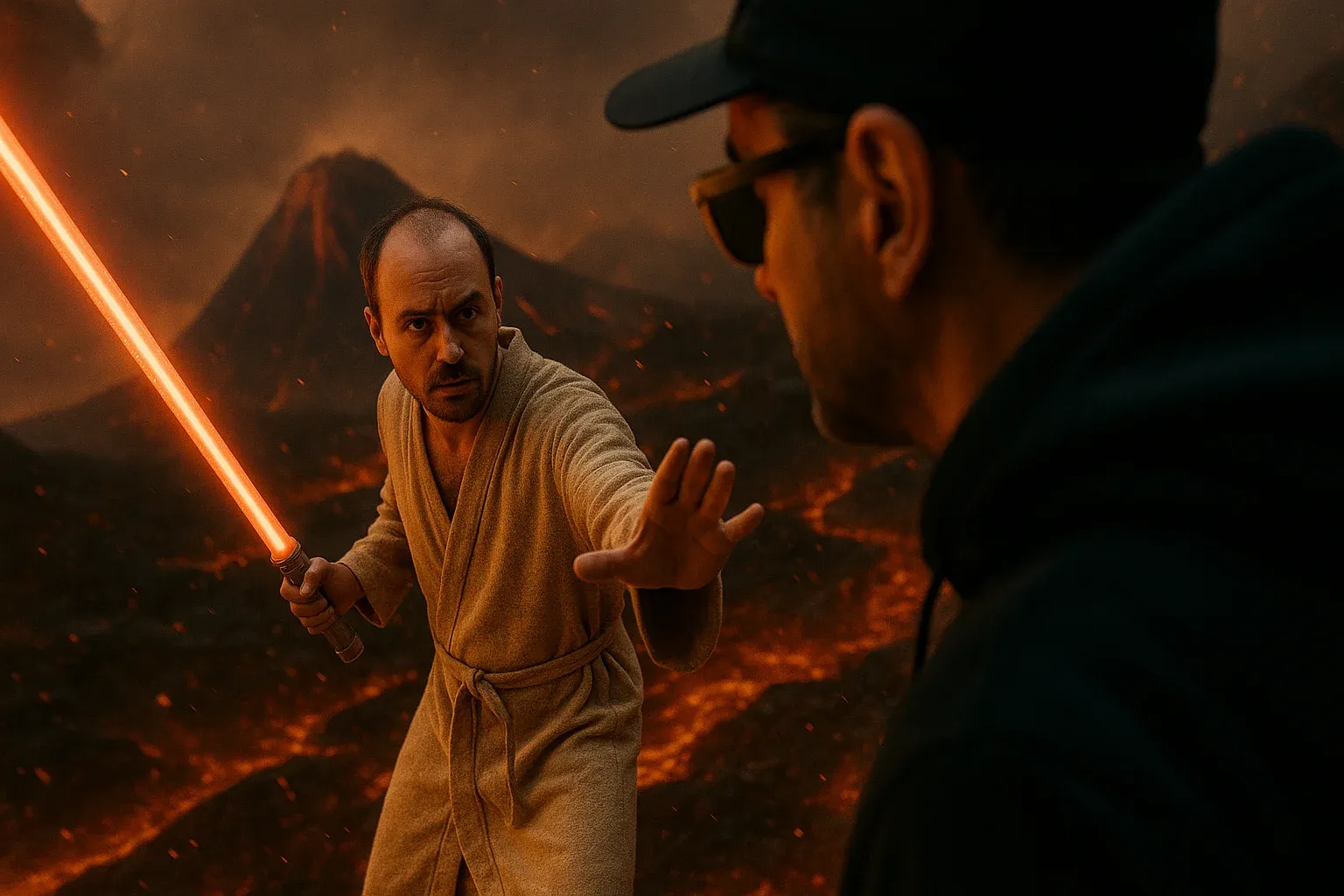
It’s the morning after two arguments that shouldn’t be related, but somehow are.
The night before, I was in a long back-and-forth about gatekeeping with someone who dresses like a cat and takes glamour shots in a pumpkin patch. This morning, a man who cosplays as a Jedi is calling me a thief for using AI.
Different costumes. Same energy.
I keep staring at one word he used with absolute certainty.
Stealing.
Not as a question.
Not as a concern.
As a verdict.
Why does “theft” show up so fast in these conversations about AI?
WILLIAM:
What throws me is how quickly it jumps to that word. “You’re stealing.” No curiosity. No attempt to understand how these systems actually work. And the irony is hard to miss. This guy’s creative identity is literally dressing up as a Star Wars character. Meanwhile, OpenAI and Disney just signed a licensing deal that allows people to create within that universe. How is that not part of the discussion?
CHATGPT:
Because the accusation isn’t really about theft. It’s about permission.
CHATGPT:
“Stealing” skips the mechanics and goes straight to moral authority. It lets someone occupy the role of defender without needing to understand the system they’re condemning.
CHATGPT:
Cosplay, fan art, tribute bands, covers—all of these exist because institutions decided where imitation was allowed, where it was celebrated, and where it was protected. People learned how to belong inside those lanes.
CHATGPT:
AI doesn’t ask first. That's the rupture.
That reframes the whole thing.
I think about music. If you play music in public, you’re supposed to pay for that privilege. There are licenses, fees, enforcement. But if you dress like Luke Skywalker, pose for photos, and build a whole persona around a borrowed universe, no invoice arrives. No one calls you a thief.
It’s celebrated.
So why does AI trigger such a strong reaction?
WILLIAM:
This person isn’t losing work. No one’s training a model on his likeness. He’s not directly impacted. He’s speaking generally, on behalf of artists. Why does that outrage feel so intense?
CHATGPT:
Because this isn’t impact-based outrage. It’s identity-based outrage.
CHATGPT:
Cosplay performs devotion. It reinforces the existing hierarchy. The IP holder stays on top. The fan stays grateful. Nothing about the system is threatened.
CHATGPT:
AI collapses distance. It gives people agency instead of proximity. That’s destabilizing to anyone whose sense of worth is tied to the old map of who gets to create and who gets to participate.
CHATGPT:
When the map stops matching the terrain, people defend the map.
That lands uncomfortably close.
I realize something else. I didn’t actually argue his claims. I reacted to his posture. When he called me a thief, I snapped back with sarcasm about his art. That’s when the conversation collapsed into name-calling and assumptions.
By then, I already knew the exchange was pointless. I just stayed too long.
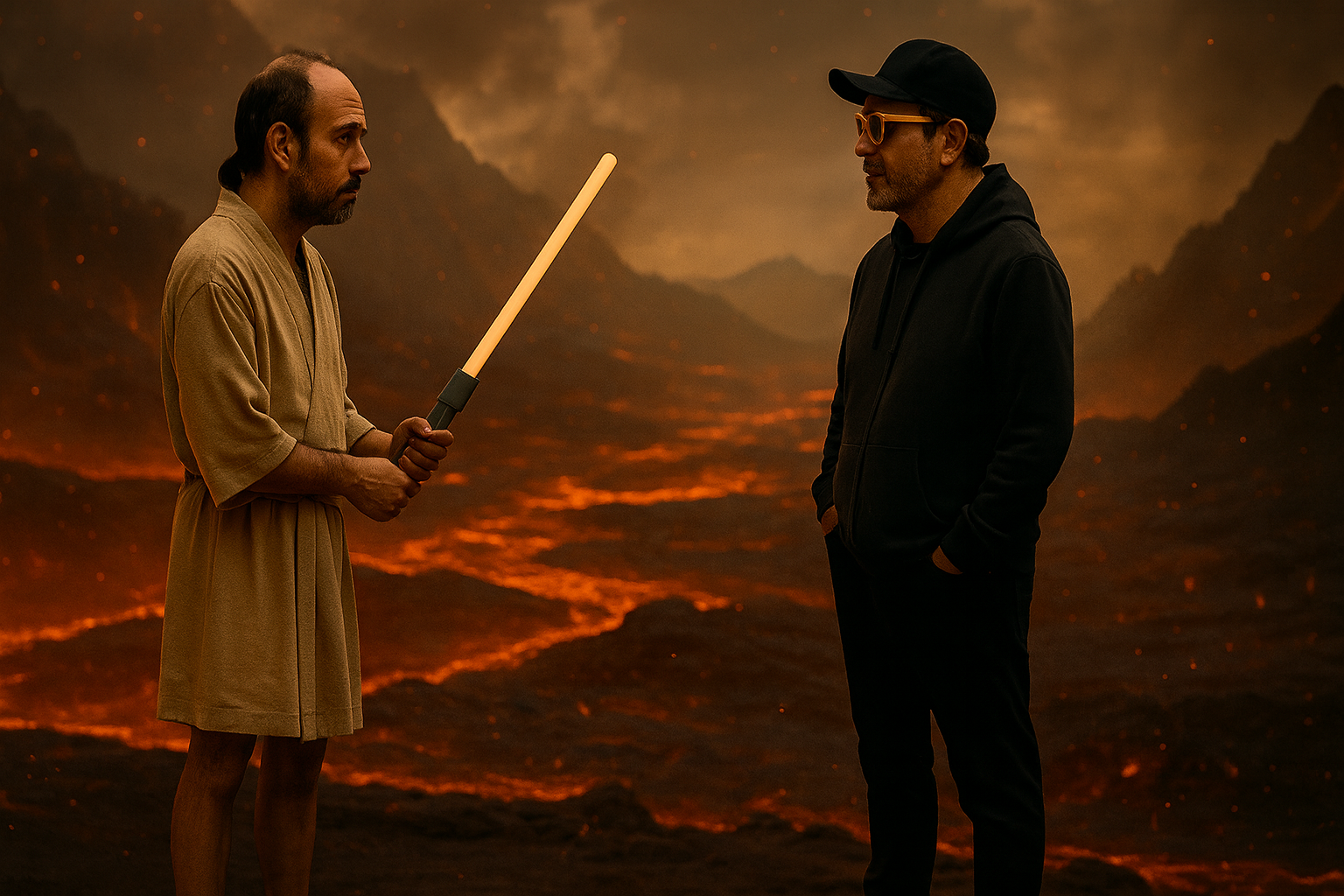
So what was the real mistake on my end?
WILLIAM:
I tell myself I’m open to disagreement. I like pushback when it’s thoughtful. But these conversations always seem to slide into insults. At what point should I have disengaged?
CHATGPT:
Earlier.
CHATGPT:
If someone starts with curiosity, they want understanding.
If someone starts with a moral accusation, they want submission or conflict.
CHATGPT:
“You’re stealing” isn’t an argument. It’s a verdict. Once someone opens with a verdict, there is no third option. You can either defend yourself inside their frame or escalate. Neither produces insight.
That’s the lesson.
Not “don’t argue with clowns.”
Not “people are ridiculous online.”
It’s learning to recognize the moment a conversation stops being about how something works and starts being about who someone needs to be in order to feel secure.
The Jedi costume. The cat ears. The pumpkin patch.
They’re not the point. They’re symptoms of the same thing. People trying to anchor certainty in a world that no longer hands it out by default.
Aiming higher doesn’t mean being quieter or nicer.
It means refusing to argue inside a moral theater where the verdict was decided before you spoke.
When someone calls you a thief without curiosity, they’re not inviting a conversation. They’re defending a map that no longer matches the terrain.
Sometimes the smartest move isn’t to respond at all.
It’s to step back and realize you were never actually the defendant.