
Last updated September 17, 2026. We're maintaining this page through release day and after it — the sections below get revised as things are announced, and there's a dated log of every change at the bottom.
Zack London's first feature is going to play in movie theaters. Several hundred screens across the US, starting October 30, with the initial run targeting New York, Los Angeles, San Francisco and Chicago.
It's called Gods Don't Give Gifts. He wrote and directed it under the name he's built for two years on YouTube — Gossip Goblin — and it's an anthology of four stories set in the same future his shorts have been building all along.
A lot of the coverage from the July announcement is already out of date, and a fair amount of what's circulating was never confirmed in the first place. So here's the current state of it, separated into what's known and what isn't.
When does Gods Don't Give Gifts come out?
October 30, 2026, in a limited US theatrical run.
The scale is several hundred theaters. The four cities named at announcement — New York, Los Angeles, San Francisco, Chicago — were described as a target for the initial run rather than a locked booking list, which is a distinction worth holding onto until a theater list is actually published.
What is Gods Don't Give Gifts about?
Four stories, one setting: what London calls the Second Cycle of Humanity. It's a future where bodies can be upgraded, memory can be bought and sold, and consciousness moves between forms.
His own framing is narrower than the "AI movie" headlines. He's described the film as being about what happens to ordinary human hungers and instincts once the physical limits around humanity start to disappear, and said the four stories live inside that unease. All four follow people using strange tools to satisfy fairly primal needs.
The horror is in the arrangement rather than the imagery. Nobody in these stories is fighting the technology. They've all accepted it, and the question is what's left of them afterward.
What's on the official Gods Don't Give Gifts site
On August 21, godsdontgivegifts.com was a title card and nothing else. It's now a full page, and it lays out the world in more detail than any of the press coverage has.
The setting is a planet called Niiro Cradle, where consciousness is the thing being controlled, traded and modified. A governing body called NiiroCore holds "97% of mindshare," and its wetware lets people move their minds into synthetic frames. The site lists who gets left behind by that: Patchwrights welding jailbroken mods in back-alley workshops, preachers raging against the death of the soul, debtors transferred into animal bodies, and aristocrats watching it all from glass spires.
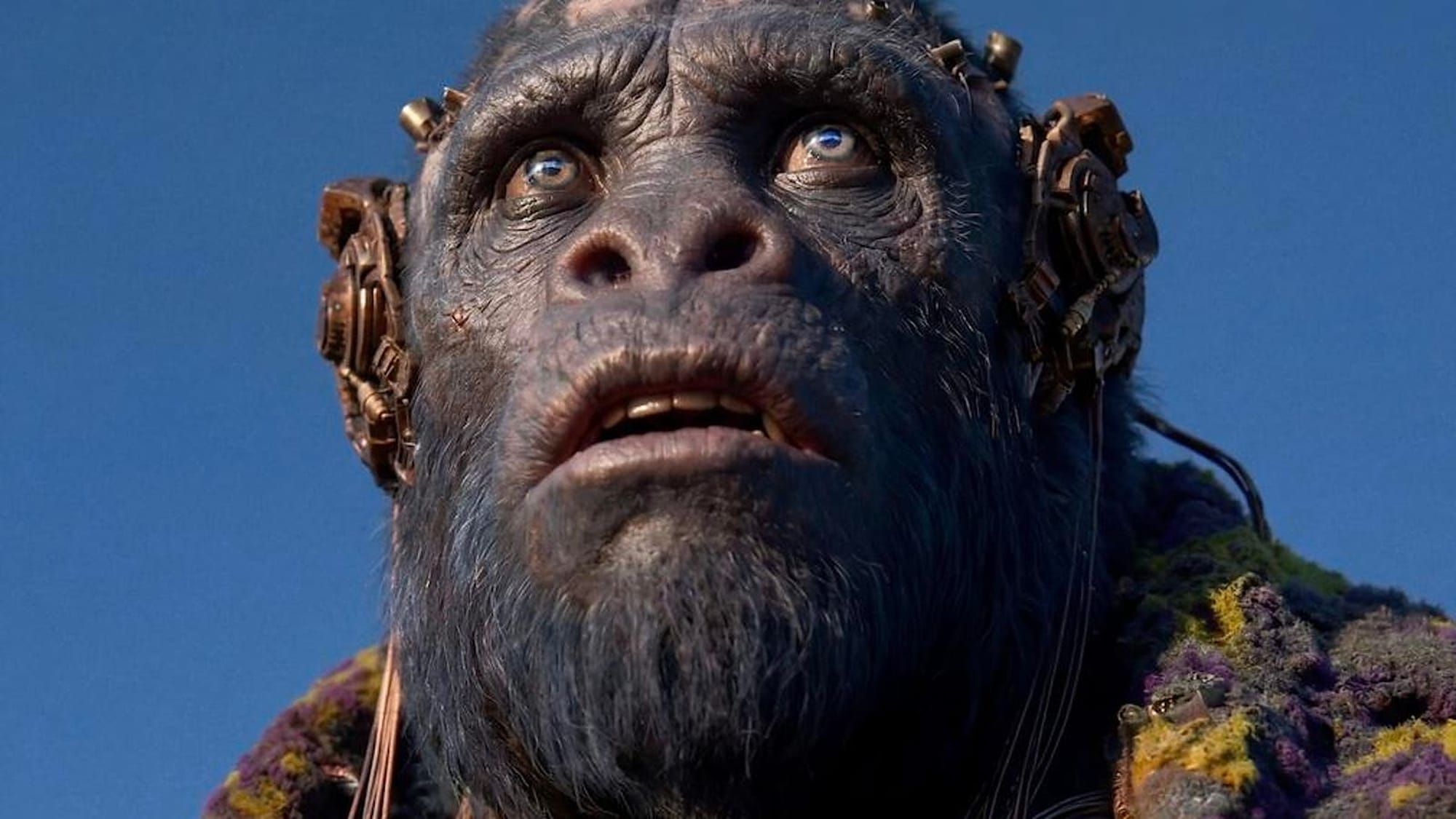
These stills are frames from the four looping clips on the page.

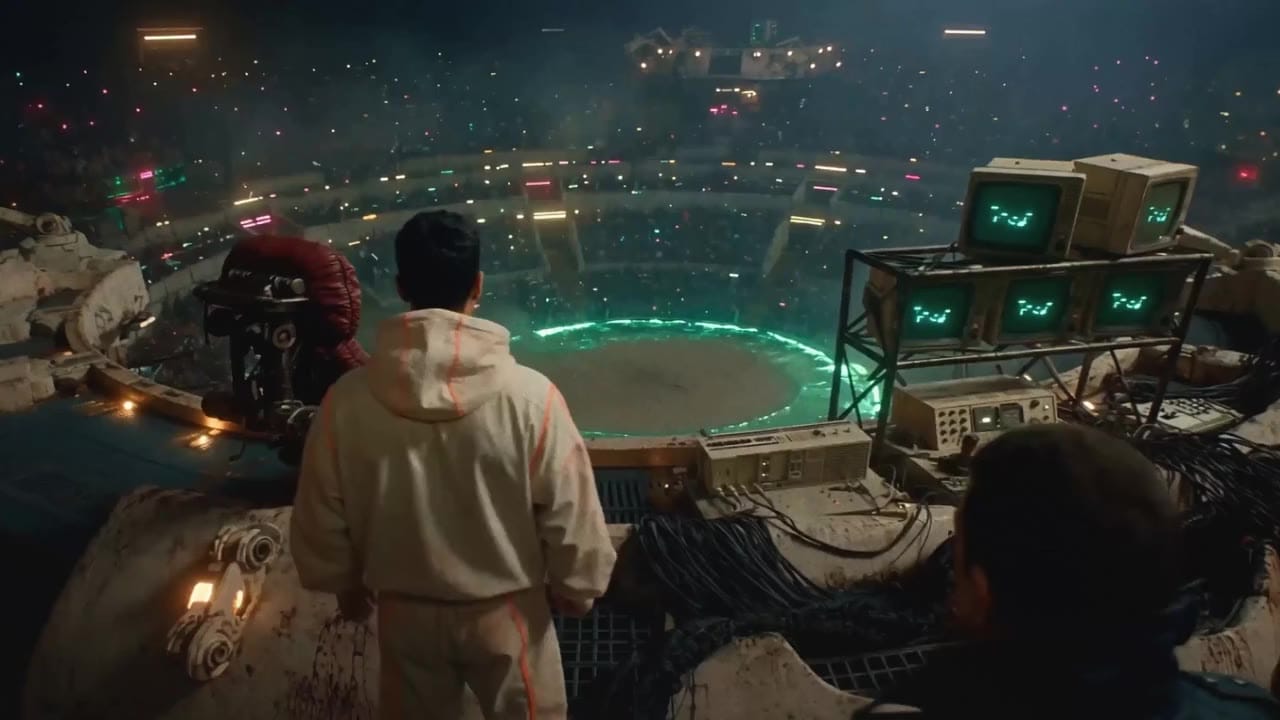
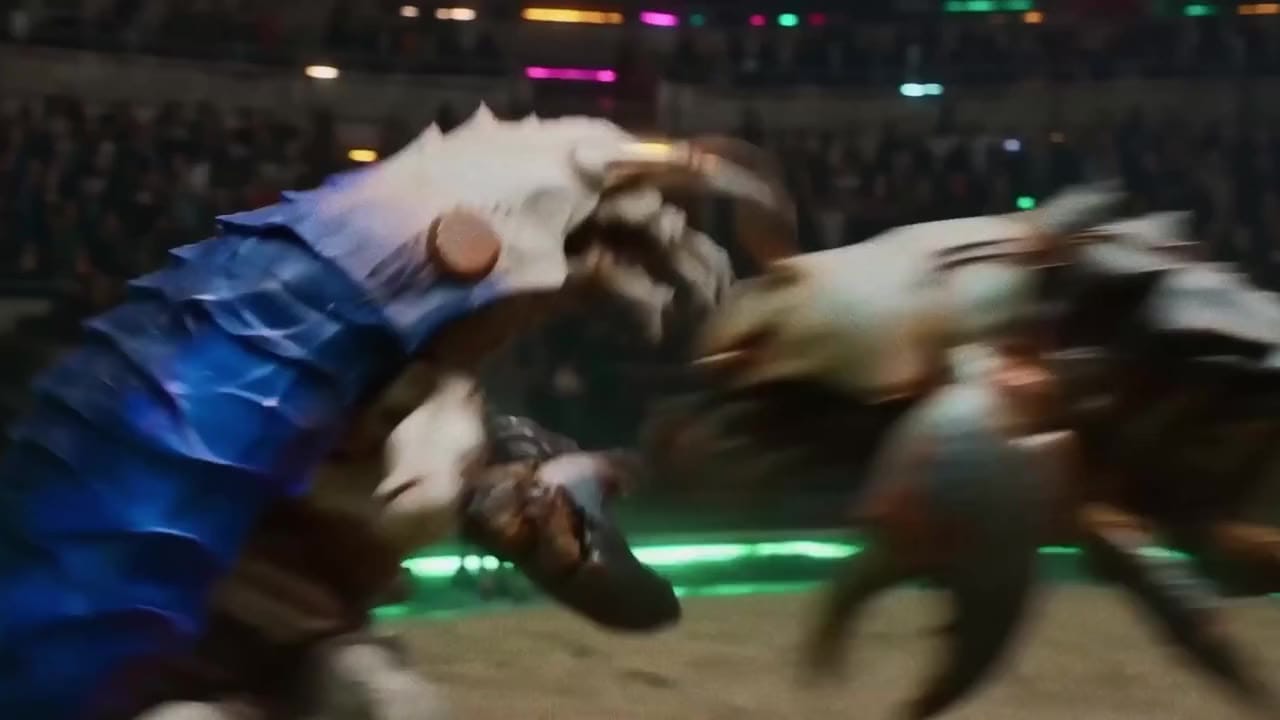
The screenings section says the film is touring select cinemas from October 30, with cities still to be announced. For now the ticket section is an email signup that alerts you when a screening lands near you.
Is Gods Don't Give Gifts really made with AI?
The visuals are generated. Most of the rest is not.
Forbes reported that London employed voice actors, musicians and a Foley artist on the feature. That matches what's visible on Pomegranate, the preview short released in July — its credit roll names fifteen people, including an animation lead, three animators, an editor, two composers, a colorist and a re-recording mixer. Asked directly by The Hollywood Reporter whether the voices were synthetic, he said no, they're all human voice actors.
His studio states the position on its own site: "Every story is imagined, written, and directed by humans. AI is just our force multiplier."
So the accurate description is a film with AI-generated imagery and a human cast, crew and score — which is a more interesting thing than either "made by a robot" or "just another movie," and it's the part most of the coverage compresses out.
How was it made?
His pipeline keeps changing. As he put it on a livestream the day after Pomegranate premiered, “every six months there’s like a wave of tools.” Speaking to The Hollywood Reporter in March, he put it plainly: the biggest misconception is that someone types "sci-fi film" into a prompt and a movie comes out the other side.
The documented shape of the process, from PJ Ace’s write-up on The Patchwright: stills begin in Midjourney using custom profile and style-reference codes, get edited in Nano Banana rather than generated there, and are animated shot by shot rather than with multi-shot features, so he controls every frame. Every voice is a human actor. In 2025 Instagram stories, since expired, he put one set of character faces at roughly 400 prompts and 1,600 images.
We took the whole method apart in the hidden work behind Gossip Goblin's worlds, which goes through the Midjourney profile codes, the animation choices, and why he grades most of the image before anything moves. If you want the wider view, how AI creators actually make their videos puts his process next to four others working the same way.
One detail that says more than the tool list: the character in Pomegranate was cast before he was written. Maureen Kerr reported that London hired a British voice actor based in Sweden who'd appeared in his earlier short The Patchwright, then built the next film around that voice. His reason:
"I can't prompt for this, because I don't think the AI even knows what this is."
As of September 17, 2026, The Patchwright, the short that voice first appeared in, is set to private on the Gossip Goblin YouTube channel.
Can you still watch Pomegranate?
Not on YouTube, for now. Pomegranate is a 27-minute short set in the same world, released free on July 22, the same day the theatrical news broke. As of September 17, 2026, the video is set to private, along with The Patchwright.
We haven't found a public explanation from Gossip Goblin. The competition page still links to it under "Watch Gossip Goblin's latest short," and that link now opens a private video. The official Pomegranate trailer is still up.
An immortal aristocrat, bored after centuries of simulated wars and wives and wonders, visits his neighbourhood dreamspool dealer looking for something that still registers as real. Kerr described the lead's delivery as Noël Coward after a very long century, which is about right.
We wrote about that release and the nineteen-day rollout behind it in Gossip Goblin released Pomegranate for free the same day he announced a theatrical run.
What he's releasing while the feature is in post
He hasn't gone quiet. After a title card called "NiiroCore Presents: Lovers Lagoon" on August 16, Lover's Lagoon ran five episodes between August 18 and 27. Since then a new short has gone up every few days: "Tender Hooks," "Eternity Spool," "Dark Forest," "Clean Sweep," "The Blender," "Clanker Art," "Ten Percent" and, on September 16, "Scalp Misalignment."
Which is the pattern that got him here — serialized shorts, released steadily, building out a world one episode at a time while a bigger thing finishes in the background.
He's also on the speaker list for the Zurich Summit, September 25 to 27, according to Deadline.
Why a theatrical release at all
Edward Saatchi of Fable, who co-produced, has framed it as a bet on durability:
"The most important thing to us is to work on projects that will stand the test of time. This film is a masterpiece, not a demonstration of where the technology is, but a brilliantly written and paced story that will move audiences."
He also put the moment in film-history terms:
"We are at an incredible moment where 'internet IP' and a generation of YouTube filmmakers are on the verge of taking over Hollywood — this is the 'Easy Riders,' 'Raging Bulls' moment for the internet generation."
Whether that comparison survives contact with November is an open question. The strategic logic behind it is clear enough though: a theatrical run buys a kind of standing that a YouTube premiere doesn't, whatever the view count.
London's own version is less grand and more useful. He told Variety he sees it as a linear path — prove you can tell stories with AI, then prove it somewhere that counts. And on why this film in particular needed the route it took: "I don't think this would ever get made any other way. This would not get greenlit. It would be too expensive, and it would be too weird, and it would be too out there."
The $20,000 Gossip Goblin Competition
Fable's Showrunner Studio is running a competition for short films set in the Gossip Goblin universe, with $20,000 in prizes: $15,000 for Best Film, $2,000 for People's Choice, and $1,000 each for Best Screenplay, Best Visuals and Best Performance.
The brief is specific. A Ripper Doc in a back alley installs experiences directly into people's minds, and every entry starts with a client sitting down in that chair. Films run 2 to 20 minutes, have to be made in Showrunner Studio and carry the competition watermark. Submissions close December 15, 2026, six weeks after the feature opens. The full rules are on the Gossip Goblin Competition page.
Who is Zack London?
He's 35, from Los Angeles, and studied sculpture and anthropology at Pitzer before working as a product designer and then on VR at Facebook and Oculus. He moved to Sweden roughly four years ago and started working with AI tools about three and a half years ago, beginning with a fictional travel series made in Midjourney before video generation existed.
The Gossip Goblin channel had 1.4 million subscribers at the July announcement, and his studio counts more than 600 episodes released in two years. The George Lucas comparison that follows him around came from The Hollywood Reporter, which put it to him as a question. He ducked it.
He's also the person who said there's zero skill involved in generating AI images — a claim that lands differently once you've watched how the shorts actually get assembled.
The open questions — trailer, tickets, runtime, distributor
Most of the practical detail about this film has not been announced yet. Rather than pad that out into paragraphs, it's collected here as a list you can scan. Each one gets revised on this page as it's confirmed.
Is there a trailer for Gods Don’t Give Gifts?
Not yet. As of September 17 no trailer for the feature has been posted to the Gossip Goblin channel. The film’s site at godsdontgivegifts.com now has world-building copy, looping clips and a screenings section, but no trailer.
The five trailers that circulated in July were all for Pomegranate, the preview short — several aggregator posts have run them as though they were the same thing.
Are tickets on sale? Which theaters?
No ticketing has opened and no theater list has been published. The official site says cities are being announced soon and offers an email signup for screening alerts. For an October 30 opening, a limited release this size would typically go on sale a few weeks out.
The four cities named at announcement — New York, Los Angeles, San Francisco, Chicago — were described as a target for the initial run rather than locked bookings.
How long is the film?
The runtime has never been published. It is an anthology of four stories presented as a single feature; Pomegranate, the preview short set in the same world, runs about 27 minutes.
Who is distributing it?
Unnamed. A distribution deal was in place at the July 22 announcement, but Edward Saatchi declined to name the distributor and it still has not been named as of September 17.
What are the four stories called?
None of them have been named. Pomegranate is the only titled work released so far, and it has been described as a preview set in the same world rather than confirmed as one of the four segments.
Do I need to watch Pomegranate first?
No. It is a separate short in the same setting, made by the same team. It was free on YouTube from July 22, but as of September 17 the video is set to private. The official trailer is still up.
Is this the first AI film to play in theaters?
Coverage has gone both ways on this, and the difference matters. Variety framed it as one of the first times an AI-driven filmmaker has moved from online audiences to the big screen. Some outlets have gone further and called it the first AI-generated film to reach US theaters outright.
The careful version is the first one. What is genuinely unusual here is the route — a creator who built an audience entirely on YouTube self-releasing a feature into several hundred screens.
When does the Gossip Goblin Competition close?
Submissions close December 15, 2026. Fable’s Showrunner Studio runs it, with $20,000 in prizes and $15,000 of that for Best Film. Entries run 2 to 20 minutes and have to be made in Showrunner Studio.
After it opens
This section is for what the film is actually like, and it stays empty until someone has seen it. We'll add a first-hand account after October 30 rather than a preview dressed up as a review.
Update log
- 2026-09-17 — Added what the official site now shows, with three stills from its clips, and swapped the header image for the ape featured there. Pomegranate and The Patchwright are set to private on YouTube, so both embeds were removed and the official Pomegranate trailer kept. Rewrote the competition section from the published rules ($20,000, closes December 15). Added the Lover's Lagoon episodes, the September shorts and the Zurich Summit. Corrected the George Lucas line, which The Hollywood Reporter put to him as a question.
- 2026-08-21 — Page restructured as a maintained reference. Added the trailer status, the ticketing status, and the August uploads. Confirmed no distributor, runtime, story titles or theater list have been announced. Open questions collected into one list.
- 2026-07-26 — First published, covering the July 22 announcement, the Pomegranate release and the production details reported by Variety, Deadline, Forbes and The Hollywood Reporter.