LatentDiffusion makes CRAFT (1979), a Minecraft-inspired dark-fantasy series made to look like a 1970s film. Here's how he makes it, from the writers' room to the edit, and what he says the AI does.
People who find CRAFT (1979) tend to ask the same three things. Is it an old movie? Who made it? Is it AI?
The answers are all on @LatentDiffusion on YouTube. It's a 2026 series. It's made by a creator who goes by LatentDiffusion, with a small team. And yes, AI generated the pictures.
He's just as clear that AI is only one part of it. From Episode 2 on, every episode description carries a note on what was done by hand. On October 31, a week after the season finale, he posted a ten-minute documentary on how the show gets made. So his process is laid out in his own words, step by step.
What CRAFT (1979) is
CRAFT is a fan-made dark-fantasy series inspired by Minecraft. In the documentary's description, he says it imagines "what the world might have looked like if it had been brought to life in the 1970s."
A man wakes up alone in a strange world and has to learn its rules before nightfall. Over ten episodes he finds a wolf, crosses an ocean, climbs into frozen mountains, goes down a ravine and steps through a black gate into a world of fire. Anyone who has played Minecraft will know most of those places.
The look is period film. The episodes are framed at 4:3, like old TV, with grain and faded color. The characters are human, with faces, armor and worn clothes. The hero wears a blue T-shirt and jeans under a heavy iron helmet, and the Episode 5 notes call him Steve.
Season 1 ran ten episodes, from June 1 to October 24, 2026. They run from about 7 minutes to about 20. As of November 3, 2026, the first episode, The First Night, has 2.4 million views on YouTube.
LatentDiffusion — "CRAFT (1979): The First Night," Episode 1, on YouTube (@LatentDiffusion)
There's an IMDb listing for the series too, and it names his YouTube channel as the official site. Fans talk lore on the r/CRAFT1979 subreddit, which his site links to. Abandoned Films, who we've profiled before, does something close with famous stories dressed as 1950s widescreen trailers.
Who makes it
He hasn't published his name. On YouTube, on his Instagram, @latentdiffusion, and on his site, he's just LatentDiffusion. The site describes it as "an independent film studio creating atmospheric stories one carefully directed frame at a time."
The series page credits the writing to LatentDiffusion, CompleteSpy and Iranderal. LatentDiffusion directs and assembles the episodes. Iranderal also shot and edited the documentary.
He hasn't said what he did before AI. What he does say about himself is short. "It just started with myself, someone who loves telling stories and someone who knows how to use the tools to create this world."
By his account, it started with no investors and no spare cash. The whole thing was "built during weekends, late nights, spare moments."
Is CRAFT (1979) AI-generated?
Partly, and he says so himself. The documentary's description includes this note, and Episodes 2 through 10 carry a version of it too:
CRAFT was made using AI as a tool, but it was not solely AI-generated. Alongside generating and animating the visuals, I did extensive manual sound design, Photoshop editing, Premiere editing, effects work, visual cleanup, color grading, compositing, and shot-by-shot adjustments.
And on the writing: "The story and script were not written by AI, but by me and my small team!"
In plain terms, AI tools make the images and turn them into moving shots. People write the story. He does the cleanup, the edit, the color and the sound by hand.
The documentary opens on the same point. "If you've ever tried asking AI to make you a movie, you know, it does not work. Not if you want to make something people actually care about."
Step one: the whole story, before any images
The documentary starts with filmed footage of a CRAFT writers' room meeting. Someone draws a rough map on a glass board, with a ravine and a tower marked.
He says the story is planned long before anything gets generated. "Before I ever make an image, I already know where the story is going." That covers more than the next episode. "We know the major story arcs, the character development, the history of the world, and the ending we're building towards."
Then each episode gets cut up into a list of shots. "Every episode gets broken down into individual shots."
Step two: designing the world
Next comes design. "Nothing is random. Every design exists because it communicates something."
The documentary flashes through what that looks like:
Character sheets that show one figure from the front, side and back on a white background, including a hooded man with a pig's face.
Props made on their own against white, like a red leather belt and a wooden crate.
A page of made-up lettering, and the same kind of lettering on a scroll in a finished shot.
A "digital set mockup," a plain 3D model of a cabin room with the window and the bed in place, followed by the finished shot of that room.
A long written description of a ruined portal high in snowy mountains, down to what the stone looks like.
Step three: dozens of tries for one image
Images come from Midjourney, Nano Banana Pro (Google's image model) and ChatGPT's image generator, per the tools list in his descriptions. Getting a good one is slow.
"Getting one usable image can take dozens of attempts. Sometimes far more." He works from reference sheets and keeps adjusting prompts, lighting, composition, focal length, materials and mood.
Sometimes generating isn't enough. "Sometimes entire pieces have to be rebuilt by hand. Sometimes multiple images get combined together." And: "Sometimes Photoshop ends up doing almost as much work as the generator itself."
Step four: turning stills into shots
A finished image becomes the first frame of a moving shot. The documentary shows them in pairs, labeled "starting image" and "animated version": a man walking toward a waterfall, a cave with glowing water, the cabin room.
The video model is Seedance, ByteDance's video model, which he uses to animate the images. He runs it through Runway and EvoLink, two services that host AI models. "I made a lot of the series using Runway," he writes.
His fix is to keep going until it works. "So I regenerate. Repair. Replace. Combine. Repeat."
LatentDiffusion — "The Making of CRAFT (1979)," on YouTube (@LatentDiffusion)
Step five: the edit and the sound
The shots come together in Adobe Premiere Pro, and he treats that part as filmmaking like any other. "All the classic rules of film making still apply here. Without editing, there is no craft."
"This is where hundreds of individual pieces finally become one story."
For sound, he credits his own manual sound design plus two AI audio tools, ElevenLabs and Seed Audio 1. The music is C418's, from the Minecraft soundtrack albums Volume Alpha and Volume Beta, credited track by track in the episode descriptions. Episode 6 adds an orchestral version of C418's "Sweden" by Julian Fayman.
From the tools list in the description of The Making of CRAFT (1979). His descriptions also carry a Runway discount code that earns him a commission; the Runway link here goes to Runway's own site.
What's next for CRAFT
The finale, Episode 10, The Harrowing, sends the man alone through the black gate. Its description says the first chapter is over but the story isn't.
LatentDiffusion — "CRAFT (1979): The Harrowing," Episode 10, the Season 1 finale, on YouTube (@LatentDiffusion)
Season 2 is being funded through his Patreon, and there's no release date yet. Earlier episode notes mention a bigger goal: more episodes, and eventually a full movie.
He closes the documentary on the plan. "We're just getting started. I can't wait to show you where this story goes."
A weekly show about artists, storytellers, designers and musicians who are working AI into how they make things. Each episode looks at what they made and how they made it, plus news from artists we’ve featured before. In between, Basement Notes: short audio episodes about what I’m building and how I think about AI.
Evgeny Stadolnik, Jacopo Reale, Leah Fasten and Vicky Clarke
Four AI artists who spent years doing a different job first, plus this week's news: Jensen Huang leaves Nvidia, Claude Fable 5.2, and a $500,000 prize for one AI short. Watch the video on YouTube.
Nov 18, 2026 · 7 min
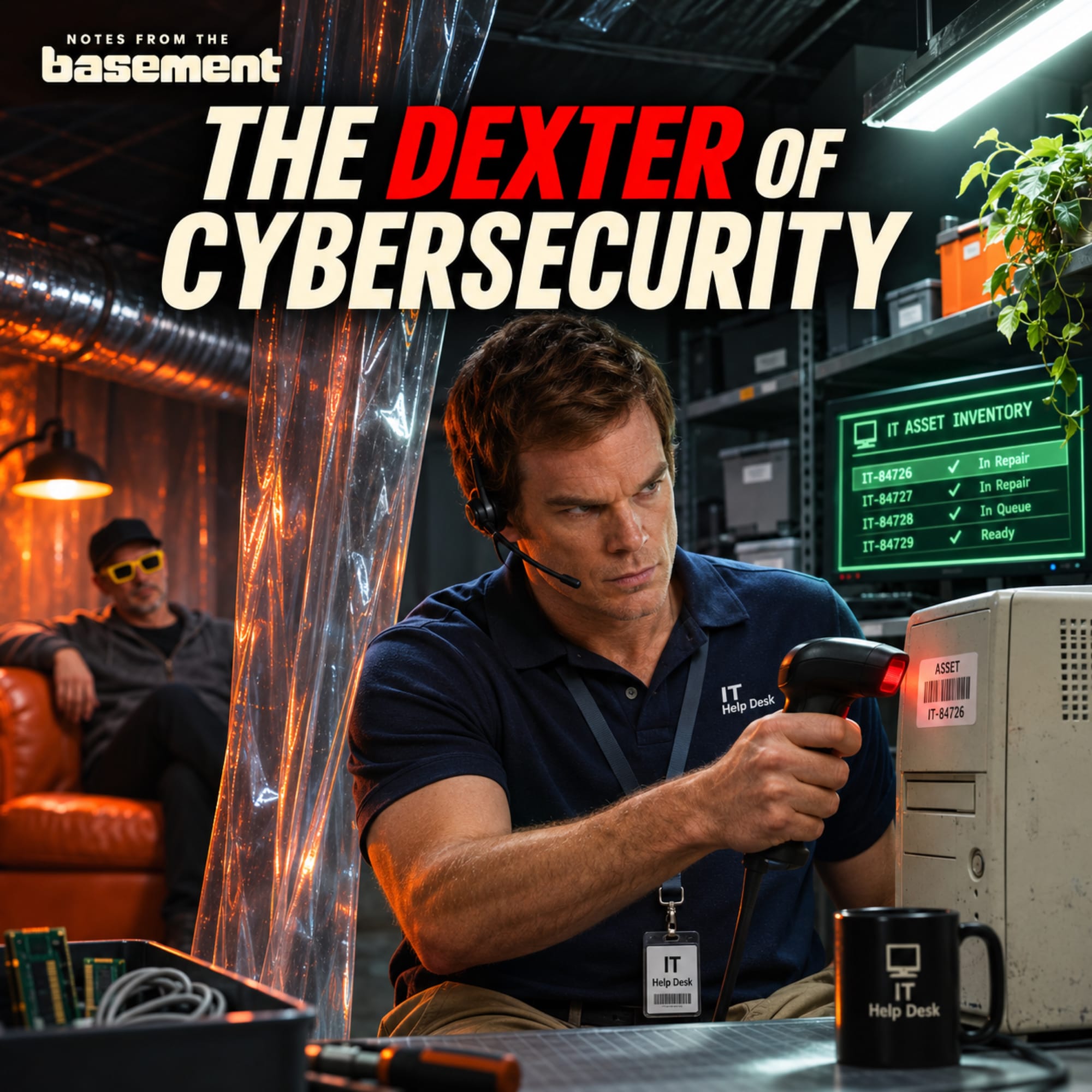
Basement Notes: The Dexter of Cybersecurity
Flights grounded, Outlook down, the banks, the NSA and Apple, all in about 72 hours. Is AI to blame, or is someone with a model too dangerous for the public playing Dexter?
Nov 13, 2026 · 5 min
Basement Notes: Jensen
Jensen Huang resigned from Nvidia. A four-trillion-dollar company, the chips behind nearly all of AI, and the people leading the race keep turning out to be the worst examples.
EP 01 · Nov 12, 2026 · 6 min
LatentDiffusion, Junie Lau, Mathery and Alex Viegas
Four AI artists and how they make their work, plus this week's news from Gossip Goblin, Kavan the Kid and Kelly Boesch. Watch the video on YouTube.
Oct 20, 2026 · 6 min
Basement Notes: Agency in a Box
Somebody's selling your clients the sun, the moon and the stars for a hundred bucks a month. Here's what that pitch leaves out, and why agencies might be the best people to train the AI.
Oct 19, 2026 · 6 min
Basement Notes: Becoming a Robot Wrangler
Fast Company found experts happily training AI to replace them. A Boston Dynamics CIO has a job title for the rest of us: robot wrangler. I think it's the job I already have.
Oct 18, 2026 · 6 min
Basement Notes: Drop Dead Simple Podcast Workflow
The whole workflow behind this show: record on a night walk, hand the audio to Claude, describe how you want to sound, and turn basement noises into the music.
Oct 18, 2026 · 4 min
Basement Notes: Welcome to Basement
The first episode, recorded in my basement with the laundry running: I made about a thousand videos by hand as a freelancer, and now I edit by telling Claude what I want.