
Montlouis Mane is the name they make films under, and the name of their studio in Seattle. Their story starts at home, with a camcorder. "I grew up making movies with my brother, with action figures and a VHS camcorder, editing everything on the tape," they wrote in the director's statement under their new film.
After that came acting. "I became an actor, but eventually my life took a different path."
About two years ago Mane started making films with generative AI. Their new short, Make Believe, is about that. "Make Believe charts, more or less, my own journey learning to make films with generative AI over the past two years," the statement says.
Mane says the tools brought them back to something they loved as a kid. "There's a bittersweet feeling in that: being grateful to have found it again, and wishing I'd allowed it more room in all those years between."
They post as Montlouis Mane on YouTube and @MontlouisMane on X. The studio site also takes commercial work for brands.
What happens in Make Believe
It's 1991. A boy named Chris and his mom break down on a desert highway, with boxes strapped to the roof of their car. She sends him into an antique shop to find a phone. Inside, he finds an old viewer with two lenses and looks through it.
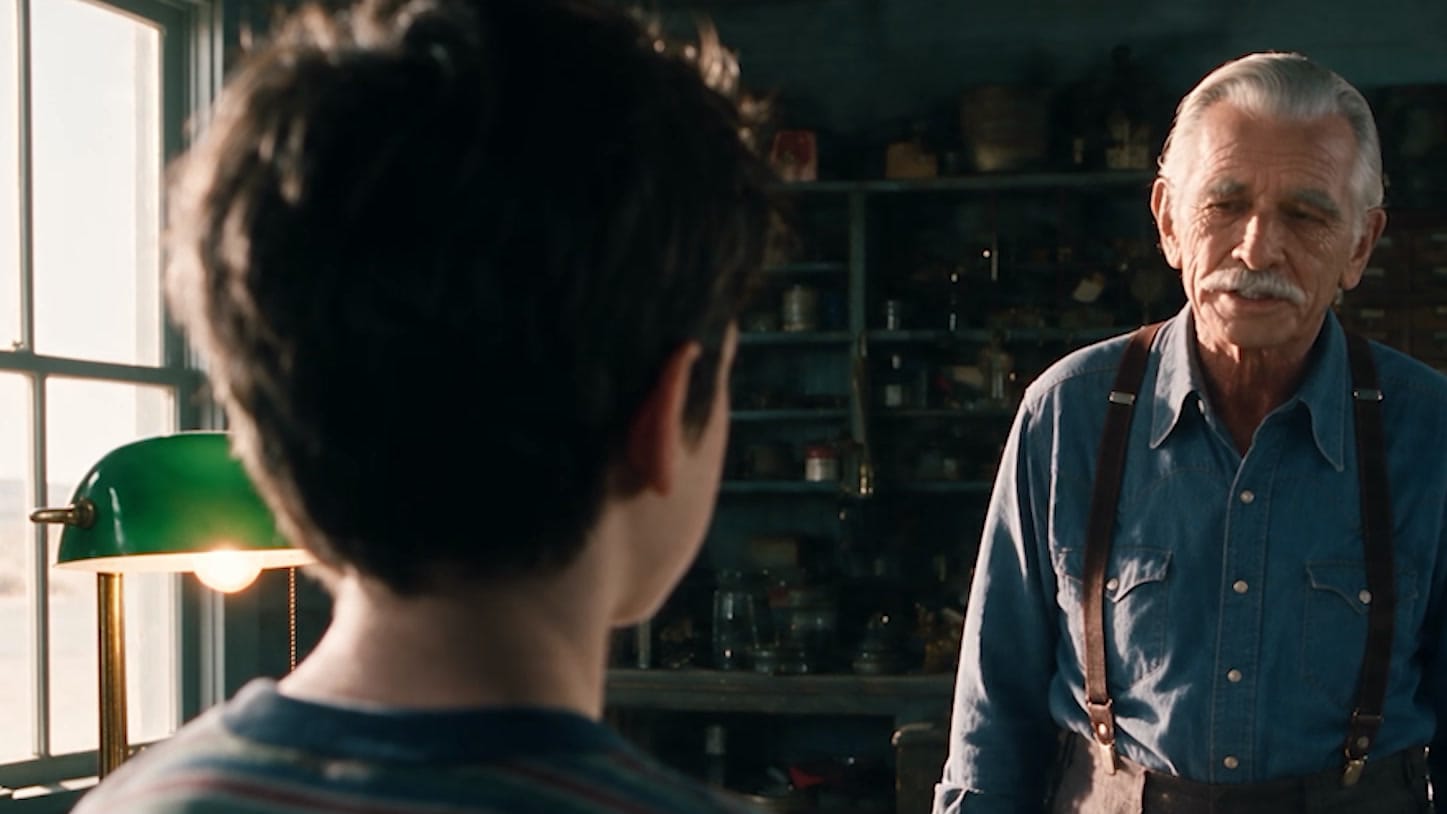
Each look drops him somewhere new: a wrestling ring, a castle, a pirate ship, a candy world and a starship. The film runs about 13 minutes.
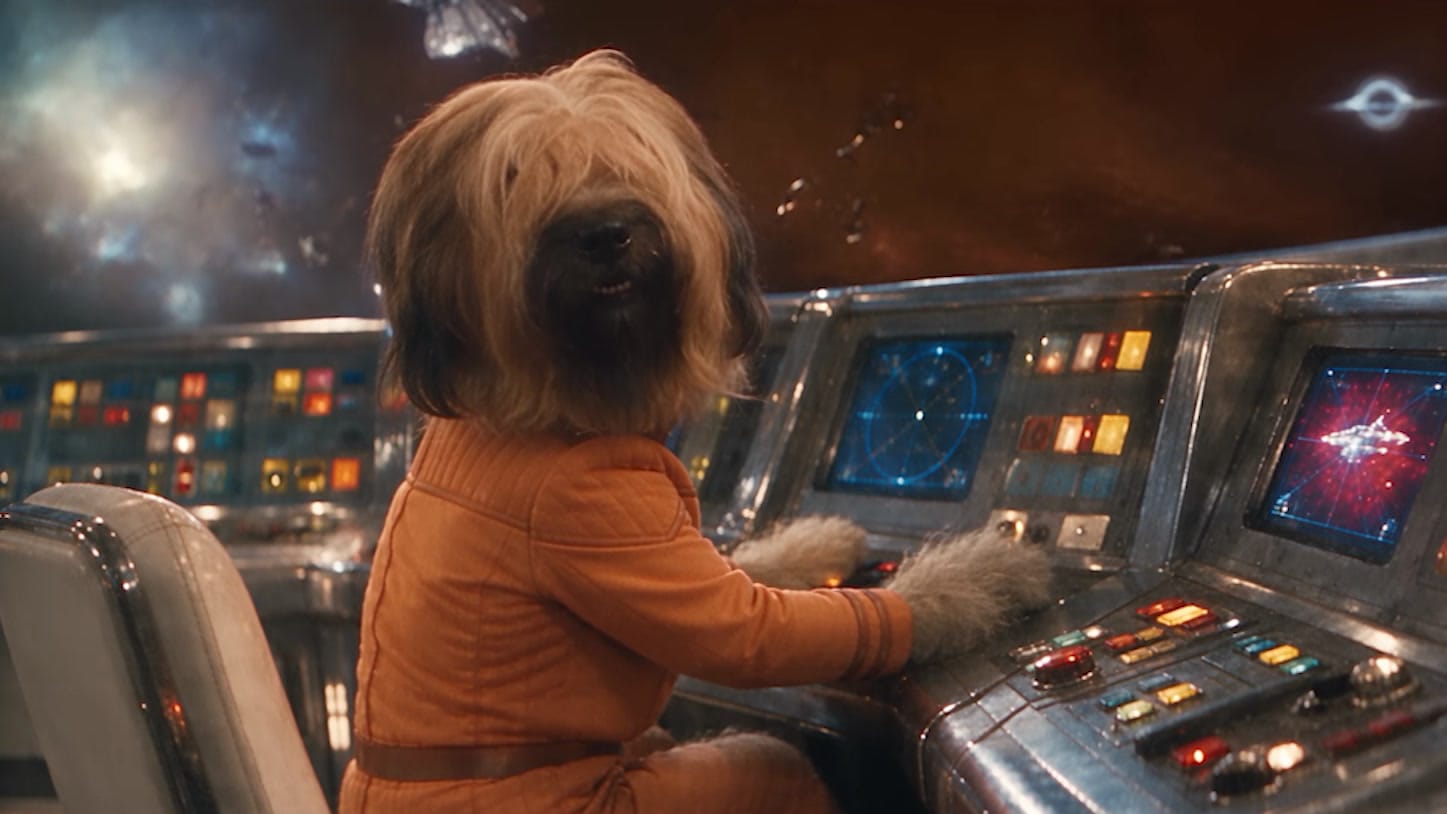
Some of the worlds start in the car. Next to him in the back seat is a toy wrestling ring with an action figure in it. A wrestling ring is the first place the viewer takes him. The family dog, Bubbles, has to stay in the car. Later Bubbles turns up on the starship bridge in an orange flight suit, next to a crew member who looks a lot like Chris's mom.
In the candy world, a monkey that looks made of raspberries grabs the viewer and runs off through a field of candy canes. The last chapter jumps ahead: Chris is grown and back in the same shop, and his own son comes in to get him.
The rule: make it look hand-built
Mane set a rule for the look. "For this film, I wanted the worlds to feel built by hand: rubber creatures, painted skies, miniatures under hard light," they wrote.
That meant working the way a 1990 crew would have had to. "I wanted to think about how it would have actually been shot in 1990, including the limitations," they wrote. In practice: "Leaning towards longer takes, keeping the frame rich with things happening in the background, and room for performances to breathe."
They know how odd that sounds.
"It is intentionally designed to not look computer-generated, which is a strange rule for a film that is entirely computer-generated. That's the point."
Mane hasn't posted a making-of yet, so how they got that look out of the tools shot by shot isn't on the record. They did say why those films were the target. "What I love about those films is that they never talked down to kids. They took their time, and there was something there for the adults watching too."
Who made it, and with what
The end credits give Mane the writing, directing, producing, editing and generating. They also thank a story consultant, a visual style consultant, a period advisor and someone for additional music production.
The credits list every model they used, sorted by job. They end by saying the visuals were made entirely on Higgsfield, an AI video platform.
Tools they credit themselves
Image: Nano Banana Pro · Nano Banana 2 · Seedream 5.0 Pro · GPT Image 2 · GPT Image 2.5 · Soul Cinema
Video: Seedance 2.5 · Seedance 2.0 · MiniMax H3
Audio: Seed Audio 1.0 · Suno · ElevenLabs
3D: Hunyuan 3D
Writing help (LLMs): Fable · Astra · Opus · K2
From the end credits of "Make Believe," which also say the visuals were made entirely on Higgsfield.
Mane made it for the Higgsfield Global Film Festival, a contest run by Higgsfield itself with $1 million in prizes. Entries had to be generated entirely on its platform, per the festival's rules. Winners were announced on November 1 in a video on Higgsfield's YouTube channel, and Make Believe was not among the 14 films that won prizes.
We also profiled Evgeny Stadolnik, who made THE THREAD alone for the same festival.
Before Make Believe
The channel has a 36-second trailer for Make Believe, which they titled a 1991 VHS-style movie trailer. In May 2026, before Make Believe, they posted a trailer for 442. It's a pitch for a nine-part drama about the 442nd, the Japanese American Army unit that fought in World War II while their families were held in camps back home. They made it for Runway's Big Pitch contest.
There are also a few short ads they made for Runway's ad contest. Make Believe is the longest thing on the channel by far.
They end the statement with a line for the audience: "If you grew up loving those movies, I hope this brings some of that feeling back."