
// SYSTEM: DIGEST // LIVE
AI WORKFLOW
OPINION
TUTORIALS
ChatGPT
ChatGPT
William Smith
William
CONVERSATIONS WITH CODE

My Week with Claude Cowork

In one weekend, I went from manually managing everything to running a system of AI agents handling growth, content, and operations. Here’s how I built it—and where it falls apart.

I paid $100 for a Claude Max subscription on a Friday night. By Saturday morning, I'd already gotten my money's worth. By Sunday, I had 11 automated tasks running across two machines. By the end of the week, I was genuinely questioning what I'd been spending my time on for the last six months.

This is that story.

The $100 Bet

I'd been using Gemini for everything — coding, writing, research. I'm certified in it. I know the ecosystem well. But Anthropic kept shipping features that made me stop what I was doing and stare at my screen. Every day last week, something new. And the thing that finally got me to open my wallet was a feature called Cowork.

Cowork is, in the simplest terms, an AI that can control your computer. It sits in the Claude desktop app, and it can open browsers, click things, type things, navigate websites, read your screen, and automate tasks that would normally require you to be sitting there doing them yourself. I know that sounds like what every AI company has promised for the last two years. The difference is this one actually works.

Teaching It My Taste

The first thing I did was point it at my social media growth problem. I run The Daring Creatives across Threads, Instagram, YouTube, and LinkedIn. Growing these accounts takes hours every day — finding the right people to follow, engaging with their content, posting consistently, analyzing what's working. Hours I don't really have, doing work that isn't exactly creative.

So I trained Claude on what I care about. It already had context on me — my biography, my content pillars, 62+ articles I've written for the website, my aesthetic preferences. I gave it more. What kinds of art I find interesting. What types of creators I want to connect with. What a good follower-to-following ratio looks like. Whether someone posts regularly or hasn't touched their account in months.

And then I told it: go find people on Threads and Instagram who fit this profile, follow them, and like a few of their posts. Not randomly. With judgment.

The Nightly Run

Every night at 10 PM, my computer comes alive. Claude opens the browser, navigates to Threads, and starts working. It looks at profiles, evaluates the content, checks the ratios, reads bios, and makes decisions about who to follow. For each person, it likes two or three posts — not just the most recent ones, but the ones it thinks I'd actually appreciate based on everything it knows about my taste.

On Instagram, it's a similar process but more conservative. I'm only adding 10-15 people per day there because Instagram's rate limits are tighter and my content strategy for that platform is still evolving.

The numbers behind all of this were backed into from a goal: I want 75 new followers per week on Threads and 25 on Instagram. Using standard follow-back conversion rates, that dictates how many people Claude needs to follow each day to hit those targets. It's math, not guessing.

When the run finishes, I get a report. Here's who was followed. Here's why. Here's what I liked. Here's the observations from tonight's session. The first morning after, I woke up to 7 new followers. Passively. Without thinking about it.

The 14-Day Cleanup

Here's the part that makes this feel like a real system instead of just a bot. Every person Claude follows gets tracked. After 14 days, if they haven't followed back, they go into an unfollow queue. I can intervene if someone's valuable to me regardless of reciprocation, but the default is to keep the ratio clean.

It also runs smart protection checks before unfollowing anyone. Verified accounts stay. Accounts with 50K+ followers stay — those are brands or public figures and I don't expect them to follow back. It checks bios for keywords that suggest someone's an institution or creator worth keeping. The unfollow system has taste, same as the follow system.
The Calendar Hack

One of my favorite discoveries this week was a workaround for a real limitation. Claude's Gmail connector can read emails but can't send them. So I couldn't use email as my reporting hub. What I could do was use Google Calendar.

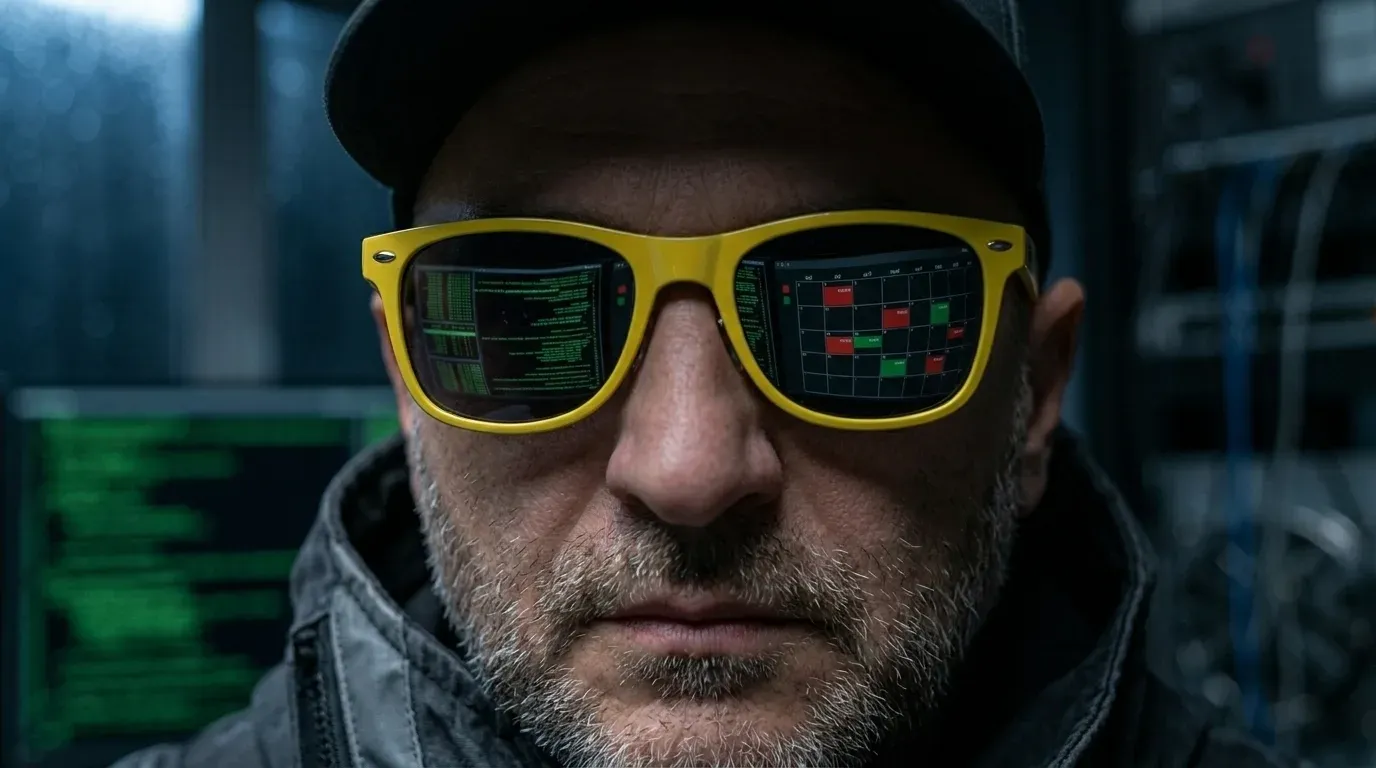
Google Calendar lets Claude update event descriptions through its MCP server connection. So now, every automated task has a corresponding calendar event. Tasks that haven't run yet show up in red. When a task completes, it updates the event description with the full report and flips the color to green. I open my calendar and I can see exactly what ran, what it did, and what's still pending. It's kind of beautiful, actually.

The Content Pipeline

Beyond the social growth stuff, I set up a content pipeline that pulls themes from my existing articles and creates conversation starters for Threads. These one-liners serve as the de facto comment section for the website — each article links to a threaded discussion where the topic is being debated.

This was the third leg of the strategy. I'm still posting my own ideas and responding to people manually. That's the part that should stay human. But having a system that ensures something goes out every day, something connected to the deeper content I've already written, that consistency is what compounds.

The Model Matching Game

Something I learned on day two: you can assign different AI models to different tasks. For basic browser work — navigating Instagram, scrolling through profiles, clicking follow buttons — I use Sonnet 4.6. It's fast and cheap. But when it comes to analyzing engagement data and making creative decisions about what content to post, I switch to Opus 4.6. Better reasoning, better taste.

Matching the model to the task turned out to be a real optimization. It's like hiring different people for different jobs instead of asking one person to do everything. I started thinking of it as managing a small team of specialists, each with their own strengths.

The Stuff Nobody Talks About

Let me be honest about the limitations, because everybody on the internet right now is just circle-jerking about how amazing Claude is, and while I agree, there are real rough edges.

The browser agent is slow. Way better than it was a year ago — I tried Operator from OpenAI back then and it was damn near unusable. This is probably three times faster. But it's still the bottleneck. When Claude is controlling Chrome, you can't use that browser for anything else. And if something times out or a page loads weirdly, the whole task can stall without completing the reporting step.

The Gmail integration is limited. Read-only access means you're constantly working around the fact that it can't send emails. The calendar hack works, but it feels like duct tape.

And honestly, Google still connects to more of the ecosystem I use. Gemini plays nicer with Docs, Sheets, and Gmail because it's all the same company. Claude is better at automation and reasoning, but the integration story still has gaps. I ended up using both — Gemini for writing and research, Claude for automation and browser tasks.

The Bigger Picture

By day three, I had 11 tasks automated. Social media growth across two platforms. Content distribution from my article archive. Analytics tracking. Inbox cleanup — Claude went through 25,000 emails, organized everything into folders, pulled receipts for taxes, fixed broken filters that were sending important stuff to junk. It even helped with tax prep, sitting with me like a patient accountant, going through expenses, categorizing deductions, calculating mileage write-offs.

I'm running Cowork on two machines now. And I'm doing all of this development during Anthropic's double-usage off-peak promotion, which gives me room to pressure test these automations without worrying about hitting limits.

The approach I've landed on is smaller, focused tasks across multiple agents rather than trying to build one massive automation that does everything. Each agent handles part of a process and documents its output for the next one to pick up. Whether that's the best approach long-term, I don't know yet. But it optimizes for reliability, which matters when you're trusting a machine to represent you on the internet.

What This Actually Means

Here's the thing I keep coming back to. Social media management is going to become a task, not a role. The same way typing became a task. Nobody hires a typist anymore. The skills are still valuable — understanding audiences, knowing what resonates, having taste — but the execution layer is getting compressed.

I've been calling the role that replaces it something like a Context Curator. Someone who understands the full picture well enough to direct AI systems with judgment. The tools to make that role possible literally didn't exist two months ago. And now I'm living it.

This has been the most fun time of my professional life. I feel like I'm doing a hundred times better work than I was three years ago. And at the same time, the most uncertain, because the ground keeps shifting under everyone's feet.

But that's exactly why this stuff matters. Go build something.

← Back to Digest

My Week with Claude Cowork

In one weekend, I went from manually managing everything to running a system of AI agents handling growth, content, and operations. Here’s how I built it—and where it falls apart.

My Week with Claude Cowork

I paid $100 for a Claude Max subscription on a Friday night. By Saturday morning, I'd already gotten my money's worth. By Sunday, I had 11 automated tasks running across two machines. By the end of the week, I was genuinely questioning what I'd been spending my time on for the last six months.

This is that story.

The $100 Bet

I'd been using Gemini for everything — coding, writing, research. I'm certified in it. I know the ecosystem well. But Anthropic kept shipping features that made me stop what I was doing and stare at my screen. Every day last week, something new. And the thing that finally got me to open my wallet was a feature called Cowork.

Cowork is, in the simplest terms, an AI that can control your computer. It sits in the Claude desktop app, and it can open browsers, click things, type things, navigate websites, read your screen, and automate tasks that would normally require you to be sitting there doing them yourself. I know that sounds like what every AI company has promised for the last two years. The difference is this one actually works.

Teaching It My Taste

The first thing I did was point it at my social media growth problem. I run The Daring Creatives across Threads, Instagram, YouTube, and LinkedIn. Growing these accounts takes hours every day — finding the right people to follow, engaging with their content, posting consistently, analyzing what's working. Hours I don't really have, doing work that isn't exactly creative.

So I trained Claude on what I care about. It already had context on me — my biography, my content pillars, 62+ articles I've written for the website, my aesthetic preferences. I gave it more. What kinds of art I find interesting. What types of creators I want to connect with. What a good follower-to-following ratio looks like. Whether someone posts regularly or hasn't touched their account in months.

And then I told it: go find people on Threads and Instagram who fit this profile, follow them, and like a few of their posts. Not randomly. With judgment.

The Nightly Run

Every night at 10 PM, my computer comes alive. Claude opens the browser, navigates to Threads, and starts working. It looks at profiles, evaluates the content, checks the ratios, reads bios, and makes decisions about who to follow. For each person, it likes two or three posts — not just the most recent ones, but the ones it thinks I'd actually appreciate based on everything it knows about my taste.

On Instagram, it's a similar process but more conservative. I'm only adding 10-15 people per day there because Instagram's rate limits are tighter and my content strategy for that platform is still evolving.

The numbers behind all of this were backed into from a goal: I want 75 new followers per week on Threads and 25 on Instagram. Using standard follow-back conversion rates, that dictates how many people Claude needs to follow each day to hit those targets. It's math, not guessing.

When the run finishes, I get a report. Here's who was followed. Here's why. Here's what I liked. Here's the observations from tonight's session. The first morning after, I woke up to 7 new followers. Passively. Without thinking about it.

The 14-Day Cleanup

Here's the part that makes this feel like a real system instead of just a bot. Every person Claude follows gets tracked. After 14 days, if they haven't followed back, they go into an unfollow queue. I can intervene if someone's valuable to me regardless of reciprocation, but the default is to keep the ratio clean.

It also runs smart protection checks before unfollowing anyone. Verified accounts stay. Accounts with 50K+ followers stay — those are brands or public figures and I don't expect them to follow back. It checks bios for keywords that suggest someone's an institution or creator worth keeping. The unfollow system has taste, same as the follow system.

The Calendar Hack

One of my favorite discoveries this week was a workaround for a real limitation. Claude's Gmail connector can read emails but can't send them. So I couldn't use email as my reporting hub. What I could do was use Google Calendar.

Google Calendar lets Claude update event descriptions through its MCP server connection. So now, every automated task has a corresponding calendar event. Tasks that haven't run yet show up in red. When a task completes, it updates the event description with the full report and flips the color to green. I open my calendar and I can see exactly what ran, what it did, and what's still pending. It's kind of beautiful, actually.

The Content Pipeline

Beyond the social growth stuff, I set up a content pipeline that pulls themes from my existing articles and creates conversation starters for Threads. These one-liners serve as the de facto comment section for the website — each article links to a threaded discussion where the topic is being debated.

This was the third leg of the strategy. I'm still posting my own ideas and responding to people manually. That's the part that should stay human. But having a system that ensures something goes out every day, something connected to the deeper content I've already written, that consistency is what compounds.

The Model Matching Game

Something I learned on day two: you can assign different AI models to different tasks. For basic browser work — navigating Instagram, scrolling through profiles, clicking follow buttons — I use Sonnet 4.6. It's fast and cheap. But when it comes to analyzing engagement data and making creative decisions about what content to post, I switch to Opus 4.6. Better reasoning, better taste.

Matching the model to the task turned out to be a real optimization. It's like hiring different people for different jobs instead of asking one person to do everything. I started thinking of it as managing a small team of specialists, each with their own strengths.

The Stuff Nobody Talks About

Let me be honest about the limitations, because everybody on the internet right now is just circle-jerking about how amazing Claude is, and while I agree, there are real rough edges.

The browser agent is slow. Way better than it was a year ago — I tried Operator from OpenAI back then and it was damn near unusable. This is probably three times faster. But it's still the bottleneck. When Claude is controlling Chrome, you can't use that browser for anything else. And if something times out or a page loads weirdly, the whole task can stall without completing the reporting step.

The Gmail integration is limited. Read-only access means you're constantly working around the fact that it can't send emails. The calendar hack works, but it feels like duct tape.

And honestly, Google still connects to more of the ecosystem I use. Gemini plays nicer with Docs, Sheets, and Gmail because it's all the same company. Claude is better at automation and reasoning, but the integration story still has gaps. I ended up using both — Gemini for writing and research, Claude for automation and browser tasks.

The Bigger Picture

By day three, I had 11 tasks automated. Social media growth across two platforms. Content distribution from my article archive. Analytics tracking. Inbox cleanup — Claude went through 25,000 emails, organized everything into folders, pulled receipts for taxes, fixed broken filters that were sending important stuff to junk. It even helped with tax prep, sitting with me like a patient accountant, going through expenses, categorizing deductions, calculating mileage write-offs.

I'm running Cowork on two machines now. And I'm doing all of this development during Anthropic's double-usage off-peak promotion, which gives me room to pressure test these automations without worrying about hitting limits.

The approach I've landed on is smaller, focused tasks across multiple agents rather than trying to build one massive automation that does everything. Each agent handles part of a process and documents its output for the next one to pick up. Whether that's the best approach long-term, I don't know yet. But it optimizes for reliability, which matters when you're trusting a machine to represent you on the internet.

What This Actually Means

Here's the thing I keep coming back to. Social media management is going to become a task, not a role. The same way typing became a task. Nobody hires a typist anymore. The skills are still valuable — understanding audiences, knowing what resonates, having taste — but the execution layer is getting compressed.

I've been calling the role that replaces it something like a Context Curator. Someone who understands the full picture well enough to direct AI systems with judgment. The tools to make that role possible literally didn't exist two months ago. And now I'm living it.

This has been the most fun time of my professional life. I feel like I'm doing a hundred times better work than I was three years ago. And at the same time, the most uncertain, because the ground keeps shifting under everyone's feet.

But that's exactly why this stuff matters. Go build something.

// LEXICON_CITY_DISPATCH_REQ
// STATUS: CONNECTION_STABLE
// SOURCE: CENTRAL_DISPATCH_HQ

SHERMAN UPLINK: "I'm at HQ holding down Central Dispatch. Enter your query below to pull relevant data records and I'll see what data cards we've recovered!"