

Article Details
The loudest lie in the creative industry is that your work speaks for itself. Believe me, I fell for it harder than just about anyone else.
In a perfect world, a portfolio of three years of daily AI implementation would be enough. But we don’t live in a perfect world; we live in a world of filters, HR algorithms, and "safe" bets. Last Friday night, the house was quiet. My wife was out, I was bored, and instead of scrolling through TikTok, I decided to finally see what the "Google AI Professional" certification from Coursera was all about.
I didn’t do it because I expected to be transformed. I did it for the same reason anyone seeks a certification: validation.
Why would a three-year AI veteran spend a Friday night taking a fundamentals course?
I’ve been living as an ai-native for three years now, using AI for everything I ship—from brand strategy to video production.
But all of this stuff is really new. Self-taught. Right now, there really isn’t a traditional pedigree when it comes to AI, so you develop a reflex for collecting "proof" that you know what you’re doing through small experiments and demos.
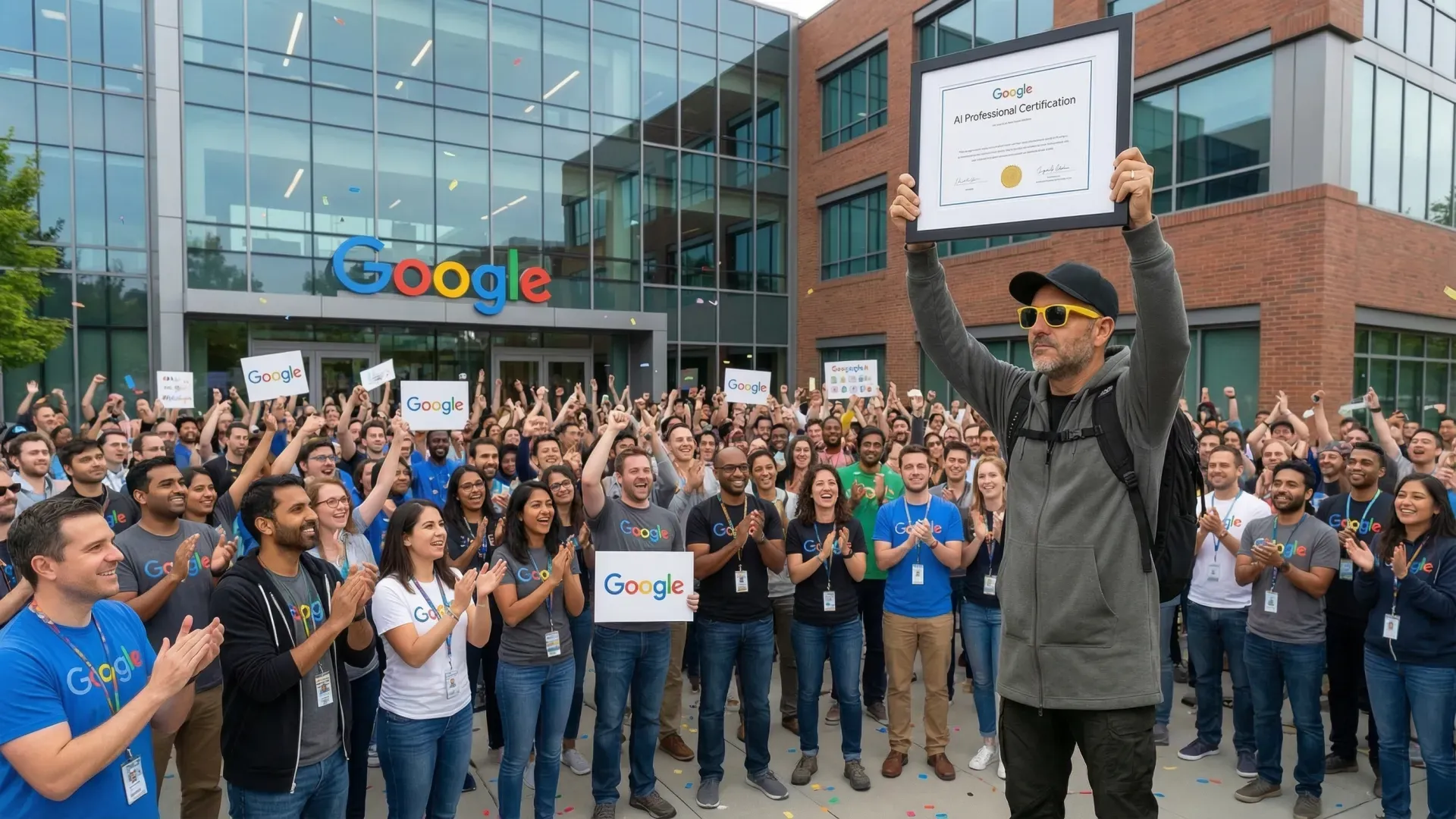
Here is where I feel like a certification can help. If you have two people who know exactly the same thing, but one has a badge from a tech giant like Google, the world tends to weigh that person a little more heavily. I wanted the sticker for the suitcase, even if I already knew the route.
What should you expect when taking Google’s AI Professional certification?
The certification is marketed as an eight-hour commitment. I finished it in four. I didn't score below a 100% on a single module, even the ones I skimmed. After all, this was about the fundamentals.
The curriculum is broken down into seven specific modules that aim to move you from a "simple task completer" to a "professional collaborator." Here is how Google organizes the journey:
- AI Fundamentals (3 hours): The foundational layer.
- AI for Brainstorming and Planning (1 hour): Moving from ideas to action.
- AI for Research and Insights (1 hour): Digging into data.
- AI for Writing and Communicating (1 hour): Refining your message.
- AI for Content Creation (1 hour): Where most creatives live.
- AI for Data Analysis (1 hour): Using AI to find the signal in the noise.
- AI for App Building (2 hours): The final step into "vibe coding."
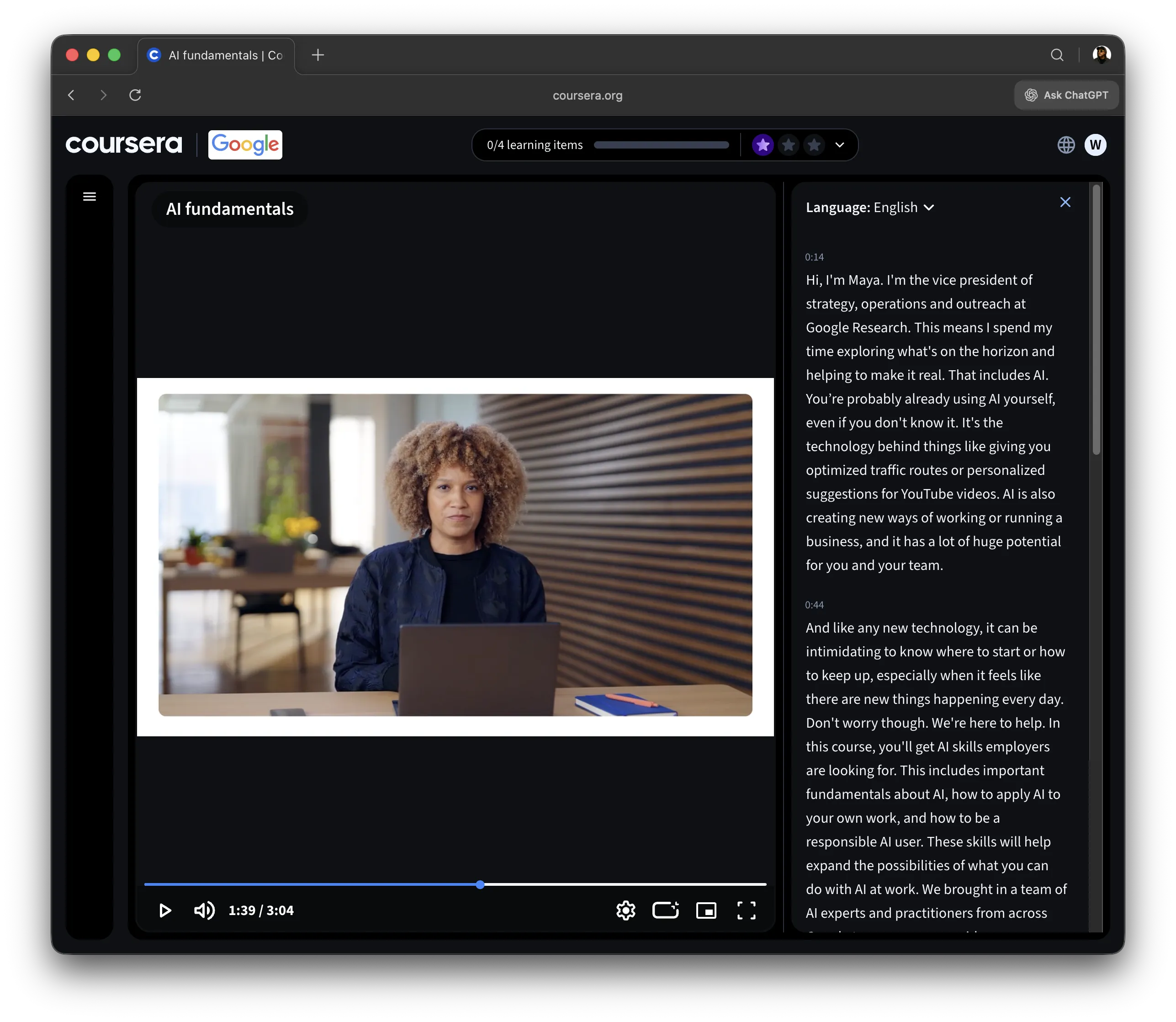
The course is very video-driven, featuring polished, professional talking heads. But, there was a glaring irony in a tech giant teaching AI fundamentals through traditional, human-centric video lectures. To be honest, it felt pretty sanitized to me.
Why wasn't Gemini teaching the course? Why wasn't the experience conversational? Most corporate training feels like it’s being presented by people who want to assure you that everything is fine and "human-in-the-loop" is the only way forward. But the right people—The Daring Creatives—don’t want sanitized. We want to see the weird stuff. We want output that looks like it was written by a machine because that’s the whole point of the tool.
Where did I find the most value in this certification?
Despite my gripes with the "talking head" format, the course does focus on high-utility skills. One of the primary promises is learning to build custom apps to solve unique workplace challenges with no coding experience required.
This leads directly into what I consider the "diamond in the rough" for this course: Google AI Studio.
For a long time, I’ve been trying to build my own environment for AI applications—a place where I could tinker and build. I’ve been waiting for a solution that didn’t require a massive technical setup I wasn't equipped to handle.
As it turns out, Google AI Studio is exactly what I was trying to build for myself. It’s the "vibe coding" environment I’ve been waiting for. It just works. Finding that tool, along with some nuanced features in NotebookLM and Gemini’s integration into workspace tools (like using AI for Data Analysis directly in Sheets), made the four hours feel worth it.
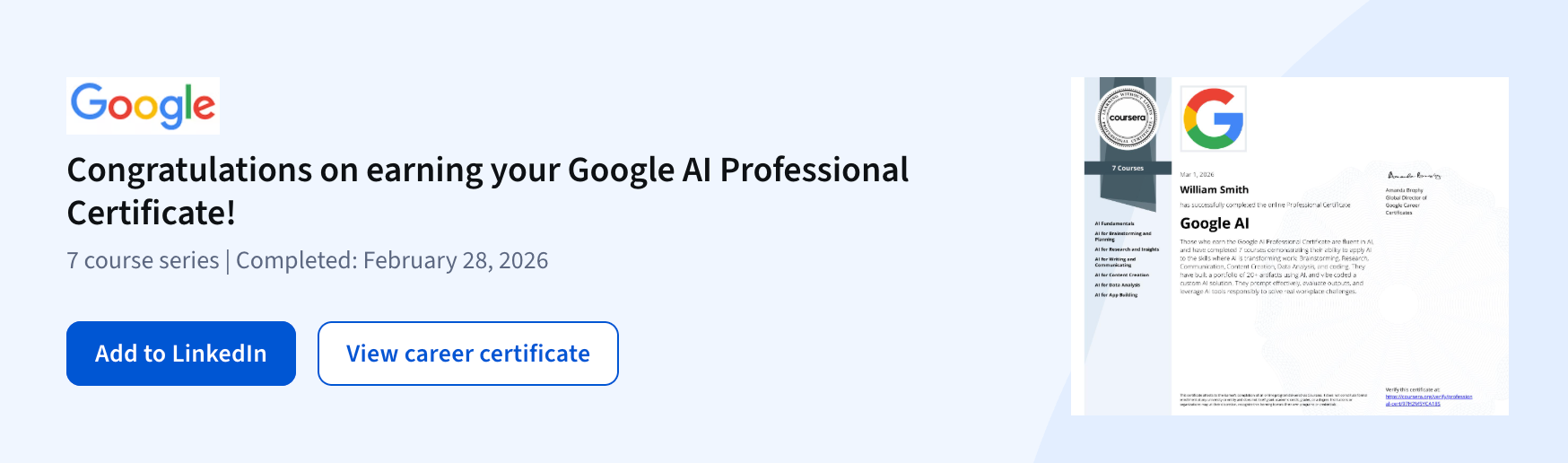
Does this certification actually matter for “The Daring Creative"?
Is it worth it?
If you’re looking for a creative spark or a deep dive into the "bizarre" potential of generative art, probably not. But if you need to bridge the gap between your "Internet-taught" reality and a professional resume, it’s a low-cost way to do it (free with a Coursera subscription which I believe cost me $50).
You'll gain skills in everything from Machine Learning and Project Management to Content Creation and Responsible AI.