
// SYSTEM: DIGEST // LIVE
AI WORKFLOW
OPINION
TUTORIALS
ChatGPT
ChatGPT
William Smith
William
CONVERSATIONS WITH CODE

The Trade-Offs of Autonomy: Closing the Freelance Chapter

The biggest lie about freelancing is that it gives you freedom to create; mostly, it gives you administrative overhead. This piece explores the exhaustion of the freelance chapter and how AI is finally acting as the bridge to get our ideas out into the world.

Article Details Transparency Protocol v2.5
William 75%
Original Ideation, Source Material, Creative Direction, Structural Overrides, Final Polish
AI 25%
Structural Formatting, Initial Prose Drafting, Data Categorization, Synthesis
Stack: Gemini 3.1 Pro, Voice Note, ChatGPT for imagery, NotebookLM

I turned 51 in January, and if the last few years have taught me anything, it’s that being a freelancer is exhausting.

Technically, my freelance career ran from 2019 to 2025. What started as a podcast production venture, eventually took me into video and brand storytelling. I learned so much during this time, and experienced so many great things. I still operate somewhat like a freelancer today, but in terms of my future trajectory, I’ve stepped back from taking on short-term projects. For the last 2 years, I've been documenting the story of a master sculptor living and working in Portland, OR.

When I look back at that era, I realize how difficult life really was. I take on a mountain of responsibilities—business development, constant self-promotion, administrative overhead, and the dread business tax—without any safety or security for myself or my family.

It's hard to make friends, or to maintain healthy relationships just due to the constant feeling of needing to be working.

The biggest draw for me was always the autonomy. That was the trade-off. But over the years, the value of that autonomy started to diminish under the weight of everything else. When you factor in all the peripheral tasks required to keep a freelance business alive, you end up spending shockingly little time doing the work you’re actually passionate about.

The "What If" of AI

Lately, I’ve been thinking about how different things might have been if AI had arrived just a few years sooner.

Today, I have a well-oiled system for building content for The Daring Creatives. If I’d had this kind of system back when I was juggling clients and constantly hunting for the next opportunity, the freelance grind might have been sustainable.

Shipping Ideas Over Perfecting Words

Another huge benefit to utilizing AI now is for writing. Do I love writing? No, I don't. But I love seeing my ideas read and utilized. You're reading my thoughts, synthesized while on a walk at night on a Sunday. It's written, but not entirely by me.

But, I digress.

Writing is a lightweight, low-friction way to get thoughts and ideas out into the world. My favorite way to write, is to tell a story. To be a good storyteller, you have to pack a lot of detail, context, and emotion into how you describe things. Writing forces me to keep that imaginative muscle strong.

That’s where AI comes in for me now. It acts as a bridge. It allows me to document my thoughts, maintain a robust publishing schedule, and reach more people.

The Freedom to Walk and Work

Ultimately, instead of dwelling on the timing, I’m just deeply grateful for the technology we have in our hands right now. AI has stripped away some of the bullshit, letting me focus entirely on the parts of the process I actually want to do. It means I can be out going on a walk—moving, thinking, and doing the things that keep me grounded—while still actively creating and building. It’s a shift from being tethered to a desk and staring at a blank screen to finally having the freedom to just let the ideas flow naturally.

← Back to Digest

The Trade-Offs of Autonomy: Closing the Freelance Chapter

The biggest lie about freelancing is that it gives you freedom to create; mostly, it gives you administrative overhead. This piece explores the exhaustion of the freelance chapter and how AI is finally acting as the bridge to get our ideas out into the world.

The Trade-Offs of Autonomy: Closing the Freelance Chapter
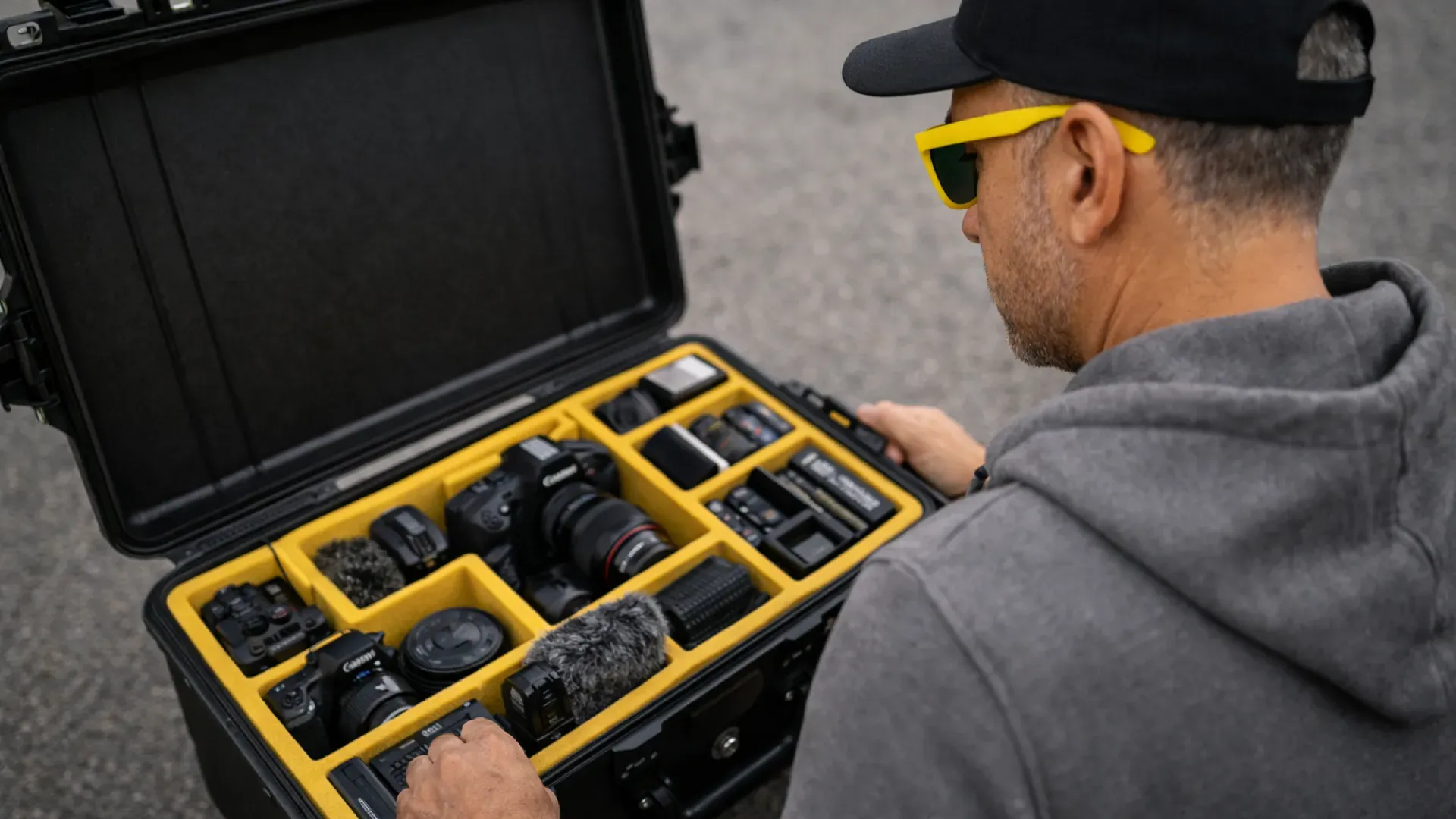
An over the shoulder shot of the man in yellow sunglasses closing a pelican case full of video equipment including canon cameras, lenses, accessories. The inside of the case has a yellow foam divider. Place the man in yellow sunglasses on the right third of the 1920x1080 composition. High visual quality, depth of field, low background noise.
Article Details Transparency Protocol v2.5
William 75%
Original Ideation, Source Material, Creative Direction, Structural Overrides, Final Polish
AI 25%
Structural Formatting, Initial Prose Drafting, Data Categorization, Synthesis
Stack: Gemini 3.1 Pro, Voice Note, ChatGPT for imagery, NotebookLM

I turned 51 in January, and if the last few years have taught me anything, it’s that being a freelancer is exhausting.

Technically, my freelance career ran from 2019 to 2025. What started as a podcast production venture, eventually took me into video and brand storytelling. I learned so much during this time, and experienced so many great things. I still operate somewhat like a freelancer today, but in terms of my future trajectory, I’ve stepped back from taking on short-term projects. For the last 2 years, I've been documenting the story of a master sculptor living and working in Portland, OR.

When I look back at that era, I realize how difficult life really was. I take on a mountain of responsibilities—business development, constant self-promotion, administrative overhead, and the dread business tax—without any safety or security for myself or my family.

It's hard to make friends, or to maintain healthy relationships just due to the constant feeling of needing to be working.

The biggest draw for me was always the autonomy. That was the trade-off. But over the years, the value of that autonomy started to diminish under the weight of everything else. When you factor in all the peripheral tasks required to keep a freelance business alive, you end up spending shockingly little time doing the work you’re actually passionate about.

The "What If" of AI

Lately, I’ve been thinking about how different things might have been if AI had arrived just a few years sooner.

Today, I have a well-oiled system for building content for The Daring Creatives. If I’d had this kind of system back when I was juggling clients and constantly hunting for the next opportunity, the freelance grind might have been sustainable.

Shipping Ideas Over Perfecting Words

Another huge benefit to utilizing AI now is for writing. Do I love writing? No, I don't. But I love seeing my ideas read and utilized. You're reading my thoughts, synthesized while on a walk at night on a Sunday. It's written, but not entirely by me.

But, I digress.

Writing is a lightweight, low-friction way to get thoughts and ideas out into the world. My favorite way to write, is to tell a story. To be a good storyteller, you have to pack a lot of detail, context, and emotion into how you describe things. Writing forces me to keep that imaginative muscle strong.

That’s where AI comes in for me now. It acts as a bridge. It allows me to document my thoughts, maintain a robust publishing schedule, and reach more people.

The Freedom to Walk and Work

Ultimately, instead of dwelling on the timing, I’m just deeply grateful for the technology we have in our hands right now. AI has stripped away some of the bullshit, letting me focus entirely on the parts of the process I actually want to do. It means I can be out going on a walk—moving, thinking, and doing the things that keep me grounded—while still actively creating and building. It’s a shift from being tethered to a desk and staring at a blank screen to finally having the freedom to just let the ideas flow naturally.