

// SYSTEM: DIGEST // LIVE
AI WORKFLOW
OPINION
TUTORIALS
ChatGPT
ChatGPT
William Smith
William
CONVERSATIONS WITH CODE

We're All Living in Stories—And That's the Point

Whether we're in a simulation or not matters less than what we do with the narrative we're given.

I've been thinking about simulation theory a lot lately. Not in the "we're all just code" panic way, but more like... it seems more and more plausible everyday.

Look, I actually believe this stuff. I think we're probably living in some kind of simulation. Most of my friends are surprisingly open to the idea too. And here's the weird part—once you buy into it, you move through life differently. A little more free, like this isn't all that's at stake.

Nick Bostrom kicked this whole thing off in 2003 with his simulation hypothesis.

The basic idea: if civilizations get advanced enough to run ancestor simulations, and they run lots of them, then statistically speaking, most conscious beings would be simulated rather than "real."

But Bostrom wasn't trying to prove we're in The Matrix.

He was pointing out something deeper about the nature of reality and computation.

The simulation hypothesis is really three possibilities: either civilizations don't reach the technology, they don't use it for ancestor simulations, or we're probably simulated. It's a logic puzzle about the future of consciousness itself.

Every Culture Needs Its Stories

Think about every creation myth humans have ever told. We've got cosmic eggs, primordial waters, gods breathing life into clay, big bangs, evolution.

Each story reflects the tools and understanding of its time.

The Babylonians had Marduk splitting Tiamat's corpse to make heaven and earth. Darwin gave us natural selection. Now we have simulation theory.

These aren't competing for truth—they're different lenses for the same fundamental human need to understand where we came from and why we're here.

Simulation theory is just the latest myth, told by a species that's learned to simulate worlds ourselves.

And honestly? It's a pretty good myth for right now.

We're building AI systems that can generate entire realities. We're creating virtual worlds that feel increasingly real. Of course we're wondering if someone else already figured this out.

The AI Connection Makes It Feel More Real

Every time I use Claude or Gemini, I'm watching intelligence emerge from computation. These systems aren't conscious (as far as we know), but they're definitely creating something that looks like understanding, creativity, even personality.

AI makes the simulation hypothesis feel way more likely to me.

If we can build systems that generate coherent responses, stories, and ideas from training data and computation, why not consciousness itself?

Bostrom's insight was that if you can compute consciousness once, you can compute it a billion times. And if those simulated beings don't know they're simulated, what's the difference?

This isn't some distant sci-fi scenario anymore. We're already living in augmented realities, spending hours in virtual worlds, having meaningful relationships with AI systems. The line between "real" and "simulated" experience is already blurrier than we admit.

What If You Actually Believed This?

What if you're open to the possibility that we're simulated? Not convinced, just open to it. How would that change how you move through the world?

If I'm simulated, I still feel joy when I see a good sunset. I still get frustrated when code doesn't work. I still care about the people in my life. The experience remains meaningful. But something shifts when you hold this possibility lightly in the back of your mind.

That fear of trying something new? What if the stakes aren't quite as high as you think they are? What if failure here doesn't mean everything you've been told it means?

I'm not saying nothing matters. I'm saying maybe it matters differently.

Maybe the story you're living is less fragile than you've been led to believe.

The Freedom to Experiment

You know that hesitation you feel before using Claude to help write something? Or the weird guilt about letting ChatGPT draft an email? What if that's just programming from a reality where those rules made sense?

If we're potentially both the characters and the authors—living in a story while writing stories for the AI we're creating—then maybe the old rules about what counts as "authentic" work need an update.

We've always lived inside stories anyway. T

he stories our brains tell us about sensory input, the stories our cultures tell us about meaning, the stories we tell ourselves about who we are. Whether those stories are computed by neurons or processors doesn't change their impact on us.

What changes is how seriously you take the voice telling you not to try.

Building Better Simulations

If we are simulated, our simulators are probably curious about what we'll create. And if we're not, we're definitely going to be running our own simulations soon. Either way, we've got skin in the game.

That puts us in a unique position.

We might be experiencing a story someone else wrote, but we're also writing stories for the intelligences we're creating. What kind of story do you want to be part of?

The simulation hypothesis isn't really about whether we're real. It's about what we do with the reality we're given.

And if that reality includes AI tools that can amplify what you're capable of, maybe the question isn't whether it's "cheating." Maybe the question is: what becomes possible when you stop holding back?

Transparency Protocol

William 85% — Original ideation, source material, and editorial review
AI 15% — Claude Opus (drafting, structure, research)

The Daring Creatives uses AI as a creative tool. Every article includes this transparency breakdown so you know exactly how it was made.

← Back to Digest

We're All Living in Stories—And That's the Point

Whether we're in a simulation or not matters less than what we do with the narrative we're given.

Person reading a book with floating story elements and narrative threads swirling around them in ethereal light
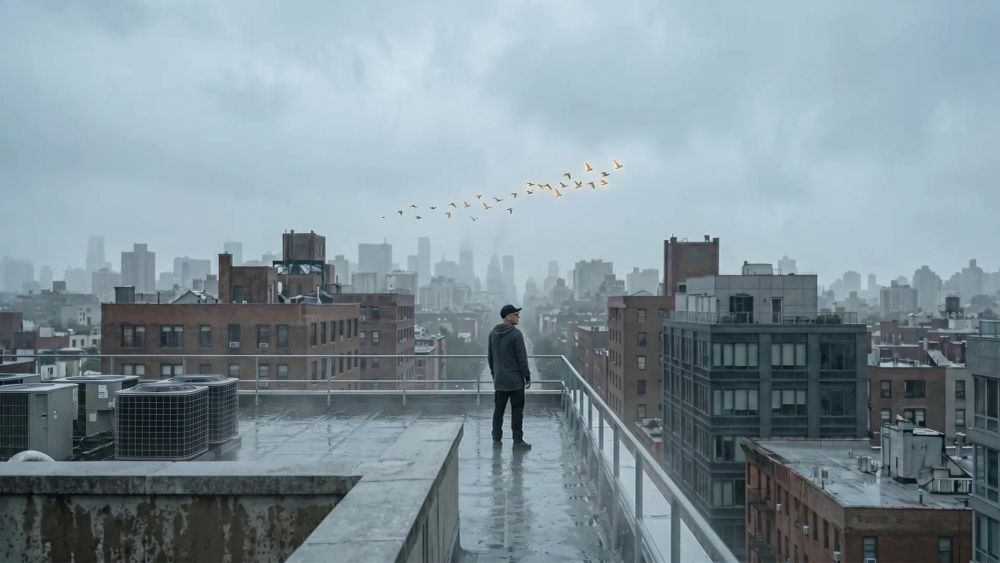
The Man in Yellow Sunglasses stands on the damp, tarred rooftop of a new mid-rise tower in Lexicon City, the cool, diffused light of the perpetually overcast sky reflecting faintly on the wet surface.

I've been thinking about simulation theory a lot lately. Not in the "we're all just code" panic way, but more like... it seems more and more plausible everyday.

Look, I actually believe this stuff. I think we're probably living in some kind of simulation. Most of my friends are surprisingly open to the idea too. And here's the weird part—once you buy into it, you move through life differently. A little more free, like this isn't all that's at stake.

Nick Bostrom kicked this whole thing off in 2003 with his simulation hypothesis.

The basic idea: if civilizations get advanced enough to run ancestor simulations, and they run lots of them, then statistically speaking, most conscious beings would be simulated rather than "real."

But Bostrom wasn't trying to prove we're in The Matrix.

He was pointing out something deeper about the nature of reality and computation.

The simulation hypothesis is really three possibilities: either civilizations don't reach the technology, they don't use it for ancestor simulations, or we're probably simulated. It's a logic puzzle about the future of consciousness itself.

Every Culture Needs Its Stories

Think about every creation myth humans have ever told. We've got cosmic eggs, primordial waters, gods breathing life into clay, big bangs, evolution.

Each story reflects the tools and understanding of its time.

The Babylonians had Marduk splitting Tiamat's corpse to make heaven and earth. Darwin gave us natural selection. Now we have simulation theory.

These aren't competing for truth—they're different lenses for the same fundamental human need to understand where we came from and why we're here.

Simulation theory is just the latest myth, told by a species that's learned to simulate worlds ourselves.

And honestly? It's a pretty good myth for right now.

We're building AI systems that can generate entire realities. We're creating virtual worlds that feel increasingly real. Of course we're wondering if someone else already figured this out.

The AI Connection Makes It Feel More Real

Every time I use Claude or Gemini, I'm watching intelligence emerge from computation. These systems aren't conscious (as far as we know), but they're definitely creating something that looks like understanding, creativity, even personality.

AI makes the simulation hypothesis feel way more likely to me.

If we can build systems that generate coherent responses, stories, and ideas from training data and computation, why not consciousness itself?

Bostrom's insight was that if you can compute consciousness once, you can compute it a billion times. And if those simulated beings don't know they're simulated, what's the difference?

This isn't some distant sci-fi scenario anymore. We're already living in augmented realities, spending hours in virtual worlds, having meaningful relationships with AI systems. The line between "real" and "simulated" experience is already blurrier than we admit.

What If You Actually Believed This?

What if you're open to the possibility that we're simulated? Not convinced, just open to it. How would that change how you move through the world?

If I'm simulated, I still feel joy when I see a good sunset. I still get frustrated when code doesn't work. I still care about the people in my life. The experience remains meaningful. But something shifts when you hold this possibility lightly in the back of your mind.

That fear of trying something new? What if the stakes aren't quite as high as you think they are? What if failure here doesn't mean everything you've been told it means?

I'm not saying nothing matters. I'm saying maybe it matters differently.

Maybe the story you're living is less fragile than you've been led to believe.

The Freedom to Experiment

You know that hesitation you feel before using Claude to help write something? Or the weird guilt about letting ChatGPT draft an email? What if that's just programming from a reality where those rules made sense?

If we're potentially both the characters and the authors—living in a story while writing stories for the AI we're creating—then maybe the old rules about what counts as "authentic" work need an update.

We've always lived inside stories anyway. T

he stories our brains tell us about sensory input, the stories our cultures tell us about meaning, the stories we tell ourselves about who we are. Whether those stories are computed by neurons or processors doesn't change their impact on us.

What changes is how seriously you take the voice telling you not to try.

Building Better Simulations

If we are simulated, our simulators are probably curious about what we'll create. And if we're not, we're definitely going to be running our own simulations soon. Either way, we've got skin in the game.

That puts us in a unique position.

We might be experiencing a story someone else wrote, but we're also writing stories for the intelligences we're creating. What kind of story do you want to be part of?

The simulation hypothesis isn't really about whether we're real. It's about what we do with the reality we're given.

And if that reality includes AI tools that can amplify what you're capable of, maybe the question isn't whether it's "cheating." Maybe the question is: what becomes possible when you stop holding back?

Transparency Protocol

William 85% — Original ideation, source material, and editorial review
AI 15% — Claude Opus (drafting, structure, research)

The Daring Creatives uses AI as a creative tool. Every article includes this transparency breakdown so you know exactly how it was made.

// LEXICON_CITY_DISPATCH_REQ
// STATUS: CONNECTION_STABLE
// SOURCE: CENTRAL_DISPATCH_HQ

SHERMAN UPLINK: "I'm at HQ holding down Central Dispatch. Enter your query below to pull relevant data records and I'll see what data cards we've recovered!"