
On Wednesday, July 15, two episodes of a preschool series called Ozzy Fox appeared on YouTube. No press release. No launch coverage. The CEO of the studio behind it marked the occasion with a LinkedIn post, and that was about it.
Which is a strange way to launch what Cartoon Brew reports is Disney Jr's first preschool series made for YouTube — co-developed with Animaj, a company whose entire public identity is AI-accelerated animation. The two episodes pulled roughly 800,000 combined views in their first two days, and they're past 1.4 million as I write this.
Most of the studios we cover here are one person and a stack of subscriptions. Animaj is the other end of the spectrum: 85 million dollars in funding, offices in London, Paris, and Madrid, and ownership of Pocoyo — the kids' franchise it bought in 2023 and then used as training data. It's the first studio deconstruction we've done, and Animaj makes it easy in one specific way: they publish their pipeline like an engineering blog.
The studio that bought its own training data
Animaj was founded in May 2022 by Sixte de Vauplane and Grégory Dray, an ex-YouTube executive. The move that defines them came a year later: they acquired Pocoyo, the Spanish preschool franchise, outright. They now co-own Maya the Bee with Studio 100, run the HeyKids and Kidibli channels, and claim over 22 billion YouTube views a year across their properties. Two-thirds of their revenue reportedly comes from YouTube.
Buying Pocoyo got them a beloved character. It also got them four seasons of professionally animated footage they own outright — which turned out to be the foundation for everything they built next.
De Vauplane has been open about the ambition. He told Sifted in an interview that the goal is building kids' franchises on the scale of Pokémon, Peppa Pig, and PAW Patrol — his framing was that they're trying to build what Disney built a century ago, on AI-era economics. The backers apparently agree: the $85M round announced in June 2025 was led by HarbourView and Bpifrance, and the company has since joined both the Disney Accelerator and Google's AI Futures Fund.
The pipeline they actually published
Here's what makes Animaj coverable in a way most AI studios aren't. In November 2024 they unveiled a system called Sketch-to-Motion and wrote up how the first model works in real technical detail.
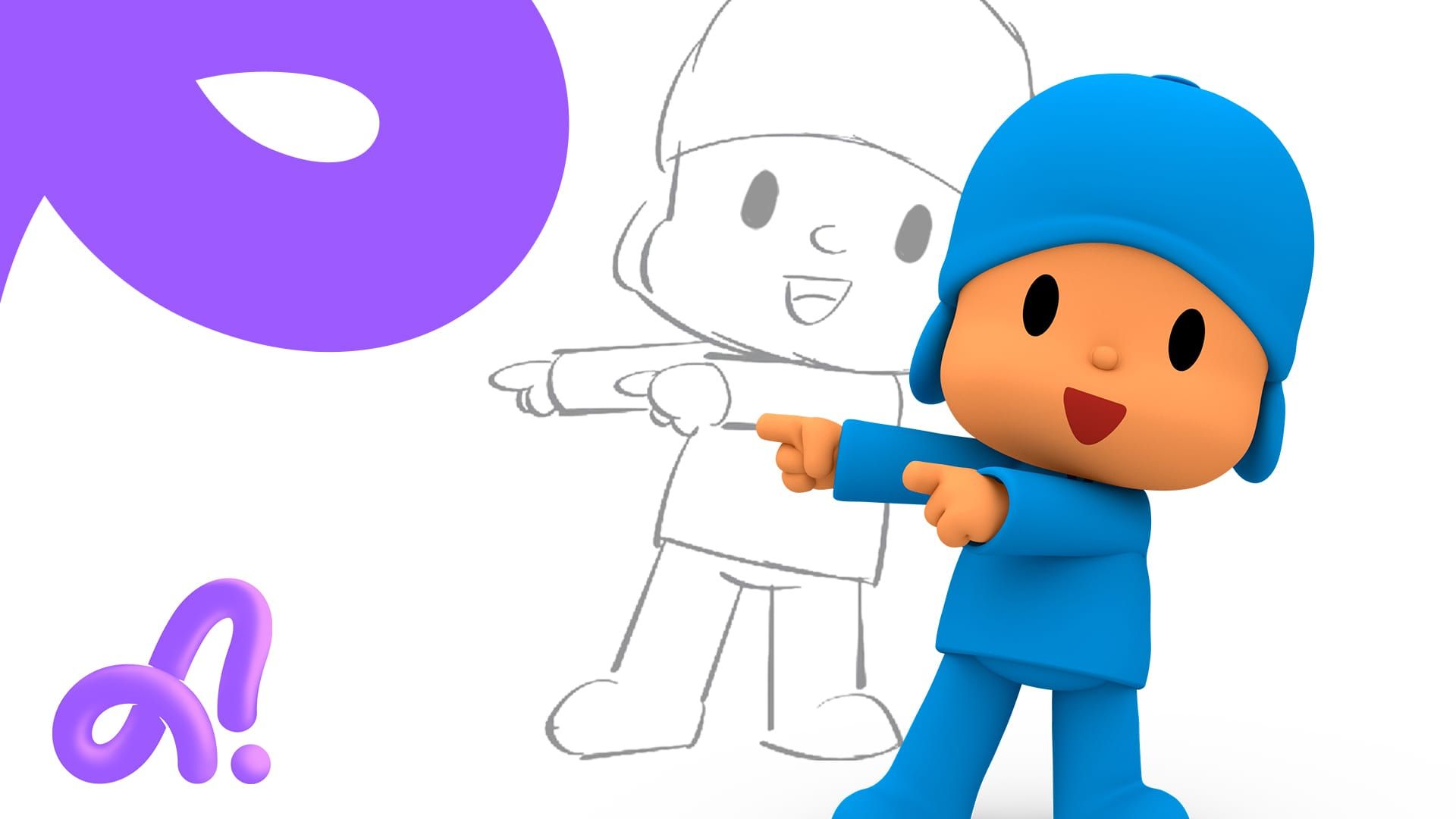
The system is two models in sequence. Sketch-to-Pose takes a storyboard artist's rough drawing and predicts the values of the character's 3D rig — head rotation, hand positions, elbow angles — so the sketch becomes a posed character without an animator translating it by hand. It was trained on more than 300,000 sketch-and-pose pairs mined from four full seasons of Pocoyo. Their published numbers: posing a two-minute animation dropped from 14-plus hours to about six.
The second model, Motion In-Betweening, fills the frames between key poses. It's a bidirectional LSTM trained on 298 Pocoyo episodes — over 770,000 frames — and it learned the animation-school fundamentals from the footage itself: ease-in and ease-out, anticipation, overshoot. That step went from 339 minutes to 113 for a two-minute piece.
The division of labor in their telling: humans keep the scripts, the storyboards, the key creative poses, and the final refinement pass. The models do the translation and the filling-in. De Vauplane's line at the Sketch-to-Motion unveiling: "Sketch-to-Motion changes everything about how we create animations. It's not just faster; it's smarter. Artists now have the freedom to iterate endlessly and see their ideas come to life instantly. This tool isn't replacing creative artists—it's empowering them."
Their stated productivity target puts a number on the ambition: from roughly 30 seconds of finished animation per animator per day toward 500 seconds within three years.
So what is Ozzy Fox?
A music-driven preschool show about a five-year-old fox whose imagination turns chores into games — cleanup songs, potty training, that register. The pedigree is legitimately strong: it was created by Jennifer Oxley, whose credits include Peg + Cat and Wonder Pets!, and developed by Guillermo García-Carsí, the co-creator of Pocoyo himself, who's been Animaj's creative director since 2023.
C21Media reports it as jointly developed by Disney Jr and Animaj — a partnership that grew out of Animaj's slot in the 2025 Disney Accelerator — with a broader platform rollout planned in the coming months. The episodes themselves run about two and a half minutes.
Neither company has said what the AI did
Here's the detail Cartoon Brew zeroed in on, and the reason this launch is interesting beyond preschool music videos: neither Disney nor Animaj has said what role Animaj's AI tools actually played in making Ozzy Fox.
That's worth sitting with. Animaj publishes engineering posts about its models. De Vauplane talks about AI acceleration in every interview. The company's own positioning line — verbatim from their site — is that they're "pioneering a new category of studios where creators lead, data informs creation, AI accelerates production, and distribution is built in from day one." And yet the one production with Disney's name on it arrived with no methodology talk at all. I can't tell you whether Sketch-to-Motion touched this show, because nobody involved has said.
Cartoon Brew reads the silence as part of a trend: as these tools normalize inside studios, disclosure is shrinking, not growing. Two years ago an AI-assisted show was an announcement. Now it's a quiet Wednesday upload.
The critics filled the vacuum anyway. Kotaku's write-up was scathing about the look of the episodes — too smooth, too shiny, background details that don't hold up. Creative Bloq's angle was that the criticism itself is driving the view counts. For what it's worth, the loudest objections so far have come from industry press, and the view counters keep climbing.
What's verifiable, and what to watch
To be fair to the humans in this pipeline: a show created by the person behind Wonder Pets! and developed by Pocoyo's co-creator is a real creative team, whatever the production stack looks like. The steelman for Animaj's approach is in their own published numbers — the models handle posing and in-betweening, the stages animators tend to describe as labor rather than authorship. Whether that's how it played out on this particular show is exactly the thing nobody has disclosed.
What happens next is checkable. Pocoyo's sixth season runs on the published pipeline. Maya the Bee digital content starts this year. Ozzy Fox has its broader rollout coming, and the channel sits at three videos as I write this.
For the other end of the production-scale spectrum, our Creator Stories collection covers the one-person versions of this same story — including Neural Viz's one-person TV network, which gets to a finished episode with a webcam and about a hundred bucks a month.