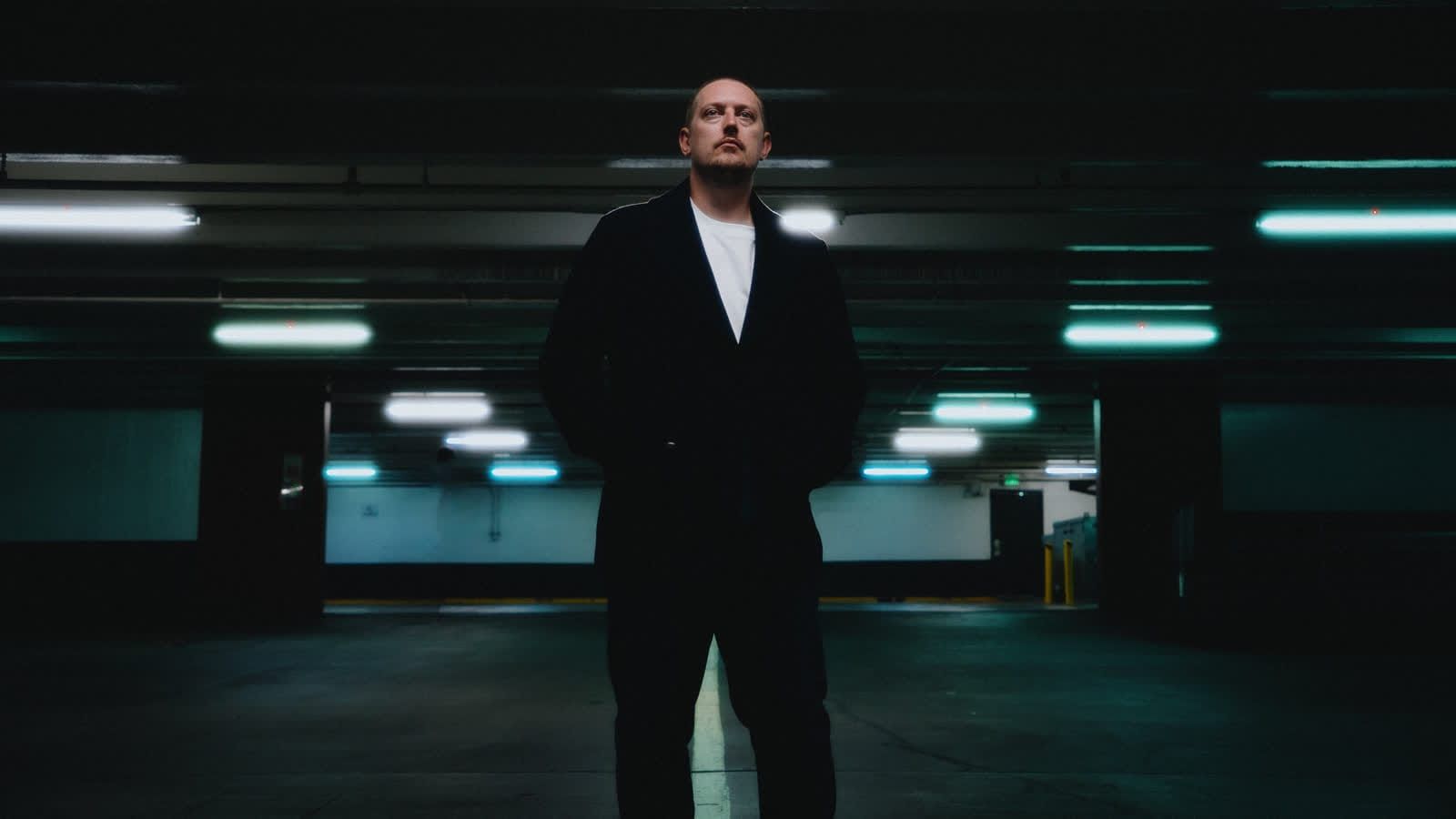

imoliver makes indie-pop, electro-soul, and the occasional country-rap track, and he'll tell you up front what he can't do. "I have no musical talent at all. I can't sing, I can't play instruments, and I have no musical background at all," he told the Associated Press. What he does have: his own lyrics, a visual design background, and enough patience to generate a hundred versions of a song before one feels right.
In July 2025 that combination made him the first person a traditional record label ever signed for making music with an AI platform. Hallwood Media — the company run by former Geffen Records president Neil Jacobson — announced the deal and billed him as the most-streamed creator on Suno. His single "Stone" had over 3 million plays on the platform when the deal landed. The industry term Hallwood invented for the job: "AI music designer."
The lyrics stay human
imoliver is Oliver McCann, 37, from the UK, and his path into this was a designer's, not a musician's. Per the AP, he started experimenting with AI to see if it could boost his creativity and "bring some of my lyrics to life" — the words existed before the tool did.
He keeps writing them himself for a practical reason, not a sentimental one: "AI lyrics tend to come out quite cliche and quite boring."
So the split is clean. He writes the words, then uses Suno to shape them into songs — his own site describes it as "making AI music as a craft, not slop." He also directs his own videos and handles his own marketing, per his press kit.
A hundred takes per song
The most concrete process detail on record comes from that AP feature: McCann will often create up to 100 different versions of a song, prompting and re-prompting before he's satisfied. That's the job — not typing "write me a hit" once, but generating, listening, rejecting, adjusting, and generating again until the take exists. Anyone who's iterated on AI images knows exactly this loop; he's running it on audio.
Jacobson's pitch for why that's worth a record deal: "He's a music designer who stands at the intersection of craftwork and taste. As we share his journey, the world will see the dexterity behind his work and what makes it so special."
McCann's own read on the moment, from the signing announcement: "Signing with Hallwood is a huge moment, not just for me, but for the future of music. It's a sign the industry is ready to embrace new ideas and new ways of creating. This isn't about replacing artists, it's about expanding what's possible."
What shipped since
Hallwood re-released "Stone" on all platforms on August 8, 2025, and the debut album "Io" followed on October 24 — 16 tracks, a mix of reimagined older songs and new ones. Singles kept arriving between the two: "Waiting for the Weekend" in September, "Bury Me with My Phone" in October. His Suno profile stays active alongside the label releases; the press kit's running counters put his total streams there past 7.8 million.
Where he thinks it goes, from the same AP interview: "I think we're entering a world where anyone, anywhere could make the next big hit… As AI becomes more widely accepted among people as a musical art form, I think it opens up the possibility for AI music to be featured in charts."
He said that in August 2025. By November, another Suno-built act — Xania Monet, whose process we've also profiled — was on a Billboard radio chart. The world he described showed up fast.