
Léo Cannone keeps telling his stories from a kid's point of view.
In 2024 it was a short about where grandmothers go when they get lost, told through a child's eyes. In 2025 it was Costa Verde, an eleven-minute film about a boy in 1990s Corsica who unboxes his first camcorder and points it at his grandparents' summer. And since August 2026 it's La Nonna Gigante, a serialized story on Instagram about a boy named Bruno Serra who's making a documentary about his grandmother. She happens to be a giant.
Léo is a French director and photographer based in Paris and Marseille, and he posts as @leo_cannone on Instagram. He's worth studying because the child's point of view is his storytelling device, and because he's unusually open about the order he works in: story and storyboard first, a real camera whenever he can use one, and AI for the parts he can't shoot.
La Nonna Gigante goes out one episode at a time
Episode 1 went up on Léo's Instagram on August 12, tagged in Sardinia, with a one-line setup: "Young Bruno Serra has decided to spend his summer making a film about his extraordinary grandmother."
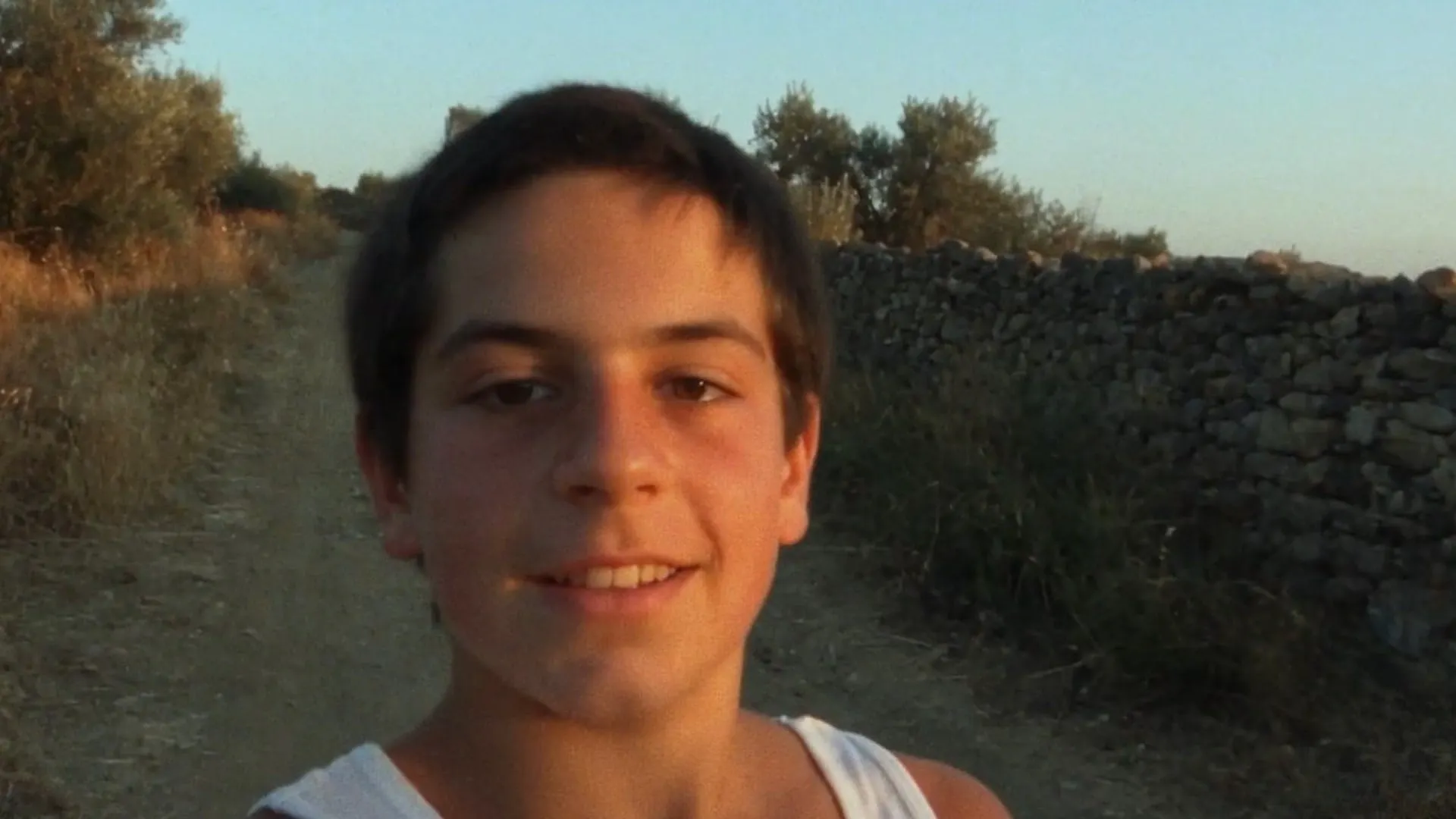
It runs about a minute and a half, framed 4:3 like a home camcorder, with yellow subtitles. Bruno is a teenager in a white tank top who talks straight into his own lens, out in dry summer countryside. Nonna is a giant.
Léo Cannone (@leo_cannone) — La Nonna Gigante, episode 1, on Instagram
Since then the episodes have kept coming, numbered and titled like chapters: 02 First day at the sea, 03 Nonna mangiare, 04 The party!, 5 after the party, 6 the car. Bruno's own posts are hashtagged #documentary, which is how he'd file it.
Episode 1 carries Instagram's AI content label, and a lot of its comments, many in Italian, argue about that.
Bruno Serra has his own Instagram
In September the story moved partly out of Léo's feed. Bruno got an account, @bruno.serra_ on Instagram, and announced it in a collab post with Léo written in Bruno's voice: "Sono Bruno Serra, and I'm on Instagram now . I'm making a film about my Nonna Gigante."
Bruno's account bio is in the same half-Italian English and credits @leo_cannone. Episodes 2 through 5 went up there. In between them, Bruno posts the kind of stills a kid would post from his own shoot: "Beach day with Nonna," "Nonna is afraid of farfalles," "Nonna playing with cars."
La Nonna Gigante 02, "First day at the sea," posted to @bruno.serra_ — a series by Léo Cannone, on Instagram
This is the part of the format worth borrowing. The character who holds the camera also holds the account, so the posts between episodes are part of the story too.
Léo hasn't posted what La Nonna Gigante is made with, so the tools for the series are unknown. The newest post, "Time for a nap," went up on October 7, and the series is still running.
Costa Verde was the camcorder film first
Before Bruno there was Costa Verde. It premiered on Nowness's experimental strand in December 2025, produced by New Forest Film Co. with sound design by Vincent Blanot, per the credits on Nowness's Instagram post. It later turned up among the film winners on Runway's AIF 2026 page, credited to Léo Cannone & New Forest Film, in the same list as Robert Gaudette's A Face Only a Mother Could Love and Dorian & Daniel's The Well.
The boy in Costa Verde shoots everything on a small camcorder, so the film is in that format too: 4:3 inside the frame, overexposed, sun-bleached, slightly soft. A mermaid swims past the reeds. Butterflies settle on his grandmother's dress. A giant figure stands on a ridge at dusk.
He told Nowness what he was after:
"What interested me was not nostalgia as an aesthetic, but childhood as a way of perceiving. At that age, the magical and the ordinary coexist on the same plane. A mermaid and a bowl of cereal carry the same intensity. I wanted to capture that way of looking."
Nowness reports that the film was built from images generated in Midjourney and Minimax, working from real references: family photos, plus new photos he took of the Corsican landscape to match the plants, the colors and the light. Everything is AI except the final shot, which was filmed on a Fujifilm X100V-I.
So a film about a child's memory ends on the only frame he shot himself.
The grandmother story started when he was a teenager
The giant grandmothers go back further than Bruno. Léo's first AI short, Where Do Grandmas Go When They Get Lost?, was one of the ten finalists at Runway's AI Film Festival in 2024, screening in Los Angeles and at the Metrograph in New York.
When he finally posted it to Instagram that November, he explained where it came from:
"When I was a teenager, I dreamed of making this story into a film, telling myself it would be the one I'd create if I ever got the chance. A full-length movie was out of reach back then, but thanks to AI, I could finally bring it to life as a short film."
Léo Cannone (@leo_cannone) — Where Do Grandmas Go When They Get Lost?, on Instagram
His director's statement on the film's Labocine page lays out the order of operations. "It began traditionally with writing the scenario and creating a storyboard to outline the narrative structure." Images came from Midjourney and got refined in Photoshop. Animation was done in Runway and finished in After Effects.
"Despite the experimental workflow, I adhered to familiar techniques with classic editing and color grading."
The voice-over was recorded by an actress, Adele Escusa, and the music is by Vincent Blanot, who later did the sound design on Costa Verde.
He shoots first when he can
Not all of his work starts in a generator. For The Hidden Tremor, which also premiered on Nowness, he spent two months traveling through Indonesia, Thailand and Vietnam with his own camera, then used AI on the footage to bring out things he'd felt on location.
He described the method in the Instagram post announcing the premiere:
"Each image was captured with my own camera. From the very moment of framing, I composed with AI in mind, not to invent, but to later reveal or complete what I could already sense: the curve of a tree suggesting a figure, the silence of a cave that felt inhabited…"
He draws, too. His feed has sketchbook pages in watercolor pencil and ink that he animates, and one reel of his "magical sketchbook" credits Dreamina for the motion. His photography gets the same mix: in one January 2025 set from a mountain walk, some frames came from his Fuji and others from Midjourney.
Ocean View came out of Google's Flow Sessions
In January 2026 he released Ocean View, made during Google's Flow Sessions program with full access to Google Flow. His own synopsis on his portfolio site is one sentence: an old woman in the mountains murmurs that she has never seen the ocean, and her wooden chalet decides it's time for a journey.
When he shared it on Instagram, he pointed people at the end: "And don't miss the end credits, they ended up being my favorite part."
Photography and commercials came first
Before any of this, Léo was a photographer and a commercial director. His bio on the Feel production roster lists high-end, naturalistic spots for Hermès and Chandon, and says that background shaped his AI work. Feel also lists two current projects: Paradoxes, a hybrid live-action and AI series he's making with Pierre Zandrowicz for ARTE, and Google's in-house AI creator program.
What he's working on next
Bruno's summer is still going. Alongside it, in late September he posted a short test from a project he's wanted to make since childhood. "Little Nemo by Winsor McCay was my favorite book as a kid."
He called it a first exploration into Slumberland, and said he hopes it's the start of a much longer journey.
You can follow La Nonna Gigante on Bruno's account and Léo's Instagram, and watch more of his films on his Vimeo channel and his YouTube channel.