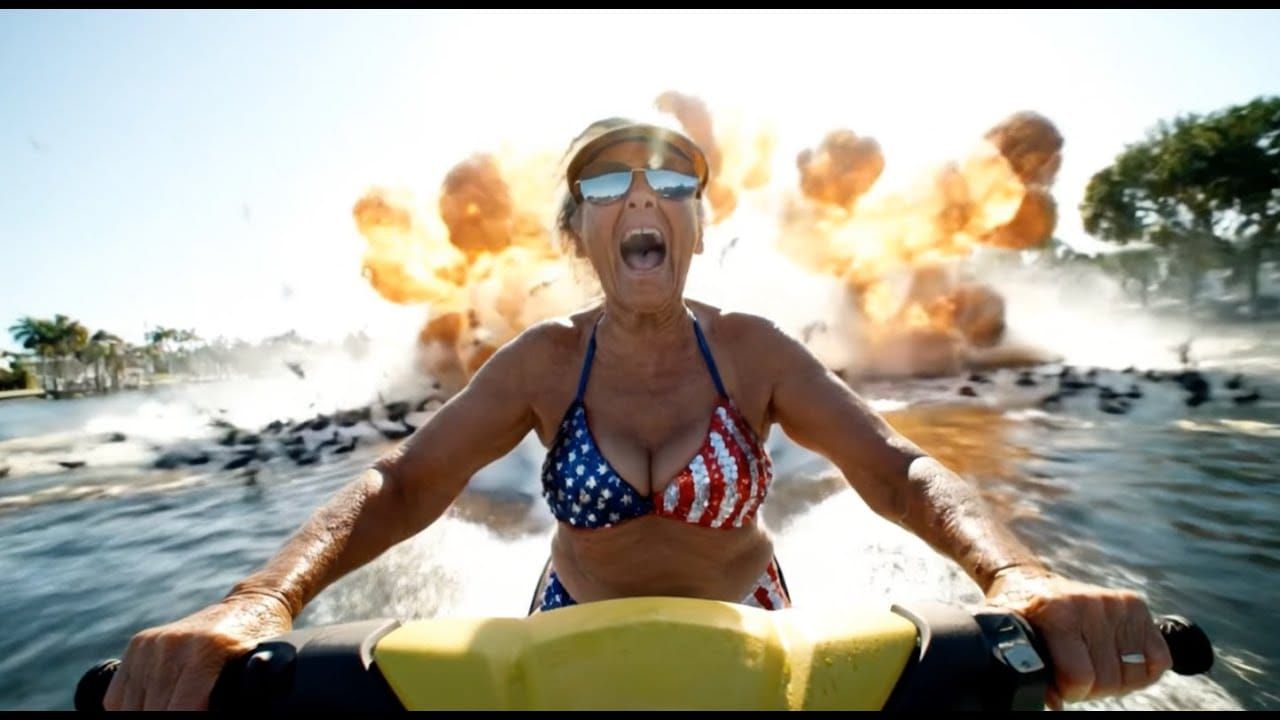

PJ Ace is the AI filmmaker behind the ad most people point to when they argue about whether AI commercials are actually here: the unhinged Kalshi spot that aired during Game 3 of the 2025 NBA Finals. Made with Google's Veo 3 for about $2,000 in AI production costs, idea to on-air in two to three days, working mostly alone. Within a week it had over 3 million views on Kalshi's X account.
The part that makes him worth profiling is what he did next: he posted the whole recipe.
The workflow, in his own words
PJ Ace is PJ Accetturo, a director with 15-plus years in commercials and TV before AI tools showed up — Toyota, Red Bull, the Atlanta Braves, and co-creating the animated series Ghosts of Ruin. After the Kalshi ad aired, he broke down the process in an X thread that NPR and Business Insider both picked apart.
The script comes first, co-written with an LLM: "I co-write with Gemini (or ChatGPT) asking it for ideas, picking the best ones, and shaping them into a simple script." For Kalshi, the client handed him lines of dialogue they wanted included, and he invented the characters to say them.
Then the script becomes prompts — with a constraint he's specific about: "I always tell it to return 5 prompts at a time — any more than that and the quality starts to slip." Each prompt describes its scene completely, as if Veo has no memory of the shot before or after it, which is what keeps characters and settings consistent.
Then volume. "This took about 300–400 generations to get 15 usable clips." When a generation misses, the prompt goes back into Gemini with a request for changes. The final edit and music happen in ordinary editing software.
The $500 spec ad that started it
Three weeks before Kalshi, he posted Puppramin — a fake pharmaceutical commercial for a pill that summons puppies. His caption on it, from the X post: "I used to shoot $500k pharmaceutical commercials. I made this for $500 in Veo 3 credits in less than a day. What's the argument for spending $500K now?"
That's the spec ad that reportedly got Kalshi's attention. But he pushes back on the idea that cheap means easy — "Just because this was cheap doesn't mean anyone can do it. I've been a director 15+ years." His take on where the leverage moved, via PetaPixel: "Right now the most valuable skill in entertainment and advertising is comedy writing."
Now it's an agency
He runs Genre AI, an AI-native ad agency built as "pods" of writers, directors, cinematographers, and editors with traditional film backgrounds. Per an interview with The brAIn, the client list grew to Popeyes, Qatar Airways, Oracle, and David Beckham's supplement brand IM8. The Popeyes job was an AI diss-track ad answering McDonald's Snack Wrap relaunch, built in about three days with Veo 3 and Suno.
The Qatar Airways job is the one that shows how far the workflow has evolved past "prompt and pray." Per his own case study, he made two ads in 14 hours aboard a live flight: reference photography of the real cabin ("CRITICAL in getting near-perfect details"), shots laid out in Figma, characters composited into base frames with Nano Banana over dozens of iterations, animation in Veo 3.1 — "Simple prompts work best" — and a Suno music bed that human musicians then customized.
What he says no to
He turned down a Super Bowl ad for a big brand because they wanted a tearjerker, and in his view the models can't deliver one yet — "AI is not meant for every campaign." The line from the same interview that sums up his position on why experienced directors aren't obsolete: "We cannot teach taste in a day."
He keeps publishing, though. The prompts, the budgets, the workflow changes — all of it lands in his newsletter, most recently guides to Seedance 2.0. For anyone building things with AI video, it's one of the few places where a working director shows the receipts while the work is still shipping.