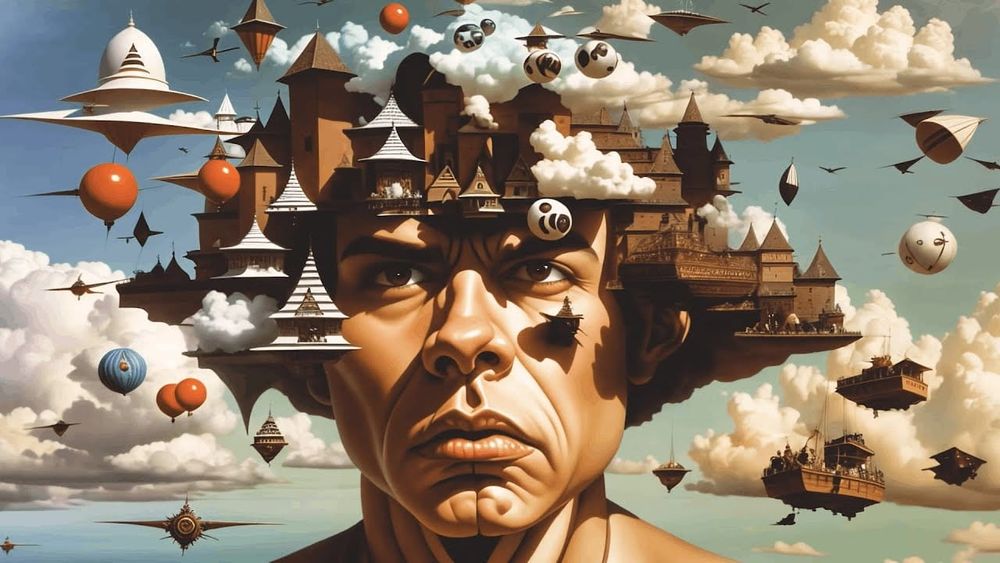
Julien Durand is a mechanical engineer by training — French-born, with a Master's from INSA Lyon — who also happens to run one of the more quietly striking AI art accounts on Instagram. Around 323,000 followers at @julienaiart. Work that pulls from cinematic sci-fi, dark fantasy, and superheroes rendered with the weight of oil painting. Not hobby-scale output. Not "I post when I feel like it" output.
The original handle was MidJourney Man — @midjourney.man — which is exactly what it sounds like. The handle changed as the tools did. The volume didn't drop.
The piece that won
"DREAMS" took the CivitAI Award in Project Odyssey Season 1. It's a short generative film — fully AI-produced — and it's the kind of thing that's easier to watch than to explain.
The win also landed him a judging seat on Project Odyssey 2025. So now Durand is reviewing the work instead of submitting it.
The actual toolstack
MidJourney handles initial image generation. ComfyUI is the control layer — compositing, workflow customization, the connective tissue that turns a static image into something with motion and intention. Kling AI and AnimateDiff handle the movement. Topaz Labs refines and upscales. Runway handles additional video output.
That's a full production pipeline, not a single-click setup. Each tool has its own logic and its own failure modes, and chaining them together into something coherent takes real time to learn.
A lot of what comes out the other end is cinematic video — pieces like "Neon Ghosts":
Durand has published 14 public ComfyUI workflows at comfy.org/workflows/julienaiart. That matters. Posting the work is one thing — sharing the method is something else. A lot of people in this space don't do it.
The full catalog lives at julienai.art. The "Fallen Heroes" series — retired superheroes in comedic, lived-in situations — ran well on Instagram. There's genuine warmth in it, which is not a given in AI-generated images that are trying to be cinematic.
Why the engineering background isn't incidental
There's a framing that treats the technical depth and the creative output as separate things — the engineering is the day job, the art is the real passion. I've had that framing. I don't think it fits here.
A ComfyUI node graph is a system. You're building pipelines — defining inputs, chaining outputs, specifying what each component does and what it hands off to the next. That's not a foreign concept to someone who has spent years working with mechanical systems and manufacturing workflows. The vocabulary is different. The mental model transfers directly.
When Durand publishes a workflow, it's typically a documented, shareable process that other people can actually learn from and run. That takes a particular kind of patience with systems — and with other people needing to understand them. That doesn't come from nowhere.
The fair counterargument
The tools are doing a lot. MidJourney and Kling AI can produce images and animations that would have required entire production teams not long ago. At 323,000 followers, some portion of that audience is responding to the sheer quality of what comes out of those tools — and honestly, fair enough. They're good tools.
When everyone has access to the same tools, the differentiator is what you actually make with them and whether it reads as distinctly yours. Looking through Durand's catalog, it does. That's harder to explain precisely than I'd like — but it's there.
What I keep thinking about
Durand does this alongside an engineering career. Not instead of it. The AI art world has a lot of dramatic pivot stories — people who left everything and went all-in. This is someone who just added something and kept going.
I keep coming back to the Fallen Heroes series specifically. There's something genuinely funny in those pieces, and funny is the hardest register to hit with AI-generated imagery. Everything wants to be epic. Making something that lands as warm and a little absurd requires a specific kind of editorial eye.
Worth following if you're not already.