
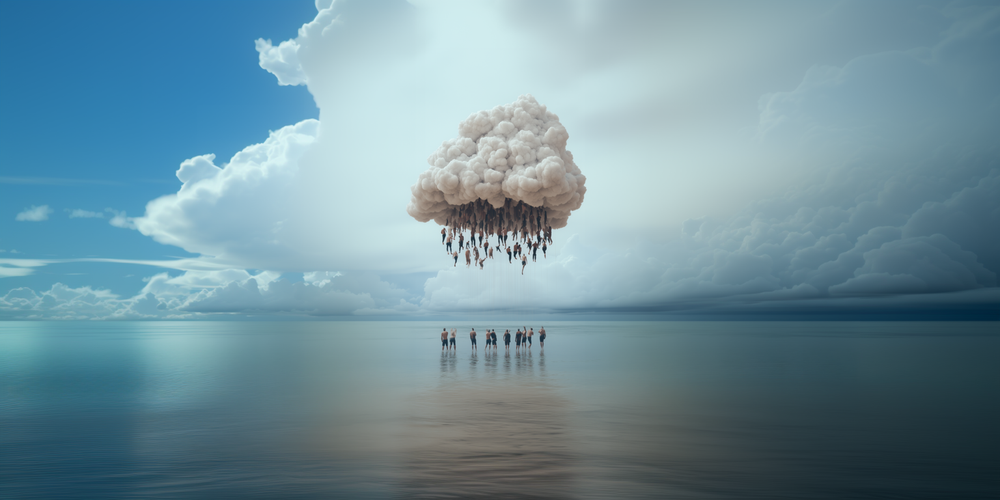
Mr. Relative is a Polish artist who has been working with AI since late 2021, and the name reads as a position as much as a pseudonym. The whole practice runs on one premise he states outright: everything is relative, especially perception. His motto — "Perception is the mother of all beliefs" — sits over a body of work called "This is Humanity": human figures dissolving into symbols, crowds merging with landscape and matter, the uncomfortable things people do together.
Here's why he says he works with this tool, in his own words, from his CLUSTER London exhibitor profile:
"I work with AI because it is the perfect medium for exploring humanity itself—a technology built on everything we have created, shaped by our knowledge, biases, and perceptions. It allows me to blend reality and imagination... This is Humanity visualises humanity as intertwining bodies, merging into nature, concepts, and everyday objects. It reflects human duality—sometimes cruel, sometimes beautiful."
That's the through-line, and it's a tight one: a system trained on everything humans have made, turned back on the subject of humans. He doesn't treat the images as one-offs either — "each piece is more than an animation," he's said, "a collective memory distilled into a single form."
From the feed to a room
This summer he took the work off the screen. The Relative Gallery opened its inaugural "This is Humanity" exhibition June 27–28, 2026, in western Poland — a restored century-old mill fitted with digital screens, staged together with the artist Odesso. Taking digital-first work that lives natively on phones and building a physical room for it isn't the obvious next step for an artist with this kind of online following, but it lines up with the premise: where you encounter an image is part of what the image is.
The gallery's own account posted a recap of opening night — digital art in a hundred-year-old barn:
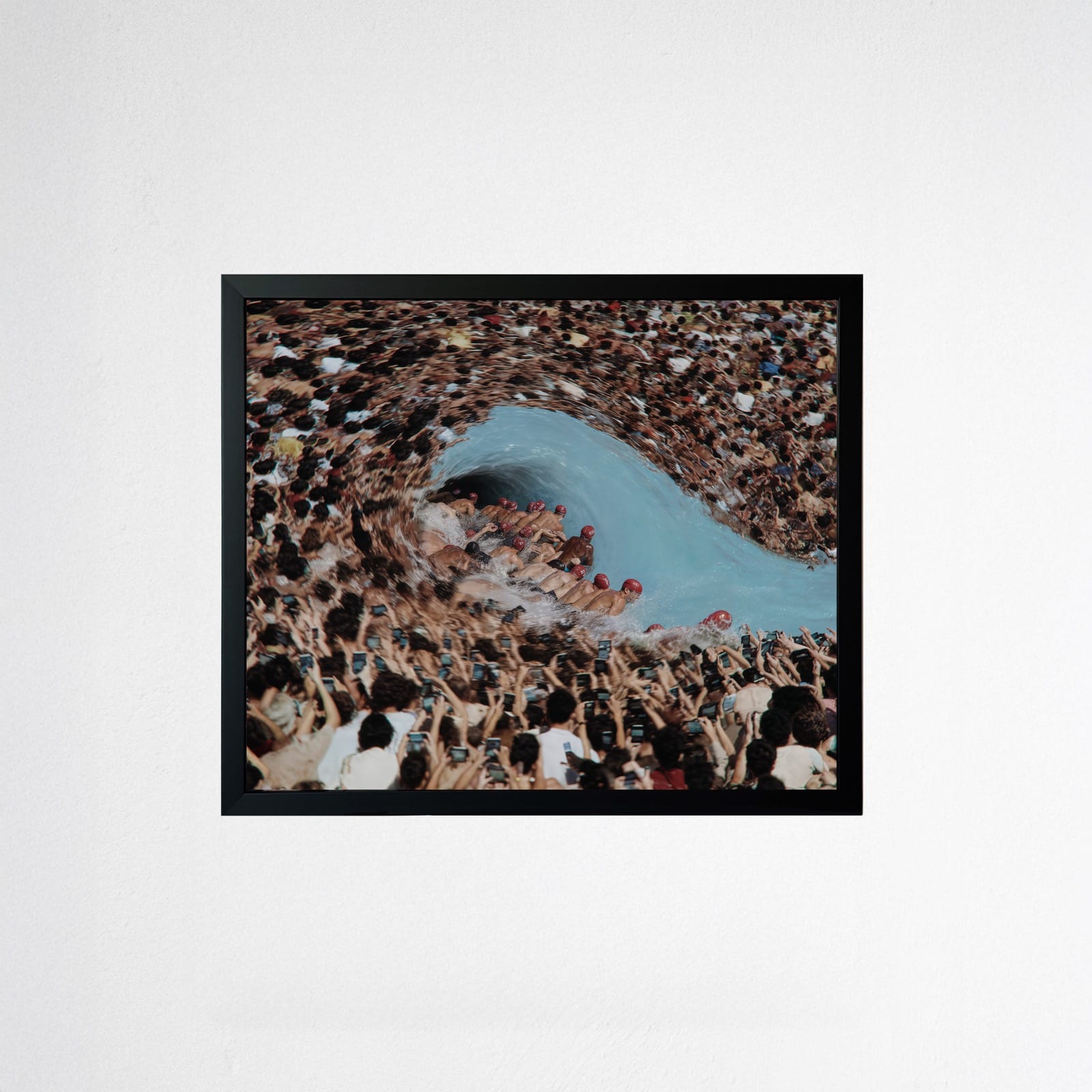
On the walls, his own pieces — like "Spectacle," a whirlpool made of a crowd, the front row filming it on their phones.
Before the gallery, the work had already been shown outside the AI-art circuit: his pieces were part of CLUSTER's AI Showcase in London in 2025, a photography and print fair.
The work in print
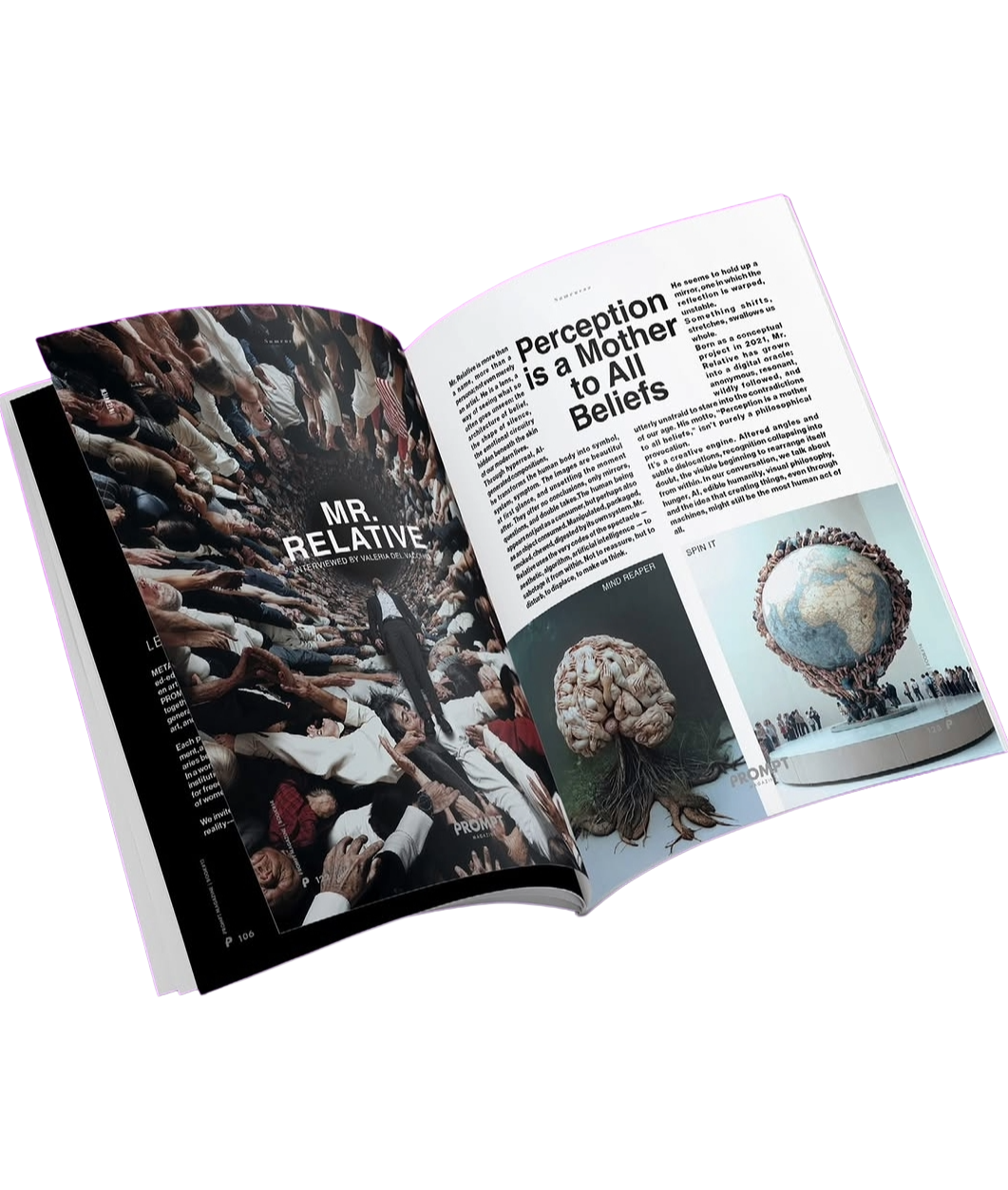
Prompt Magazine ran a feature on him that pulls more of the series into view — "Mind Reaper," a human brain rooting into the ground; a globe built entirely out of bodies. Same subject, different framings of it.
The how stays mostly private
His own file naming points to Midjourney as the starting point, and he's clear the pieces are built to move and be heard — he describes the work as blending "emotion, sound, and motion," and calls each one "more than an animation." Past that, he doesn't publish a workflow: no tool breakdown, no step-by-step, no process reel. The most he's said about method is in a print interview — Prompt Magazine's "Sameness" issue — which isn't online.
That reticence fits the rest of him. The name is a stance about perception, the work is about collective behavior, and the making stays behind the curtain — what he hands you is the finished piece and the idea under it. Most of the catalog lives on his Instagram.
The gallery show ran three days in June. The premise is five years deep now, and it hasn't moved.