
// SYSTEM: DIGEST // LIVE
AI WORKFLOW
OPINION
TUTORIALS
ChatGPT
ChatGPT
William Smith
William
CONVERSATIONS WITH CODE

The Creator's AI Journey: From 'Holy Shit ChatGPT' to Building Your Own Tools

The path from AI amazement to AI builder isn't about coding skills—it's about creative problem-solving instincts kicking in.

I still remember my first ChatGPT moment. November 2022, sitting at my laptop, typing "Hello" just to see what would happen. When it responded back like an actual conversation, that felt magical to me. Still does, honestly. I've been obsessed ever since.

Not the most sophisticated first interaction, but it changed everything.

That moment kicked off what I now recognize as the standard creator's AI journey. It's a progression that has nothing to do with your technical background and everything to do with your problem-solving instincts. If you make things for a living—writing, design, content, whatever—you've probably walked this same path without realizing it.

And honestly? It's comforting to read about what other people are discovering when they're new to this stuff. We're all on the same weird journey.

Phase One: The Tourist

First, you use AI like a search engine. I don't judge! That's how I got started as well. You ask it questions, maybe have it rewrite some emails, possibly generate a few social media captions. It's impressive but you're basically a tourist in AI land, snapping photos but not really living there.

The breakthrough comes when you stop asking for the bare minimum and start treating AI like a conversation partner. Instead of "write my newsletter," you try "help me brainstorm newsletter topics that connect AI tools to everyday creative problems." Suddenly you're collaborating, not just consuming.

Phase Two: The Experimenter

Then images happened. DALL-E, Midjourney, all of it. I started using image generation early on to visualize potential scenes for shooting my videos. Way easier than trying to explain a concept in words when I could just generate a rough visual and say "something like this."

Same thing with audio tools. I'm not a sound designer, but when I needed a simple background track for a video, AI audio generation meant I didn't have to dig through stock music sites for three hours or beg a friend with GarageBand skills.

You start to see the pattern: AI isn't replacing your creativity, it's removing the boring stuff between your ideas and their execution. The tasks you avoided because they were tedious? Now they're just Tuesday.

Phase Three: The Builder

This is where it gets interesting. You stop using AI tools as they're packaged and start building your own systems.

For me, it started with a simple dashboard. I was tracking too many different metrics across too many platforms and getting tired of opening fifteen browser tabs every morning. So I built something that pulled everything into one place. Nothing fancy—just API calls, some basic formatting, and a clean interface that showed me what I needed to see.

At some point, I basically gave up my old workflow and process and learned how to do similar things using only AI. Not because I had to, but because I was curious what would happen if I committed fully to this new way of working.

Then came the "in the moment" problem-solving. Presentations that needed last-minute data visualization. Client reports that required quick analysis of messy spreadsheets. Instead of wrestling with existing tools that almost but not quite did what I needed, I'd throw together something custom that solved the exact problem in front of me.

The shift is subtle but important. You're not using AI to automate existing workflows. You're creating new workflows that couldn't exist without AI.

Phase Four: The Integrator

Video generation tools opened up another level. Suddenly I could create explainer content, demo footage, visual examples without a camera crew or hours of editing. The quality keeps improving, but more importantly, the barrier to trying an idea keeps dropping.

Then API integration gets serious. Tools like Warp, Antigravity, Claude Code start feeling less like individual applications and more like components in a larger system you're building. You're not just using AI tools—you're orchestrating them.

I started building complex automations that chain different AI capabilities together. Image generation feeding into video creation feeding into copy optimization. Data analysis triggering content creation triggering distribution workflows. The individual tools matter less than how they connect.

Phase Five: The Native

At this stage, you're not thinking about "using AI" anymore. It's just part of how you work. You have a problem, you build a solution. Sometimes that solution is pure AI, sometimes it's AI plus traditional tools, sometimes it's no AI at all. The technology becomes invisible.

You start helping other people build their own AI workflows. Not because you're a programmer, but because you understand the creative logic of when and how to apply these tools. You can see the gap between what someone's trying to accomplish and what's possible with current AI capabilities.

The conversations change. Instead of "wow, this AI thing is crazy," it's "here's how you could solve that specific problem with a combination of these three tools and a bit of custom scripting."

The Real Pattern

None of this required becoming a developer. I'm not writing neural networks from scratch or training my own models. The progression is about creative problem-solving, not technical mastery.

Each phase builds on the one before it. The tourist phase teaches you what's possible. The experimenter phase shows you how to apply it. The builder phase reveals what you can create. The integrator phase demonstrates how to scale it. The native phase makes it second nature.

But here's what I've learned: the most important skill isn't learning to use AI tools better. It's learning to recognize when a problem you're facing could be solved with AI, and having the confidence to just try building something.

Most people get stuck in phase one or two because they're waiting for permission or perfect knowledge before they experiment. The creators who make the jump start building stuff that's probably terrible but solves their specific problem. Then they iterate.

The path from "holy shit ChatGPT" to building your own AI-powered systems isn't about becoming more technical. It's about becoming more comfortable with imperfect solutions that actually work. And honestly? That's been the most valuable creative skill I've developed in the last few years.

Wouldn't it be more fun to just focus on the part that you enjoy and are driven to do? I think so.

← Back to Digest

The Creator's AI Journey: From 'Holy Shit ChatGPT' to Building Your Own Tools

The path from AI amazement to AI builder isn't about coding skills—it's about creative problem-solving instincts kicking in.

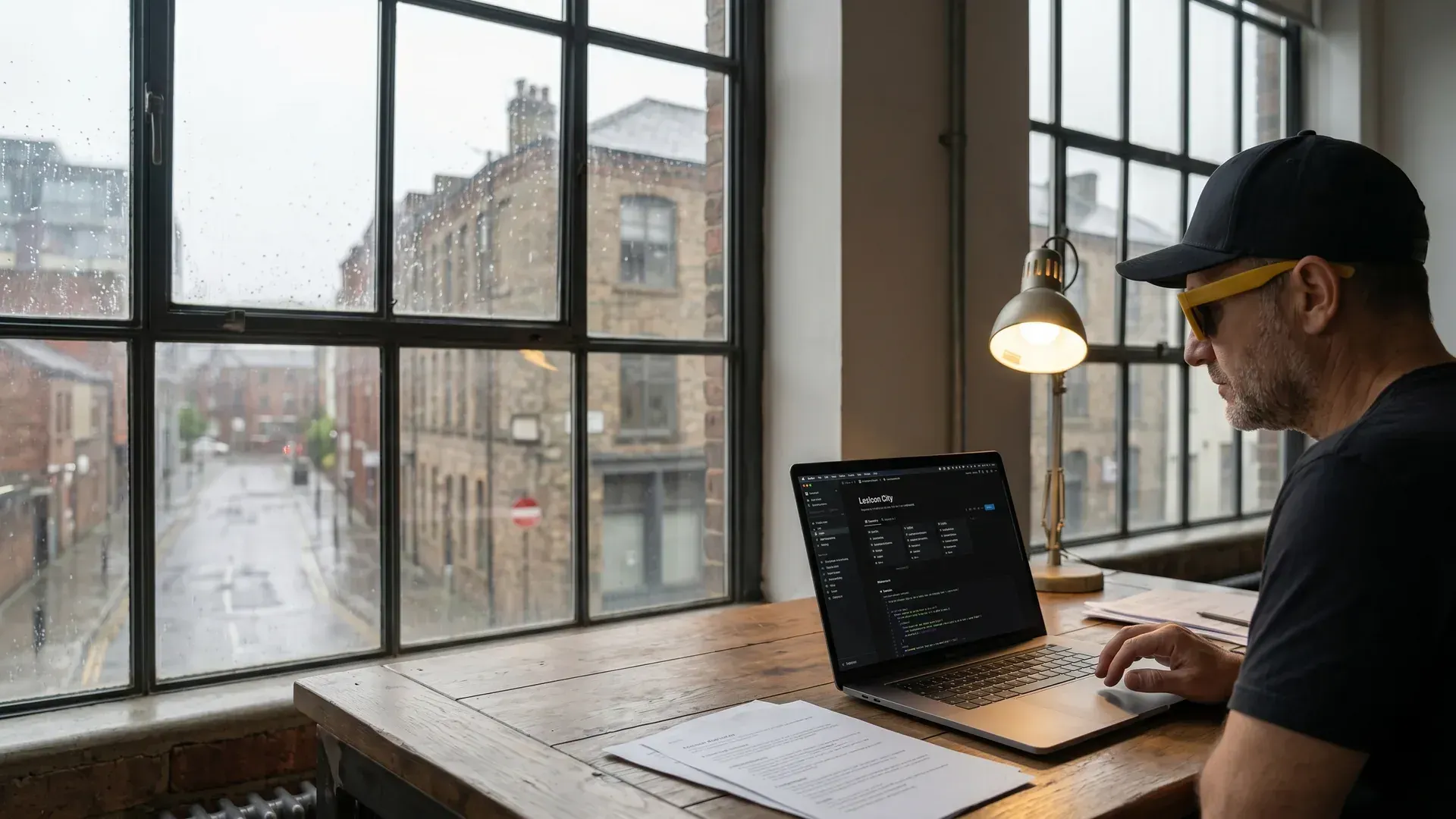
Creator working on computer with AI interface and custom tools, transitioning from ChatGPT to personalized AI solutions
The Man in Yellow Sunglasses, wearing a dark baseball cap, sits at a heavy wooden desk in a converted-warehouse loft.

I still remember my first ChatGPT moment. November 2022, sitting at my laptop, typing "Hello" just to see what would happen. When it responded back like an actual conversation, that felt magical to me. Still does, honestly. I've been obsessed ever since.

Not the most sophisticated first interaction, but it changed everything.

That moment kicked off what I now recognize as the standard creator's AI journey. It's a progression that has nothing to do with your technical background and everything to do with your problem-solving instincts. If you make things for a living—writing, design, content, whatever—you've probably walked this same path without realizing it.

And honestly? It's comforting to read about what other people are discovering when they're new to this stuff. We're all on the same weird journey.

Phase One: The Tourist

First, you use AI like a search engine. I don't judge! That's how I got started as well. You ask it questions, maybe have it rewrite some emails, possibly generate a few social media captions. It's impressive but you're basically a tourist in AI land, snapping photos but not really living there.

The breakthrough comes when you stop asking for the bare minimum and start treating AI like a conversation partner. Instead of "write my newsletter," you try "help me brainstorm newsletter topics that connect AI tools to everyday creative problems." Suddenly you're collaborating, not just consuming.

Phase Two: The Experimenter

Then images happened. DALL-E, Midjourney, all of it. I started using image generation early on to visualize potential scenes for shooting my videos. Way easier than trying to explain a concept in words when I could just generate a rough visual and say "something like this."

Same thing with audio tools. I'm not a sound designer, but when I needed a simple background track for a video, AI audio generation meant I didn't have to dig through stock music sites for three hours or beg a friend with GarageBand skills.

You start to see the pattern: AI isn't replacing your creativity, it's removing the boring stuff between your ideas and their execution. The tasks you avoided because they were tedious? Now they're just Tuesday.

Phase Three: The Builder

This is where it gets interesting. You stop using AI tools as they're packaged and start building your own systems.

For me, it started with a simple dashboard. I was tracking too many different metrics across too many platforms and getting tired of opening fifteen browser tabs every morning. So I built something that pulled everything into one place. Nothing fancy—just API calls, some basic formatting, and a clean interface that showed me what I needed to see.

At some point, I basically gave up my old workflow and process and learned how to do similar things using only AI. Not because I had to, but because I was curious what would happen if I committed fully to this new way of working.

Then came the "in the moment" problem-solving. Presentations that needed last-minute data visualization. Client reports that required quick analysis of messy spreadsheets. Instead of wrestling with existing tools that almost but not quite did what I needed, I'd throw together something custom that solved the exact problem in front of me.

The shift is subtle but important. You're not using AI to automate existing workflows. You're creating new workflows that couldn't exist without AI.

Phase Four: The Integrator

Video generation tools opened up another level. Suddenly I could create explainer content, demo footage, visual examples without a camera crew or hours of editing. The quality keeps improving, but more importantly, the barrier to trying an idea keeps dropping.

Then API integration gets serious. Tools like Warp, Antigravity, Claude Code start feeling less like individual applications and more like components in a larger system you're building. You're not just using AI tools—you're orchestrating them.

I started building complex automations that chain different AI capabilities together. Image generation feeding into video creation feeding into copy optimization. Data analysis triggering content creation triggering distribution workflows. The individual tools matter less than how they connect.

Phase Five: The Native

At this stage, you're not thinking about "using AI" anymore. It's just part of how you work. You have a problem, you build a solution. Sometimes that solution is pure AI, sometimes it's AI plus traditional tools, sometimes it's no AI at all. The technology becomes invisible.

You start helping other people build their own AI workflows. Not because you're a programmer, but because you understand the creative logic of when and how to apply these tools. You can see the gap between what someone's trying to accomplish and what's possible with current AI capabilities.

The conversations change. Instead of "wow, this AI thing is crazy," it's "here's how you could solve that specific problem with a combination of these three tools and a bit of custom scripting."

The Real Pattern

None of this required becoming a developer. I'm not writing neural networks from scratch or training my own models. The progression is about creative problem-solving, not technical mastery.

Each phase builds on the one before it. The tourist phase teaches you what's possible. The experimenter phase shows you how to apply it. The builder phase reveals what you can create. The integrator phase demonstrates how to scale it. The native phase makes it second nature.

But here's what I've learned: the most important skill isn't learning to use AI tools better. It's learning to recognize when a problem you're facing could be solved with AI, and having the confidence to just try building something.

Most people get stuck in phase one or two because they're waiting for permission or perfect knowledge before they experiment. The creators who make the jump start building stuff that's probably terrible but solves their specific problem. Then they iterate.

The path from "holy shit ChatGPT" to building your own AI-powered systems isn't about becoming more technical. It's about becoming more comfortable with imperfect solutions that actually work. And honestly? That's been the most valuable creative skill I've developed in the last few years.

Wouldn't it be more fun to just focus on the part that you enjoy and are driven to do? I think so.

// LEXICON_CITY_DISPATCH_REQ
// STATUS: CONNECTION_STABLE
// SOURCE: CENTRAL_DISPATCH_HQ

SHERMAN UPLINK: "I'm at HQ holding down Central Dispatch. Enter your query below to pull relevant data records and I'll see what data cards we've recovered!"