
// SYSTEM: DIGEST // LIVE
AI WORKFLOW
OPINION
TUTORIALS
ChatGPT
ChatGPT
William Smith
William
CONVERSATIONS WITH CODE

The Day AI Stopped Being a Tool and Started Being Your Business Partner

OpenAI wants access to your bank account, and that changes everything about how we think about AI dependencies.

OpenAI just launched a feature that lets ChatGPT connect to your bank accounts, credit cards, and investment accounts. Pro users only, U.S. only, through Plaid integration. They're calling it personal finance assistance.

I'm calling it the moment AI stopped being a creative tool and started becoming business infrastructure.

Here's what I mean.

When I use Claude to analyze a piece of content or Gemini to help draft something, I'm using AI as a tool. If Claude goes down for a day, I switch to Gemini and keep working. If both are down, I write manually. Annoying, but not catastrophic.

But if ChatGPT is analyzing my cash flow, tracking my recurring subscriptions, and making budget recommendations based on my actual transaction data—and then it goes down—I don't just lose a tool. I lose access to the financial brain of my business.

The Pipeline Problem

I've spent the last year building automated content systems that route through multiple AI providers. Claude for analysis, Gemini for image generation and research, and sometimes GPT for specific tasks.

What I've learned is the more critical the function, the more dangerous single-vendor dependency becomes.

Financial integration breaks this hedge strategy completely. You can't easily distribute your bank data across multiple AI providers the way you can distribute content creation. Once ChatGPT knows your complete financial picture, switching to Claude means rebuilding that entire context from scratch.

OpenAI knows this. That's why they're not just adding financial features—they're creating switching costs. The deeper ChatGPT integrates into your business operations, the harder it becomes to leave.

The Automation Paradox

Here's what really concerns me: the more you automate with AI, the less you understand your own systems. I've seen this in my content pipelines. When everything's working, it feels magical. When something breaks, you realize you've outsourced understanding along with the work.

Financial automation amplifies this risk exponentially. Imagine ChatGPT optimizing your subscription timing, categorizing business expenses, and suggesting cash flow strategies for months. Then ask yourself: if you had to replicate those decisions manually, could you?

Most creators can't even remember all their recurring subscriptions, let alone understand the optimization logic an AI might develop. We'd be dependent not just on the service, but on processes we don't comprehend.

The Trust Infrastructure Gap

The Enterprise AI subscription concerns that 132 Hacker News commenters were worried about last week? They just became personal. We're not just talking about losing access to a productivity tool. We're talking about losing access to the financial operating system of your business.

And the timing is perfect, isn't it? Bloomberg reports that the U.S. is starting to see heavy job losses in AI-exposed roles. Creative professionals are simultaneously being asked to trust AI with their financial data while watching AI eliminate jobs in adjacent fields.

The message is clear: trust us with your most sensitive business data while we disrupt your industry.

What This Actually Costs

The real cost isn't the monthly subscription fee. It's strategic flexibility.

When ChatGPT becomes your financial advisor, budget analyst, and subscription auditor, you're not just adopting a feature—you're choosing a business partner. And like any partnership, breaking up gets expensive.

Every month ChatGPT analyzes your transactions is another month of context that only exists in OpenAI's systems. Every financial insight it generates is another piece of institutional knowledge you can't take with you.

Compare this to how we use creative tools. I can export my Figma files, my Adobe projects, my Ghost content. The work product is portable. But financial insights based on transaction analysis? That lives in ChatGPT's memory, not yours.

The Real Question

John Gruber's recent piece argues that AI is a technology, not a product. OpenAI's financial integration proves he's wrong—at least about how OpenAI sees AI.

This isn't technology you integrate into your workflow. It's a service that integrates your workflow into itself.

The question isn't whether the financial features are useful. Of course they are. Automatic expense categorization, cash flow analysis, subscription optimization—these would save hours and reveal insights most creators miss entirely.

The question is whether you're comfortable with OpenAI becoming your silent business partner. Because once they know everything about your revenue, expenses, and financial patterns, that's exactly what they become.

And unlike human business partners, you can't easily fire them and take your data somewhere else.

I'm not saying don't use it. I'm saying understand what you're actually signing up for. This isn't ChatGPT adding financial analysis. This is OpenAI adding your business to their platform.

There's a difference. And that difference matters more than most creators realize.


## Generated Images

> Seven variants below — three standard compositions, one documentary (foreground bokeh), and three dynamic-angle "spatial" compositions for parallax video.
> To request a fix on any one, add a checkbox under `## Image Touch-ups` like:
> `- [ ] spatial-square: remove the random hand on the right`

**landscape** — 1920×1080

![landscape](_featured-images/_pending/the-day-ai-stopped-being-a-tool-and-started-being-your-business-partner/the-day-ai-stopped-being-a-tool-and-started-being-your-business-partner-landscape-1920x1080.webp)
← Back to Digest

The Day AI Stopped Being a Tool and Started Being Your Business Partner

OpenAI wants access to your bank account, and that changes everything about how we think about AI dependencies.

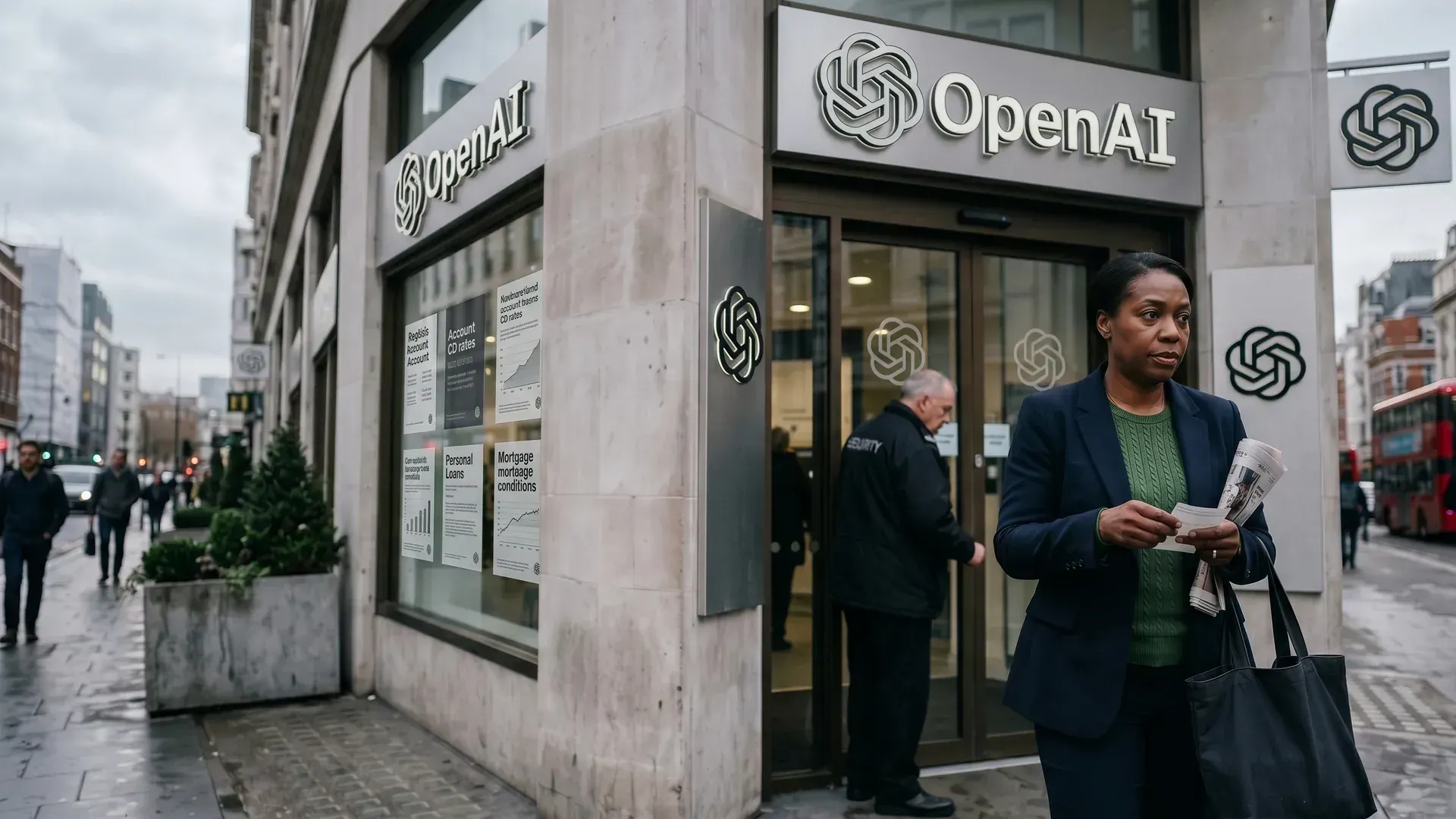
Professional businessperson collaborating with AI technology, showing partnership between human and artificial intelligence
Outside of the Bank of ChatGPT

OpenAI just launched a feature that lets ChatGPT connect to your bank accounts, credit cards, and investment accounts. Pro users only, U.S. only, through Plaid integration. They're calling it personal finance assistance.

I'm calling it the moment AI stopped being a creative tool and started becoming business infrastructure.

Here's what I mean.

When I use Claude to analyze a piece of content or Gemini to help draft something, I'm using AI as a tool. If Claude goes down for a day, I switch to Gemini and keep working. If both are down, I write manually. Annoying, but not catastrophic.

But if ChatGPT is analyzing my cash flow, tracking my recurring subscriptions, and making budget recommendations based on my actual transaction data—and then it goes down—I don't just lose a tool. I lose access to the financial brain of my business.

The Pipeline Problem

I've spent the last year building automated content systems that route through multiple AI providers. Claude for analysis, Gemini for image generation and research, and sometimes GPT for specific tasks.

What I've learned is the more critical the function, the more dangerous single-vendor dependency becomes.

Financial integration breaks this hedge strategy completely. You can't easily distribute your bank data across multiple AI providers the way you can distribute content creation. Once ChatGPT knows your complete financial picture, switching to Claude means rebuilding that entire context from scratch.

OpenAI knows this. That's why they're not just adding financial features—they're creating switching costs. The deeper ChatGPT integrates into your business operations, the harder it becomes to leave.

The Automation Paradox

Here's what really concerns me: the more you automate with AI, the less you understand your own systems. I've seen this in my content pipelines. When everything's working, it feels magical. When something breaks, you realize you've outsourced understanding along with the work.

Financial automation amplifies this risk exponentially. Imagine ChatGPT optimizing your subscription timing, categorizing business expenses, and suggesting cash flow strategies for months. Then ask yourself: if you had to replicate those decisions manually, could you?

Most creators can't even remember all their recurring subscriptions, let alone understand the optimization logic an AI might develop. We'd be dependent not just on the service, but on processes we don't comprehend.

The Trust Infrastructure Gap

The Enterprise AI subscription concerns that 132 Hacker News commenters were worried about last week? They just became personal. We're not just talking about losing access to a productivity tool. We're talking about losing access to the financial operating system of your business.

And the timing is perfect, isn't it? Bloomberg reports that the U.S. is starting to see heavy job losses in AI-exposed roles. Creative professionals are simultaneously being asked to trust AI with their financial data while watching AI eliminate jobs in adjacent fields.

The message is clear: trust us with your most sensitive business data while we disrupt your industry.

What This Actually Costs

The real cost isn't the monthly subscription fee. It's strategic flexibility.

When ChatGPT becomes your financial advisor, budget analyst, and subscription auditor, you're not just adopting a feature—you're choosing a business partner. And like any partnership, breaking up gets expensive.

Every month ChatGPT analyzes your transactions is another month of context that only exists in OpenAI's systems. Every financial insight it generates is another piece of institutional knowledge you can't take with you.

Compare this to how we use creative tools. I can export my Figma files, my Adobe projects, my Ghost content. The work product is portable. But financial insights based on transaction analysis? That lives in ChatGPT's memory, not yours.

The Real Question

John Gruber's recent piece argues that AI is a technology, not a product. OpenAI's financial integration proves he's wrong—at least about how OpenAI sees AI.

This isn't technology you integrate into your workflow. It's a service that integrates your workflow into itself.

The question isn't whether the financial features are useful. Of course they are. Automatic expense categorization, cash flow analysis, subscription optimization—these would save hours and reveal insights most creators miss entirely.

The question is whether you're comfortable with OpenAI becoming your silent business partner. Because once they know everything about your revenue, expenses, and financial patterns, that's exactly what they become.

And unlike human business partners, you can't easily fire them and take your data somewhere else.

I'm not saying don't use it. I'm saying understand what you're actually signing up for. This isn't ChatGPT adding financial analysis. This is OpenAI adding your business to their platform.

There's a difference. And that difference matters more than most creators realize.


## Generated Images

> Seven variants below — three standard compositions, one documentary (foreground bokeh), and three dynamic-angle "spatial" compositions for parallax video.
> To request a fix on any one, add a checkbox under `## Image Touch-ups` like:
> `- [ ] spatial-square: remove the random hand on the right`

**landscape** — 1920×1080

![landscape](_featured-images/_pending/the-day-ai-stopped-being-a-tool-and-started-being-your-business-partner/the-day-ai-stopped-being-a-tool-and-started-being-your-business-partner-landscape-1920x1080.webp)
// LEXICON_CITY_DISPATCH_REQ
// STATUS: CONNECTION_STABLE
// SOURCE: CENTRAL_DISPATCH_HQ

SHERMAN UPLINK: "I'm at HQ holding down Central Dispatch. Enter your query below to pull relevant data records and I'll see what data cards we've recovered!"