
The Open Source AI Race Just Got Real
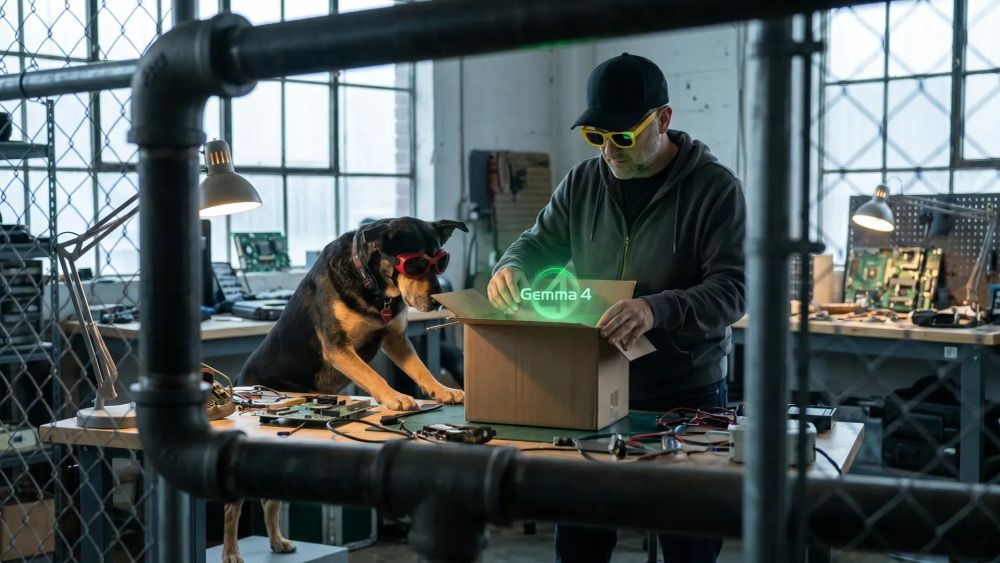
Google just dropped Gemma 4 with a fully permissive license and on-device capability. If you're used to ChatGPT or Claude, this might not sound like a big deal. But it is.
Google took one of their best AI models and said "here, run this on your own computer, do whatever you want with it." No subscription. No API calls. No asking permission.
What Running AI Locally Actually Means
Let me break this down for anyone who's only used ChatGPT or Claude through a browser.
Right now, when you type something into ChatGPT, your message goes to OpenAI's servers, gets processed by their computers, and the response comes back to you. You're basically renting access to their AI.
With Gemma 4, you download the model and run it on your own machine. Your laptop becomes the AI. No internet required after the initial download. No monthly bills.
But running AI locally isn't just "free ChatGPT." It's different in ways that matter.
- It's yours. No content policies except what you decide.
- No usage limits. You can generate 10,000 words or 10 words. Same cost: zero.
- Privacy. Your prompts never leave your computer.
- Always works. No service outages, no "we're updating our systems."
- Runs on your own computer and can access your own files.
- It's much, much slower. Your laptop isn't as powerful as Google's server farms.
- It uses a lot of your own energy.
- Setup isn't just clicking a link.
- The output quality might not match the latest ChatGPT or Claude.
Why This Changes Everything for People Just Learning
If you're someone who's been playing with ChatGPT but worried about the costs of building something real, this is huge.
I remember when I first wanted to build something with AI. I had this idea for a tool that would help me rewrite my old blog posts. Simple enough, right? But when I calculated the API costs, I realized it would cost me like $200 just to process my existing content.
With something like Gemma 4, that cost is zero. The trade-off is time and complexity, but for someone learning, that's often a better deal.
You can experiment without fear. You can feed it terrible prompts and learn from the results. And, you can run the same query 50 times with slight variations to understand how prompting actually works.
When you're paying per token, every mistake costs you money. When it's running on your laptop, every mistake teaches you something.
Of Course People Still Complain
The same people who've been saying AI is "too centralized" are now worried about it being "too accessible."
Watch for the think pieces about "responsible deployment" and "ensuring proper oversight." Watch for concerns about "bad actors" and "misuse." All the reasons why actually, it's better if only the approved companies control the good AI.
Remember, the people most worried about "democratizing AI" are usually the ones who benefit from keeping it locked up.
We're about to see an explosion of AI applications that would never make sense as a product.
The AI that knows your writing style because you trained it on your own emails. The AI that understands your company's weird internal processes because it learned from your actual documentation. The AI that helps your kid with math using the specific textbook they're actually using.
None of these are venture capital ideas. Most of them aren't even side hustle ideas. They're just useful tools you'd build for yourself if you could.
Now you can.
Google, Meta, and everyone else are fighting to be the infrastructure that powers AI applications. They're so focused on that fight, they might accidentally give regular people the tools to not need their infrastructure at all.
And honestly? That sounds pretty great to me.