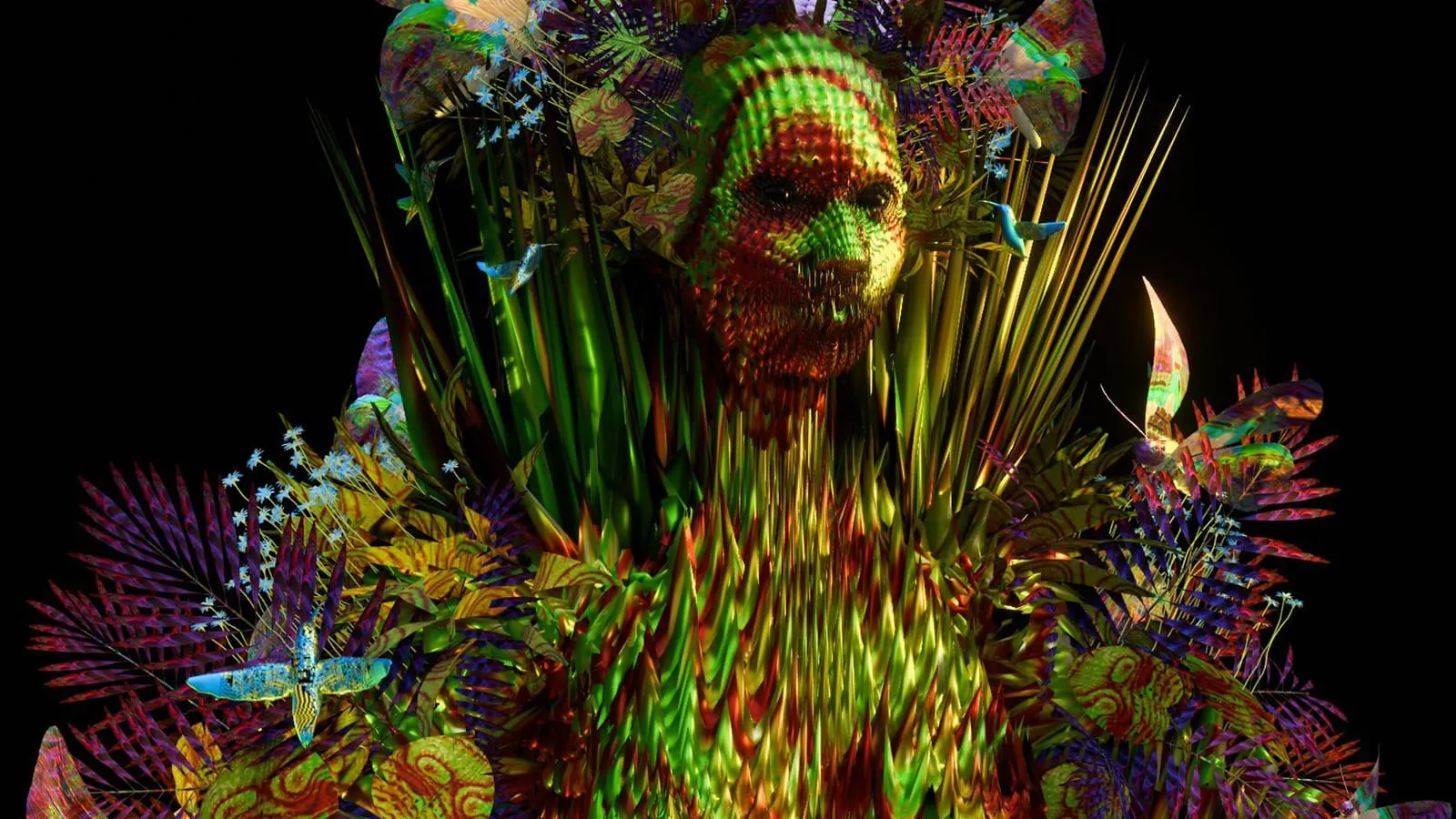

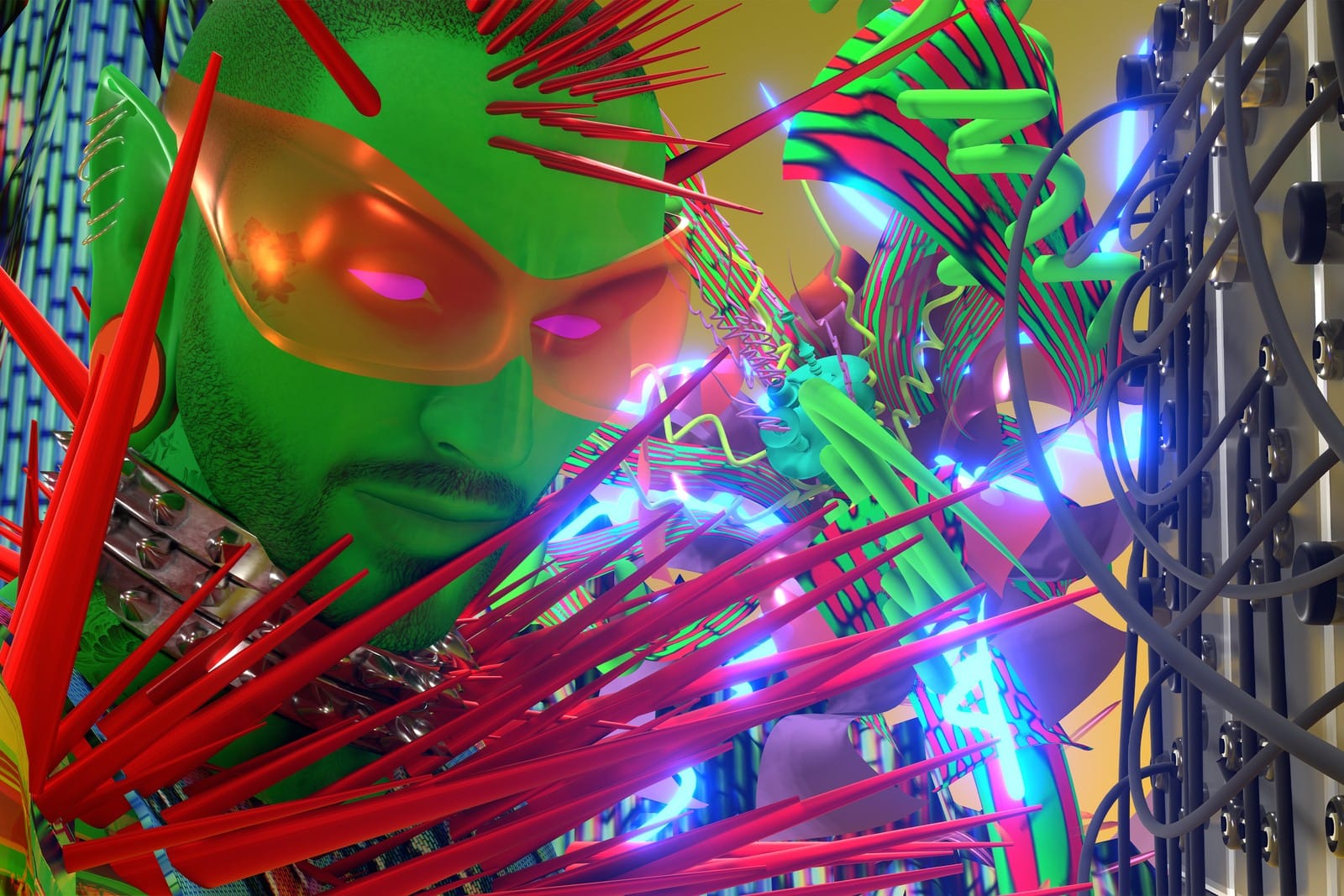
A figure stands at the center of the frame wearing a crown of spines. The spines are made of something between fern, feather, and circuit trace, in acid yellow and green, and they radiate out far enough that you lose track of where the body stops. The face is there, sort of. It's been overgrown.
The piece is called "Spined Venus." The title is doing real work — Venus is the oldest subject in Western art, and this one has been colonized by whatever the machine grew on top of her.
Error as the Method
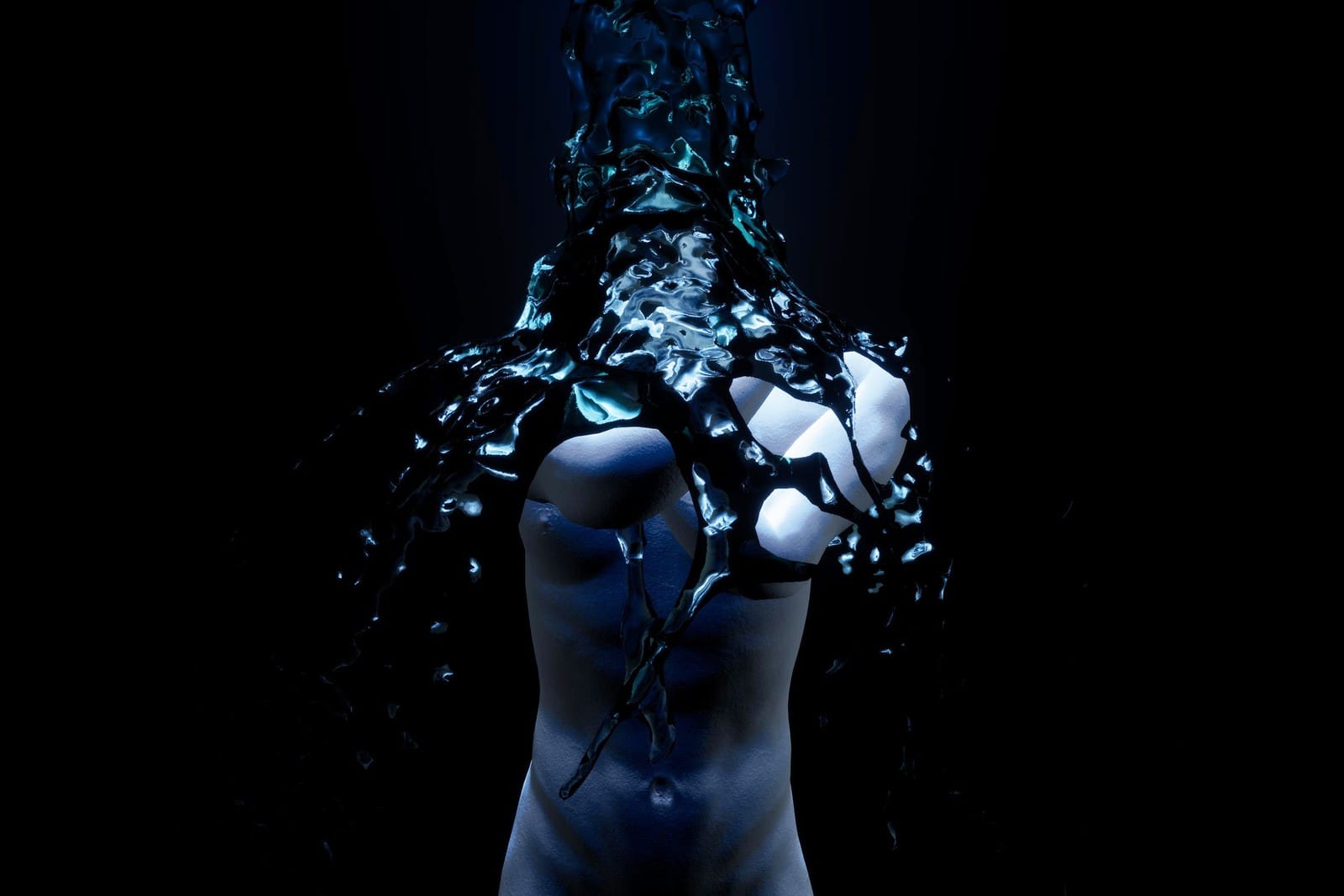
Alhadeff describes himself as an artist working with 3D animation, AI, code, and game engines, drawing on glitch aesthetics, queer theory, and video game culture. The operating principle he states is that he introduces error and instability into technological systems on purpose, corrupting the familiar into something that sits between the organic, the mechanical, and the artificial.
His faculty bio puts the same idea in four words: error becomes generative.
That's a stronger claim than it first sounds. Most work in this space treats the model's failures as a tax — something to prompt around, regenerate past, clean up in post. Alhadeff runs the tools until they break and then builds the piece out of the wreckage, which requires knowing precisely how each system fails and being able to reproduce it. You can't harvest an error you can't summon twice.
The titles track it: Glitch Dolls, Fractures, Splinters, Spectral Remnants, In Flux, Transgressions. Fifteen projects on his portfolio going back to 2022, and the through-line is bodies that won't hold their shape.
The Toolchain Is Not Just Prompting
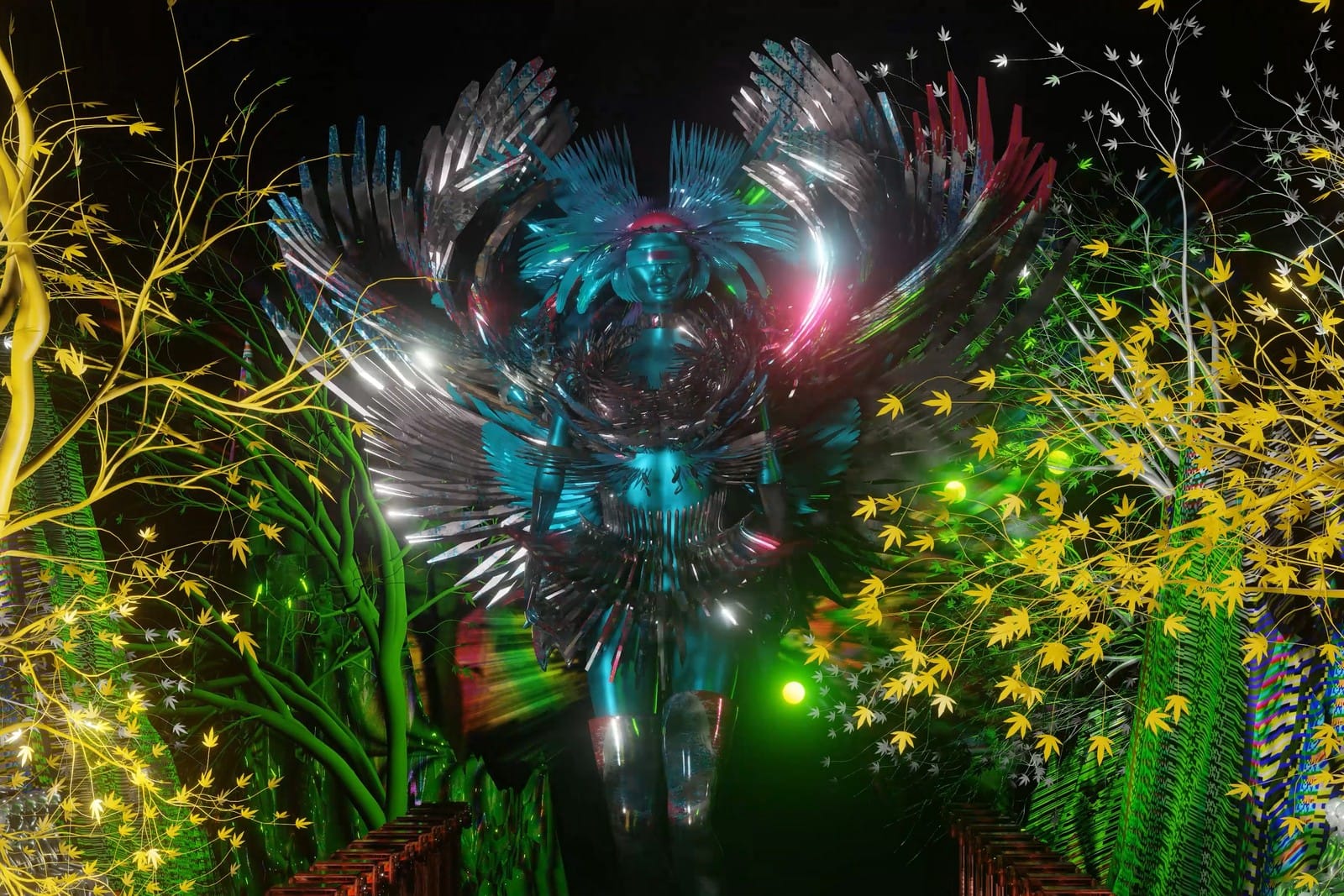
The stack he works in is listed plainly: video, game engines, motion capture, and experimental 3D processes. Not one model with a text box — a pipeline, with a body actually captured in motion at one end of it.
That's the part worth stealing. Motion capture means a real performance is in there. Game engines mean the piece can be lit, staged, and moved through rather than described and hoped for. AI is one instrument in the rack instead of the whole band, which is exactly why the output doesn't look like everyone else's.
He came to it from a background that explains the compositions: a BFA in graphic design and a BA in art history and criticism, then an MFA in Electronic Integrated Arts from Alfred University. The symmetry in "Spined Venus," the way a figure gets centered and framed like an altarpiece — that's someone who studied how images have been built for six hundred years and then handed the job to a machine that doesn't know any of it.
Where the Work Has Actually Been
The exhibition list on his faculty page is long and specific: Sotheby's in New York, The Royal Institute in London, NFT.NYC, NFC Lisbon, NFT Show Europe in Valencia, Tech Contemporary in Copenhagen, Artverse Gallery in Paris.
And then this one, which is a different kind of venue entirely: across 1,000 billboards in Belgium, through Art Crush Gallery and Clear Channel. Work built out of deliberate system failure, printed at highway scale, seen by people who did not come to look at art.
The Teaching Part
Since 2025 he's been Assistant Professor of Kinetic Imaging at Western Michigan University's Gwen Frostic School of Art, in Kalamazoo, where he teaches experimental approaches to game engines, worldbuilding, and emerging technologies.
That's the detail that separates him from most people making work like this. The aesthetic is being taught — with critique, with a syllabus, to students who will graduate knowing how to break a render on purpose. Whatever this becomes in five years, some of it will trace back to a classroom in Michigan.
His portfolio is the place to see the range; the newest project, "Contestants for a Pageant That No Longer Exists," is dated 2026 and is where the work is heading now.