
Simon Meyer spent eight years as a director of photography for German television, and also worked as a commercials director. He posts as @simonmeyer_director on Instagram and co-founded PROMPTR, a Berlin AI film studio, where the team page lists him as Head of AI Creatives.
Most AI films fall apart when somebody opens their mouth. The voice is off, the lips drift, the face does nothing while the words come out.
Meyer has spent most of this year working on exactly that. He keeps making music videos with generated singers, and he keeps posting how each one was made, down to the prompt.
On October 12, Kling put him in an episode of its interview series under the title What Makes an AI Music Video Feel Real?, built around the video he made with Kling 4.0. Kling made that episode, and Kling sponsored the video itself, so read it as a launch piece. The process he describes in it matches what he's been posting on his own channels since January.
The Kling 4.0 music video
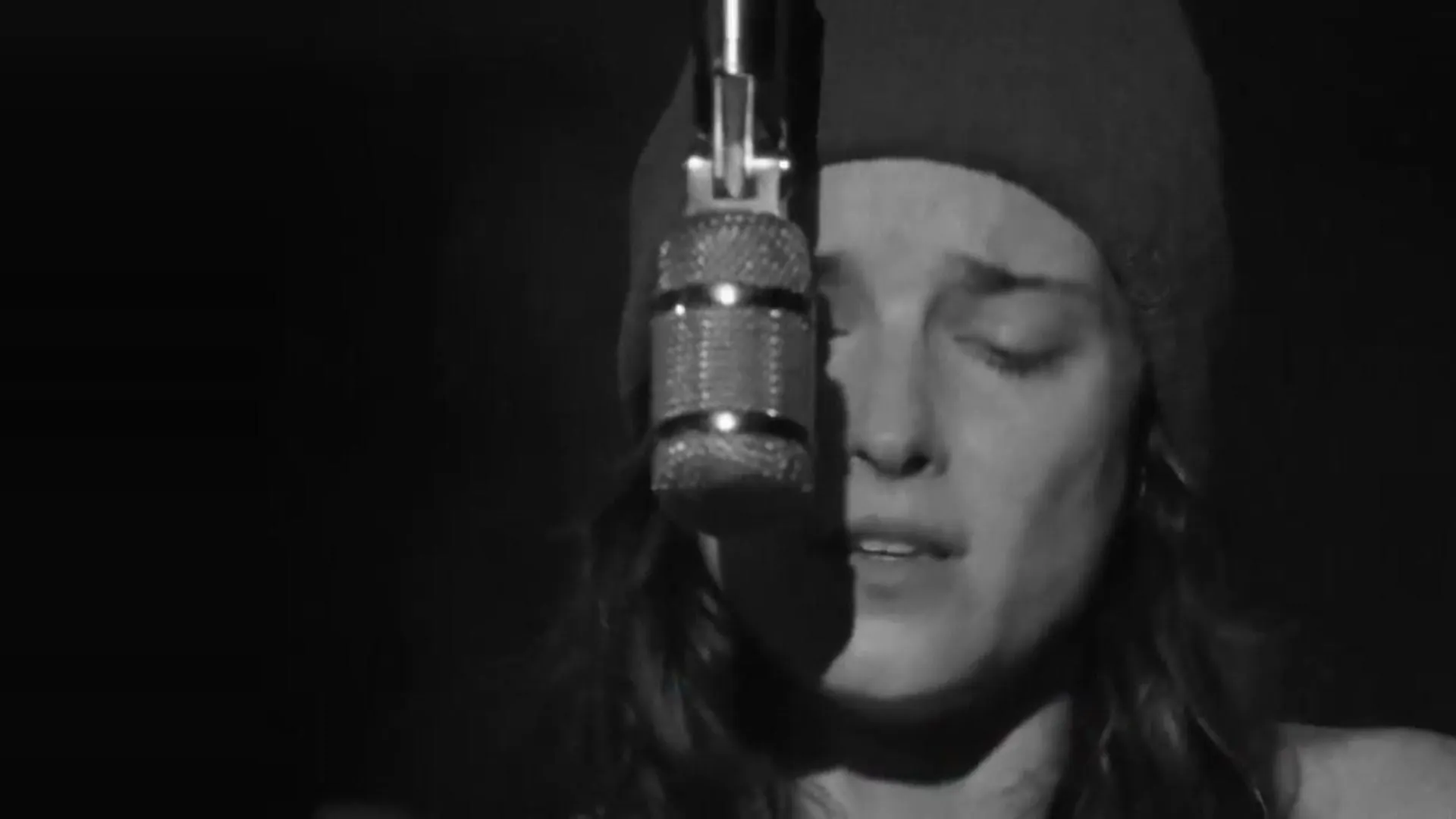
It's black and white and runs under two minutes. A singer in a knit beanie works a vintage microphone in close-up, eyes half shut. It cuts to a festival crowd at night, silhouettes against one stage light, a trumpet player backlit in smoke, a bassist, a keyboard player. The lyric starts with a porch light left on for someone who isn't coming home.
Meyer generated the song before any of the pictures. "I really loved how how you can feel the crowd, how you can feel that singer is very close with her lips to the microphone," he told Kling. "I wanted to translate the realness of the song also to the realness of the camera work and lighting and everything."
In his launch post he's upfront about the deal: "This post is sponsored by Kling AI but they allowed me to create whatever I wanted!" He was one of the early-access artists, and he thanks Ben Chimoy, an AI artist at PROMPTR, for help on it.
Simon Meyer — his Kling 4.0 music video, via Instagram (@simonmeyer_director)
He wanted the camera to shake
The camera is where a cinematographer shows up. "I didn't want to have the perfect dolly shots, the perfect slow mo. I wanted to have a shaky camera that feels like someone is holding it," Meyer says in the Kling interview, a camera operator "who is like losing focus from time to time."
His caption says the model followed that direction: "Shaky handheld camera actually felt shaky." He also asked for an anamorphic lens look, and says that came through.
He's picked models for this before. When his PROMPTR team won first and second place in Runway's Another Big Ad Contest in August, he explained the choice of Kling Turbo over Seedance: "Kling Turbo was WAY better with realistic handheld camera that we needed in these shots (and probably still is)."
Fifty takes on the opening close-up
The first shot is the singer at the mic, and it's the one he spent the most generations on. "I was really iterating for like, I don't know, 50 times on this one shot on the first shot because I really wanted to have this slight this little micro expressions in her face," he told Kling.
What he was waiting for was small. Her eyes move, she shakes a little, and he says those details are what make it feel real.
There's another close-up near the start that he singles out as the one where everything landed: her performance, the light, the camera. He called it a "100% shot," and said he expects later versions of Kling to give him nothing but those.
How the lip sync gets made
The method is simple to describe. He renders the song out as a video file with nothing but a black frame, then gives the model that file along with a still of the singer. In the Kling launch post: "For the lip sync, I used my preferred method: rendering the actual music track with a black frame and combining it with the stills I created."
On Kling 4.0 he found the two input modes did different jobs. "So, the omni mode is perfect if you want to create lip sync. The overall fidelity of the shots are better with the start frame mode," he said. "So, I constantly switched between the omni mode and the start frame mode." By his count, "I would say in like 80% of the shots the lip sync was really really good."
He started on this a lot earlier than Kling 4.0. In January he posted a three-week indie music video, a song about losing a childhood friend, sung by a band he generated. For the voice, he says he generated videos of a singer-songwriter character "until I found a voice I loved, then extracted it as a custom persona" in Suno.
The lip sync on that one ran through Dreamina's OmniHuman 1.5, and the caption is where the title of this piece comes from:
I treated this like a real video shoot. Split the song into 20-second parts (quality drops toward the end of longer clips). From each generation, maybe 3-4 seconds are actually usable. Just like real footage.
He opened that post by asking himself, "Can A.I. actually create real emotions?" The YouTube description splits the video into two layers, the band performing in a white studio and the singer as a kid running through a paper forest with his best friend.
Chunking a whole song
By June the black-frame trick was the core of the workflow, and he'd moved the lip sync to Seedance 2.0, which caps a generation at 15 seconds. So the song has to be cut into exact 15-second pieces, each exported with a black screen, each fed to the model with a start frame. Doing that for every shot is tedious.
His fix, in a video sponsored by invideo, was handing the chopping to invideo's Agent One. In the Instagram cut he puts the split like this: "The agent does the boring part (chopping the track, batch after batch), every creative decision stays mine."
The full prompt he gave the agent is in the caption, typos included, down to the Seedance instruction: "Use the driving video with the music to synch the singer in the starting frame." The result was Modern Land, by another band he generated. The video's description calls it "A song about not fitting into a world that keeps moving faster than you do."
Even with the agent, he still re-rolls. Of one chunk in that tutorial he says, "I think the lip sync is not 100% here yet," and the plan is to grab the best parts of several takes and cut them together. It's the same keep-a-few-seconds habit The Dor Brothers describe when they generate fifty clips and keep two.
The face comes from a video model
The singer's face starts before any lip sync happens. Meyer builds his start frames with video models instead of image models, and he explains why in a tutorial on start frames.
Images from photo models, he says, look like images. "They are too sharp. They are too crisp." So he generates a few seconds in Sora 2, grabs a still in DaVinci Resolve, upscales it with Nano Banana, and animates from there. "Sora was trained on a lot of commercials and films, and that's what you can feel in these start frames," he says.
The music videos get the same treatment. In the Modern Land tutorial he generates extra shot sizes of the singer as video, then pulls stills from them. Of one close-up: "It's really hard to generate a still image like this with image models, because here we can see motion blur." He also keeps the lighting to one source, "I always try to just have one light source," so the close-up and the wide shot agree.
He's honest about where it still falls short. In May, on a mock documentary built with Sora characters animated in Kling, he wrote: "I think you can still tell the characters are AI, but I’m REALLY looking forward to Veo 4 — I hope they’ll fix this audio issue."
Tools he credits himself
Kling · Seedance · Sora 2 · Nano Banana Pro · Dreamina (OmniHuman 1.5) · Suno · Freepik · invideo Agent One · DaVinci Resolve
From his own captions, video descriptions and tutorials for the three music videos above. Several of those posts were sponsored by Kling or invideo, and he says so in each one.
Eight years behind the camera first
Meyer told Kling he generated his first AI image about five years ago. "It was an image of a peach and it was like a 16 by 16 pixels or something like this," he said. He was hooked anyway, because he "always had like crazy ideas that no client on this earth would ever buy."
PROMPTR now makes full-AI and hybrid films for brands. In August he directed a film for the Berliner Senat, from a concept and script by GUD.berlin, and posted it with the full credits list. The caption argues that people wrote it, chose its camera language and shaped it, and ends on this: "A.I. can create the images. But humans create the emotion."
Simon Meyer — the film he directed at PROMPTR for the Berliner Senat, via Instagram (@simonmeyer_director)
His tutorials and breakdowns go up on his YouTube channel, and the Instagram captions usually carry the prompts. On the Kling 4.0 video, the shot he liked best was that close-up near the start, and he told Kling he's looking forward to the day every shot comes out like it.