
// SYSTEM: DIGEST // LIVE
AI WORKFLOW
OPINION
TUTORIALS
ChatGPT
ChatGPT
William Smith
William
CONVERSATIONS WITH CODE

How Kelly Boesch Built a Studio of One With AI

Kelly Boesch spent 17 years at IMAX before AI gave her a way to make the work she'd always wanted to make. The process is worth studying.

Kelly Boesch spent 17 years at IMAX doing graphic design, film production, and marketing. She built development decks that convinced studios to fund projects. She understood production rhythm, visual grammar, large-format cinematic work — in a professional context, not from watching YouTube.

Three years ago she picked up AI image generation. She didn't dabble.

She now has 2-3 million followers, 60 million views a month, a debut album on Nettwerk Music Group, and a recent gallery exhibition in London. That trajectory is interesting. But the process behind it is what I keep wanting to understand.

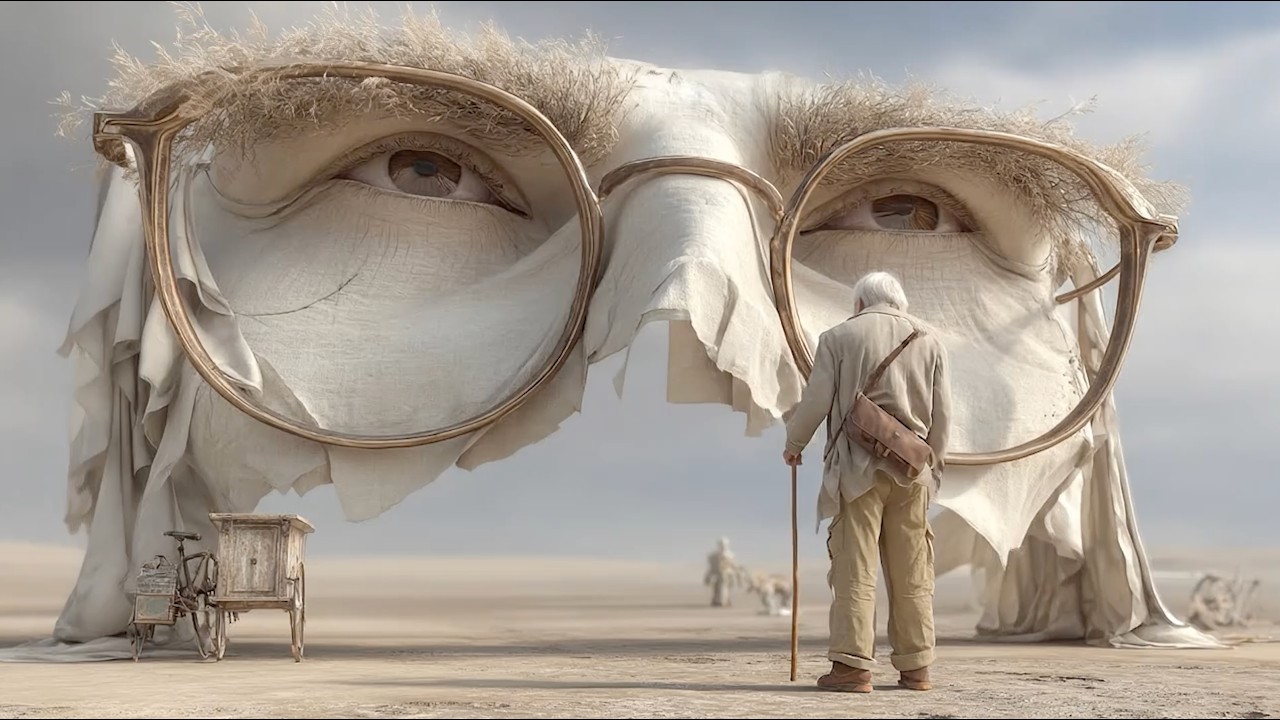
Kelly Boesch — "Not Made For The Cage" (4K AI film)

Start with an image, not a prompt

Most people approaching AI video do it text-first — describe the scene, generate, hope. Boesch works the opposite way. She generates a still with Midjourney, gets it compositionally right, then animates from that image. The control she keeps over aesthetic and framing is deliberate. Text-to-video is closer to a lottery; image-to-video is closer to art direction.

For animation she pulls from Runway ML, Pika, Higgsfield, and VEO3, depending on what a scene needs. Each tool has different behavior. She moves between them.

Her framing of the edit layer, from an interview about her process, is the clearest articulation of what she's actually doing: "You can't just let the AI do the work — the editing, color correction, and sound mixing are where the human touch turns a clip into a story." That's a methodology, not a disclaimer.

Then add music

Her debut album — Fairytale, April 2026, Nettwerk, 14 tracks, 49 minutes — came out the same week as her London show at W1 Curates. She wrote the lyrics. She used Suno to produce the music under her direction. The label and the imprint (Gelsomina Studios) are real.

This is the part that changes the conversation about what she's making. Directing a generative music tool through your own lyrics to produce a cohesive album that lands on a real label is not a random output. That's a music production pipeline she owns.

You can argue the tools are doing the heavy lifting and she's curating the results. That's a fair read, and I've had the same thought. But curation at that level of intentionality is close to authorship. Most film directors don't operate the camera either.

What the IMAX years actually did

The 17 years matter here. When Boesch talks about color correction, edit pacing, and sound mixing as the human contribution, she's not reaching for concepts she recently learned. She built those instincts professionally. She arrived at these tools already knowing what a cinematic image is supposed to feel like.

That's not a small thing. A lot of AI art fails at the sensibility level — technically generated, but visually incoherent. Her training gives her a baseline the tools can't provide.

The April moment

The timeline is worth noting: Fairytale drops April 10. W1 Curates London opens April 10. She speaks at TED2026 in Vancouver on April 15. The talk was called "Art, Music, AI and The Joy of Creativity."

I don't know whether all of that landing in one week was strategic or just how it fell. Either way, it marks a shift — from "AI creator with a big following" to "artist with gallery and conference stage recognition." Those are different categories, and she crossed into the second one.

What I keep thinking about

Boesch's stated position is consistent: AI augments creativity, it doesn't replace it. What's interesting is that her workflow demonstrates it rather than just asserting it. The image-to-video method, the manual lyric writing, the edit layer — each is a decision point the tool didn't make for her.

A lot of people describe themselves as "AI collaborators" and mean they typed a good prompt. She seems to actually mean it. The process proves it out more than most.

← Back to Digest

How Kelly Boesch Built a Studio of One With AI

Kelly Boesch spent 17 years at IMAX before AI gave her a way to make the work she'd always wanted to make. The process is worth studying.

Solo digital artist Kelly Boesch working on AI-generated artwork at a computer in a creative studio

Kelly Boesch spent 17 years at IMAX doing graphic design, film production, and marketing. She built development decks that convinced studios to fund projects. She understood production rhythm, visual grammar, large-format cinematic work — in a professional context, not from watching YouTube.

Three years ago she picked up AI image generation. She didn't dabble.

She now has 2-3 million followers, 60 million views a month, a debut album on Nettwerk Music Group, and a recent gallery exhibition in London. That trajectory is interesting. But the process behind it is what I keep wanting to understand.

Kelly Boesch — "Not Made For The Cage" (4K AI film)

Start with an image, not a prompt

Most people approaching AI video do it text-first — describe the scene, generate, hope. Boesch works the opposite way. She generates a still with Midjourney, gets it compositionally right, then animates from that image. The control she keeps over aesthetic and framing is deliberate. Text-to-video is closer to a lottery; image-to-video is closer to art direction.

For animation she pulls from Runway ML, Pika, Higgsfield, and VEO3, depending on what a scene needs. Each tool has different behavior. She moves between them.

Her framing of the edit layer, from an interview about her process, is the clearest articulation of what she's actually doing: "You can't just let the AI do the work — the editing, color correction, and sound mixing are where the human touch turns a clip into a story." That's a methodology, not a disclaimer.

Then add music

Her debut album — Fairytale, April 2026, Nettwerk, 14 tracks, 49 minutes — came out the same week as her London show at W1 Curates. She wrote the lyrics. She used Suno to produce the music under her direction. The label and the imprint (Gelsomina Studios) are real.

This is the part that changes the conversation about what she's making. Directing a generative music tool through your own lyrics to produce a cohesive album that lands on a real label is not a random output. That's a music production pipeline she owns.

You can argue the tools are doing the heavy lifting and she's curating the results. That's a fair read, and I've had the same thought. But curation at that level of intentionality is close to authorship. Most film directors don't operate the camera either.

What the IMAX years actually did

The 17 years matter here. When Boesch talks about color correction, edit pacing, and sound mixing as the human contribution, she's not reaching for concepts she recently learned. She built those instincts professionally. She arrived at these tools already knowing what a cinematic image is supposed to feel like.

That's not a small thing. A lot of AI art fails at the sensibility level — technically generated, but visually incoherent. Her training gives her a baseline the tools can't provide.

The April moment

The timeline is worth noting: Fairytale drops April 10. W1 Curates London opens April 10. She speaks at TED2026 in Vancouver on April 15. The talk was called "Art, Music, AI and The Joy of Creativity."

I don't know whether all of that landing in one week was strategic or just how it fell. Either way, it marks a shift — from "AI creator with a big following" to "artist with gallery and conference stage recognition." Those are different categories, and she crossed into the second one.

What I keep thinking about

Boesch's stated position is consistent: AI augments creativity, it doesn't replace it. What's interesting is that her workflow demonstrates it rather than just asserting it. The image-to-video method, the manual lyric writing, the edit layer — each is a decision point the tool didn't make for her.

A lot of people describe themselves as "AI collaborators" and mean they typed a good prompt. She seems to actually mean it. The process proves it out more than most.

// LEXICON_CITY_DISPATCH_REQ
// STATUS: CONNECTION_STABLE
// SOURCE: CENTRAL_DISPATCH_HQ

SHERMAN UPLINK: "I'm at HQ holding down Central Dispatch. Enter your query below to pull relevant data records and I'll see what data cards we've recovered!"