
// SYSTEM: DIGEST // LIVE
AI WORKFLOW
OPINION
TUTORIALS
ChatGPT
ChatGPT
William Smith
William
CONVERSATIONS WITH CODE

Meta's User Exodus Points to a Bigger Creative Shift

As Meta loses 20 million users while doubling down on AI, creators are quietly building audiences elsewhere — and that's exactly what should happen.

Meta just reported losing 20 million users last quarter while announcing they're pumping billions more into AI investments.

The company's "Family daily active people" metric — their term for collective users across Facebook, Instagram, WhatsApp, and Threads — dropped significantly even as they continue betting the farm on generative AI features.

What's Actually Happening

The numbers tell a clear story.

Meta's user base contracted while their AI spending expanded.

They're not pulling back on the AI push despite the user decline — if anything, they're accelerating it. CEO Mark Zuckerberg framed this as a necessary investment in the company's future, positioning AI as the key to eventually winning back users and driving new engagement.

Meanwhile, creators are quietly diversifying.

The smart ones saw this coming years ago and have been building email lists, launching newsletters, starting podcasts, and experimenting with platforms that give them more control over their relationship with their audience.

This connects to something bigger happening across the creator economy. GitHub just announced they're moving Copilot to usage-based billing, which means the AI tools that creators rely on are becoming more expensive and unpredictable. Google's search queries hit an "all time high" last quarter, suggesting people are looking for information in different places. The platforms are changing the rules faster than creators can adapt to them.

The Creative Work Angle

Meta is optimizing for AI-generated content and algorithmic efficiency over human creativity. Their AI investments aren't about making better tools for creators — they're about replacing creator output with synthetic content that keeps people scrolling without having to pay creators at all.

That's not sustainable for anyone who makes things for a living.

The creators I know who are thriving right now aren't the ones trying to game Meta's algorithm. They're the ones who've built direct relationships with their audience through newsletters, Discord communities, Patreon subscriptions, and their own websites. They treat social platforms as discovery tools, not as their primary distribution channel.

This is actually good news if you're willing to do the work.

When a platform starts hemorrhaging users, it creates opportunities for creators who are willing to go where the attention is moving. The early adopters who jumped on TikTok when it was still weird, who started YouTube channels when everyone said video was too hard, who launched podcasts when most people didn't know what RSS feeds were — they're the ones who built lasting audiences.

Where the Attention is Going

The 20 million people leaving Meta's platforms didn't disappear. They went somewhere.

Some went to newer platforms. Some went back to consuming content through direct subscriptions and newsletters. Some started spending more time on platforms that prioritize human-created content over algorithmic feeds.

The creators who recognize this shift early have a real advantage. While everyone else is trying to figure out how to make Meta's algorithm happy, the smart move is building an audience that doesn't depend on any single platform's goodwill.

The Infrastructure Play

This is where the principles-over-buttons thinking becomes important.

Instead of chasing the latest Meta AI feature or trying to optimize for whatever engagement hack is working this month, focus on building systems that work regardless of which platform is winning.

That means owning your email list. It means having a website that isn't dependent on social media traffic. It means creating content that has value beyond the platform it was originally posted on. It means building relationships with your audience that survive platform changes, algorithm updates, and user migrations.

I'm not saying abandon social media entirely. But if Meta losing 20 million users while investing billions in AI doesn't make you think about diversifying your creative distribution strategy, I don't know what will.

The platforms will keep changing the rules. They'll keep prioritizing their AI features over creator tools. They'll keep treating human creativity as a cost center rather than the thing that makes their platforms worth visiting in the first place.

The creators who adapt to that reality — who build businesses that can survive platform instability — are the ones who'll be making a living from their work five years from now. The ones betting everything on algorithmic reach might not be.

Meta's user decline isn't a crisis for creators. It's a reminder that audiences are portable, but only if you do the work to make them portable. The best time to start building that infrastructure was five years ago. The second best time is right now.


## Generated Images

> Seven variants below — three standard compositions, one documentary (foreground bokeh), and three dynamic-angle "spatial" compositions for parallax video.
> To request a fix on any one, add a checkbox under `## Image Touch-ups` like:
> `- [ ] spatial-square: remove the random hand on the right`

**landscape** — 1920×1080

![landscape](_featured-images/_pending/meta-s-user-exodus-points-to-a-bigger-creative-shift/meta-s-user-exodus-points-to-a-bigger-creative-shift-landscape-1920x1080.webp)
← Back to Digest

Meta's User Exodus Points to a Bigger Creative Shift

As Meta loses 20 million users while doubling down on AI, creators are quietly building audiences elsewhere — and that's exactly what should happen.

Meta's User Exodus Points to a Bigger Creative Shift
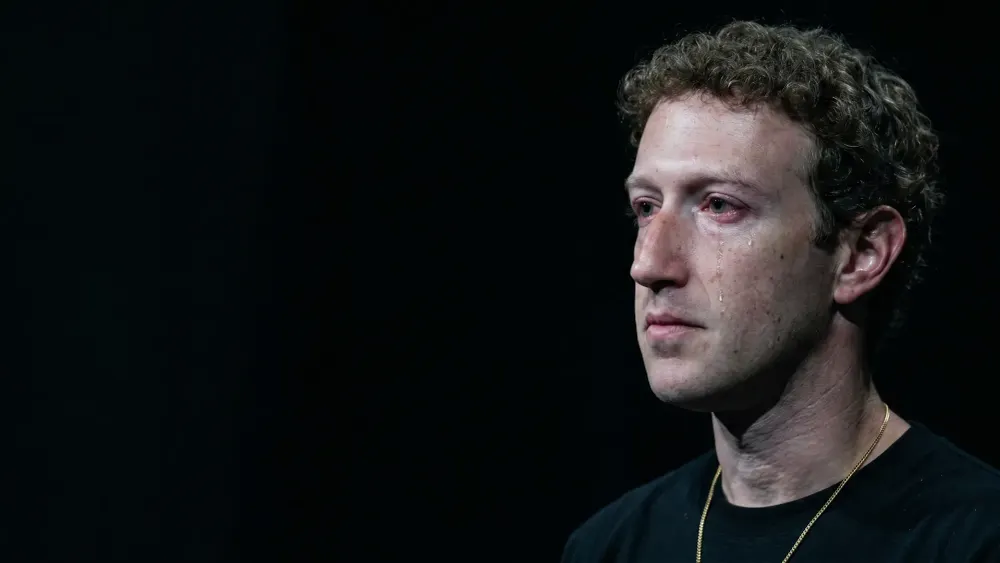
A close-up, documentary editorial photograph of Mark Zuckerberg, his face somber and visibly distressed, with a single tear tracing a path down his cheek. His eyes, red-rimmed, look directly into the camera with a weepy expression.

Meta just reported losing 20 million users last quarter while announcing they're pumping billions more into AI investments.

The company's "Family daily active people" metric — their term for collective users across Facebook, Instagram, WhatsApp, and Threads — dropped significantly even as they continue betting the farm on generative AI features.

What's Actually Happening

The numbers tell a clear story.

Meta's user base contracted while their AI spending expanded.

They're not pulling back on the AI push despite the user decline — if anything, they're accelerating it. CEO Mark Zuckerberg framed this as a necessary investment in the company's future, positioning AI as the key to eventually winning back users and driving new engagement.

Meanwhile, creators are quietly diversifying.

The smart ones saw this coming years ago and have been building email lists, launching newsletters, starting podcasts, and experimenting with platforms that give them more control over their relationship with their audience.

This connects to something bigger happening across the creator economy. GitHub just announced they're moving Copilot to usage-based billing, which means the AI tools that creators rely on are becoming more expensive and unpredictable. Google's search queries hit an "all time high" last quarter, suggesting people are looking for information in different places. The platforms are changing the rules faster than creators can adapt to them.

The Creative Work Angle

Meta is optimizing for AI-generated content and algorithmic efficiency over human creativity. Their AI investments aren't about making better tools for creators — they're about replacing creator output with synthetic content that keeps people scrolling without having to pay creators at all.

That's not sustainable for anyone who makes things for a living.

The creators I know who are thriving right now aren't the ones trying to game Meta's algorithm. They're the ones who've built direct relationships with their audience through newsletters, Discord communities, Patreon subscriptions, and their own websites. They treat social platforms as discovery tools, not as their primary distribution channel.

This is actually good news if you're willing to do the work.

When a platform starts hemorrhaging users, it creates opportunities for creators who are willing to go where the attention is moving. The early adopters who jumped on TikTok when it was still weird, who started YouTube channels when everyone said video was too hard, who launched podcasts when most people didn't know what RSS feeds were — they're the ones who built lasting audiences.

Where the Attention is Going

The 20 million people leaving Meta's platforms didn't disappear. They went somewhere.

Some went to newer platforms. Some went back to consuming content through direct subscriptions and newsletters. Some started spending more time on platforms that prioritize human-created content over algorithmic feeds.

The creators who recognize this shift early have a real advantage. While everyone else is trying to figure out how to make Meta's algorithm happy, the smart move is building an audience that doesn't depend on any single platform's goodwill.

The Infrastructure Play

This is where the principles-over-buttons thinking becomes important.

Instead of chasing the latest Meta AI feature or trying to optimize for whatever engagement hack is working this month, focus on building systems that work regardless of which platform is winning.

That means owning your email list. It means having a website that isn't dependent on social media traffic. It means creating content that has value beyond the platform it was originally posted on. It means building relationships with your audience that survive platform changes, algorithm updates, and user migrations.

I'm not saying abandon social media entirely. But if Meta losing 20 million users while investing billions in AI doesn't make you think about diversifying your creative distribution strategy, I don't know what will.

The platforms will keep changing the rules. They'll keep prioritizing their AI features over creator tools. They'll keep treating human creativity as a cost center rather than the thing that makes their platforms worth visiting in the first place.

The creators who adapt to that reality — who build businesses that can survive platform instability — are the ones who'll be making a living from their work five years from now. The ones betting everything on algorithmic reach might not be.

Meta's user decline isn't a crisis for creators. It's a reminder that audiences are portable, but only if you do the work to make them portable. The best time to start building that infrastructure was five years ago. The second best time is right now.


## Generated Images

> Seven variants below — three standard compositions, one documentary (foreground bokeh), and three dynamic-angle "spatial" compositions for parallax video.
> To request a fix on any one, add a checkbox under `## Image Touch-ups` like:
> `- [ ] spatial-square: remove the random hand on the right`

**landscape** — 1920×1080

![landscape](_featured-images/_pending/meta-s-user-exodus-points-to-a-bigger-creative-shift/meta-s-user-exodus-points-to-a-bigger-creative-shift-landscape-1920x1080.webp)
// LEXICON_CITY_DISPATCH_REQ
// STATUS: CONNECTION_STABLE
// SOURCE: CENTRAL_DISPATCH_HQ

SHERMAN UPLINK: "I'm at HQ holding down Central Dispatch. Enter your query below to pull relevant data records and I'll see what data cards we've recovered!"