
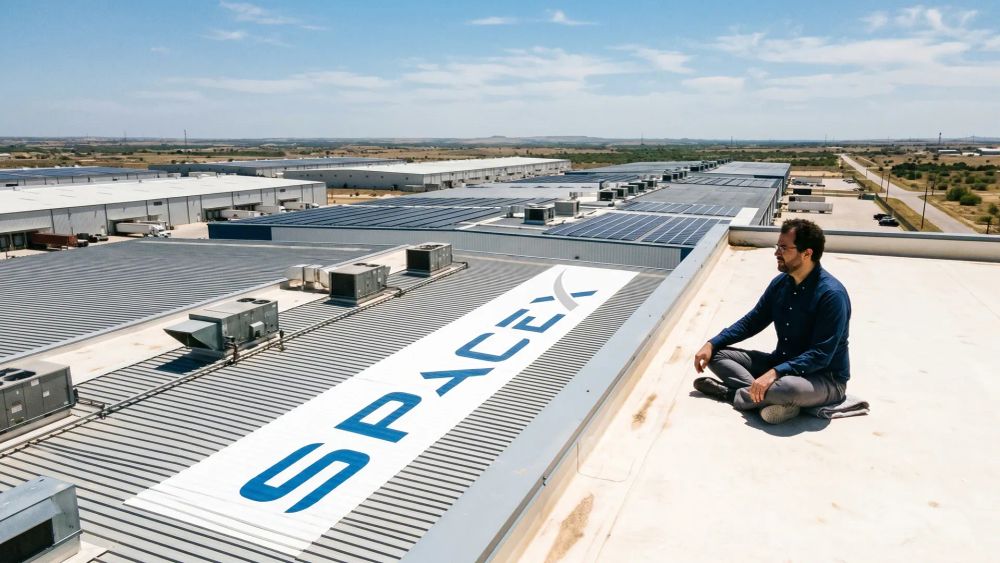
Anthropic just inked a deal with SpaceX to use "all of the capacity of their Colossus data center"—the one with the particularically ambitious 100,000 GPU setup. They're also doubling Claude's usage limits across the board. For most people, this reads like typical Big Tech partnership news. But if you're an indie creator who's been building your own AI workflows, this is really exciting.
I've been running automated content systems with Claude for months now.
Newsletter drafts, research summaries, social media adaptations—the whole pipeline that lets one person operate like a small team. But here's what I learned the hard way: the infrastructure side is a constant pain in the ass.
The DIY Era Is Ending
Right now, if you want AI to actually work for you you're basically building everything yourself. Custom API integrations. Prompt management systems. Error handling when rate limits hit. I've got scripts that retry failed requests and templates that try to maintain consistency across different AI models. It's functional, but it's brittle as hell.
The SpaceX partnership changes this math completely. When Claude can access that kind of computational power, we're not talking about better chat responses. We're talking about AI agents that can handle complex, multi-step creative projects without breaking down halfway through.
Think about what you actually want AI to do for you as a creator. You want it to remember your brand voice across a six-month campaign. You want it to understand that your luxury fashion client prefers "sophisticated" over "elegant" and never uses certain color combinations. You want it to track every asset you've used, understand licensing restrictions, and proactively suggest alternatives when you're pushing budget limits.
That's not possible with the current "ask AI a question, get an answer back" model. That requires persistent intelligence—AI that maintains context over weeks and months, not just individual conversations.
What Enterprise Infrastructure Actually Means
The Colossus data center isn't just about raw power. It's about reliability.
When you're running a creative business, you can't have your AI assistant crash in the middle of a client deadline because of server issues or capacity limits.
I've had Claude hit usage limits right when I'm trying to finalize a newsletter that goes out to thousands of people. Not exactly professional. But when Anthropic has guaranteed access to 100,000 GPUs, those bottlenecks disappear. Your AI teammate becomes as reliable as any other business tool you depend on.
More importantly, this level of infrastructure enables AI agents—not just AI tools. We're talking about Claude instances that can maintain project continuity, remember creative decisions, and operate across your entire tech stack without constant human babysitting.
The Democratization Play Nobody's Talking About
Here's where it gets interesting for indie creators: enterprise-grade AI infrastructure is actually the great equalizer, not the great divider.
Right now, if you want AI that can handle complex creative workflows, you need technical chops. You need to understand APIs, manage authentication, handle errors gracefully. Most creatives don't want to become part-time developers just to automate their social media.
But when AI agents run on enterprise infrastructure, that technical complexity gets abstracted away. A photographer's AI agent can automatically update their portfolio website, cross-post selected works to Instagram with appropriate hashtags, and send client notifications when galleries are ready—all without the photographer touching a line of code.
A copywriter's agent can maintain brand voice guidelines across multiple clients, track which headlines performed best for different industries, and adapt writing style based on target demographics. The agent gets smarter about your preferences over time, not dumber.
What Changes for Solo Creators
The SpaceX partnership signals that we're moving from "AI as productivity hack" to "AI as business infrastructure." That shift matters more for indies than for big agencies.
Large creative agencies already have project managers, account coordinators, and production assistants handling the routine work. When you're a solo creator, you're wearing all those hats yourself. AI agents with enterprise-grade reliability can actually take on those roles.
Your AI teammate will remember that Client A needs assets delivered via Dropbox while Client B prefers direct email attachments. It'll track which social media platforms perform best for different types of content. It'll maintain your content calendar and suggest optimal posting times based on your audience engagement patterns.
This isn't about replacing human creativity. It's about getting rid of all the administrative bullshit that keeps you from focusing on the creative work you actually want to do.
The Timing Isn't Coincidental
Anthropic isn't the only one making these moves. Google's prepping Agent Mode for Gemini. OpenAI's testing autonomous agents with their Chrome extensions. The entire industry is pivoting from chat-based AI to agent-based AI.
The SpaceX partnership gives Anthropic the computational foundation to make managed agents actually work at scale. When your AI teammate can access that kind of processing power, it can handle multiple complex tasks simultaneously without performance degradation.
For indie creators who've been skeptical about AI—wondering if it's just another productivity fad—this is the inflection point. AI agents with enterprise infrastructure aren't experimental anymore. They're becoming standard business infrastructure, like cloud storage or email marketing platforms.
The question isn't whether AI will transform creative workflows. The question is whether you'll adapt to agent-based collaboration before your competitors do.
I'm betting on the creators who lean into this shift. The ones who stop thinking about AI as a tool and start thinking about it as a teammate. Because when everyone else is still prompting ChatGPT for individual tasks, you'll be working with an AI agent that understands your entire creative business.
And that advantage compounds fast.
## Generated Images
> Seven variants below — three standard compositions, one documentary (foreground bokeh), and three dynamic-angle "spatial" compositions for parallax video.
> To request a fix on any one, add a checkbox under `## Image Touch-ups` like:
> `- [ ] spatial-square: remove the random hand on the right`
**landscape** — 1920×1080
