
Something ugly is happening in the AI conversation, and I'm getting worried about where it's headed.
I've been watching the discourse around AI tools shift from skeptical-but-reasonable to genuinely vicious, and it's starting to feel dangerous.
Not dangerous like "the robots are coming" dangerous.
Dangerous like "someone threw a molotov cocktail at Sam Altman's house" dangerous.
When Skepticism Became a Witch Hunt
Look, I get the concerns about AI.
But somewhere along the way, legitimate criticism turned into something else entirely. And I can trace exactly how it happened.
It started in tech culture - engineers and researchers having heated but mostly reasonable debates about alignment, safety, data practices. Fair enough. These are the people building the stuff, they should be arguing about it.
Then it jumped to the news cycle. Suddenly every tech reporter had hot takes about AI doom. The coverage got more sensational, more black-and-white. Nuance doesn't get clicks, after all.
Then it hit pop culture. Celebrities started weighing in. Social media influencers picked sides. The conversation stopped being about actual AI capabilities and started being about team loyalty.
And now? Now it's everywhere. Your neighbor has strong opinions about data centers. Your aunt is sharing articles about AI stealing jobs.
This is the same pattern we've watched politics follow.
Start with legitimate policy disagreements, add media amplification, mix in social media tribalism, and suddenly you're not debating ideas anymore - you're demonizing people. If you just say "AI is evil" long enough you might actually convince people to believe it.
The Escalation is Real
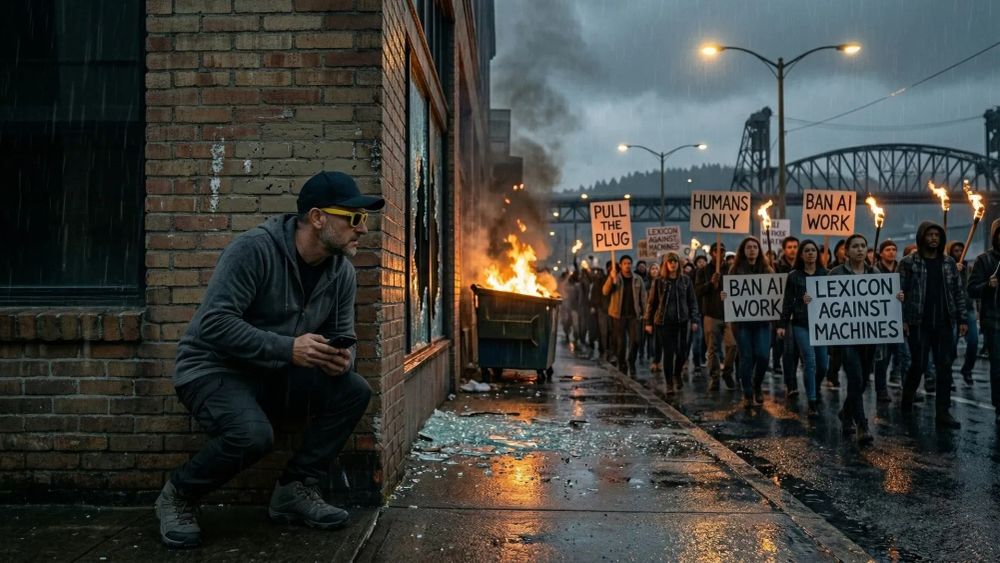
We've moved way past arguing about whether AI training is fair use. We're talking about actual violence now.
Someone literally threw a molotov cocktail at Sam Altman's house. Whatever you think about OpenAI's business practices, that's not criticism - that's terrorism and I can't help but hope that the same technology this lunatic is demonizing be used to put him away. I hate that thats my instinct now.
And it's not just the extreme stuff.
The whole conversation has gotten infected with this viciousness. People are treating anyone who uses AI tools like they're personally responsible for every bad outcome the technology might cause.
You mention you used Claude to help with a first draft? You're contributing to job displacement. You experiment with image generation? You're stealing from artists.
The Data Center Hysteria
Look at what's happening with data centers. Suddenly every new facility is treated like we're building nuclear waste dumps.
Yes, energy usage matters. Yes, we should optimize for efficiency. But the way people are talking about it, you'd think these were death camps instead of computers.
I've seen protestors comparing AI training to environmental destruction while tweeting from phones that were manufactured using rare earth mining, from the hands of slaves.
And here's the thing - a lot of the most vocal opponents live in places where their local economy depends on tech infrastructure. They just don't want to connect the dots.
Who Benefits from This?
The loudest voices in the anti-AI mob often aren't the people who are actually at risk.
It's not the photographers whose stock photo business is getting disrupted. It's not the copywriters whose clients are asking for AI rates. And finally, it's not the artists trying to figure out how to compete with generated work.
It's the people who were already established before any of this started. The ones with tenure, with big followings, with secure positions. Essentially: gatekeepers.
And they're using legitimate concerns about AI to tear down anyone who's trying to adapt, learn, or experiment. Conveniently, this keeps the competition small and the conversation focused on fear instead of solutions.
The Chilling Effect is Real
I'm talking to people who are afraid to mention they use AI tools at all, even when it would be helpful context. They're keeping their experiments private. They're not sharing what they're learning.
You know what that creates? A world where only the people who don't give a shit about transparency get to benefit from these tools. Where the honest ones stay quiet and the dishonest ones keep working.
Where the Real Problems Are
Want to know what actually pisses me off about AI? It's not that people are using the tools. It's that some people are using them to flood the world with garbage and calling it "content creation."
The problem isn't AI. The problem is human slop. It's people who were already cutting corners, already producing junk, who now have a faster way to produce more junk.
But instead of going after the people making human slop, we're going after the people trying to use AI thoughtfully. The ones being transparent about their process. The ones still putting in the work.
It's backwards. And it's starting to look a lot like other forms of political scapegoating I really don't want to see repeated in tech.
A Better Way Forward
Look, I'm not saying all AI criticism is wrong. Some of it is legitimate. But we need to separate the legitimate concerns from the mob mentality before this gets completely out of hand.
We can push for better training data practices without treating people like criminals for using existing tools. We can advocate for artists' rights without attacking students who use AI for research. We can worry about job displacement without turning transparency into a confession of crimes.
Maybe, just maybe, we can have these conversations without anyone getting hurt. Because molotov cocktails aren't changing anyone's mind, it's just going to escalate all of this further.
Let's aim for the right targets. Before this gets any uglier than it already has.