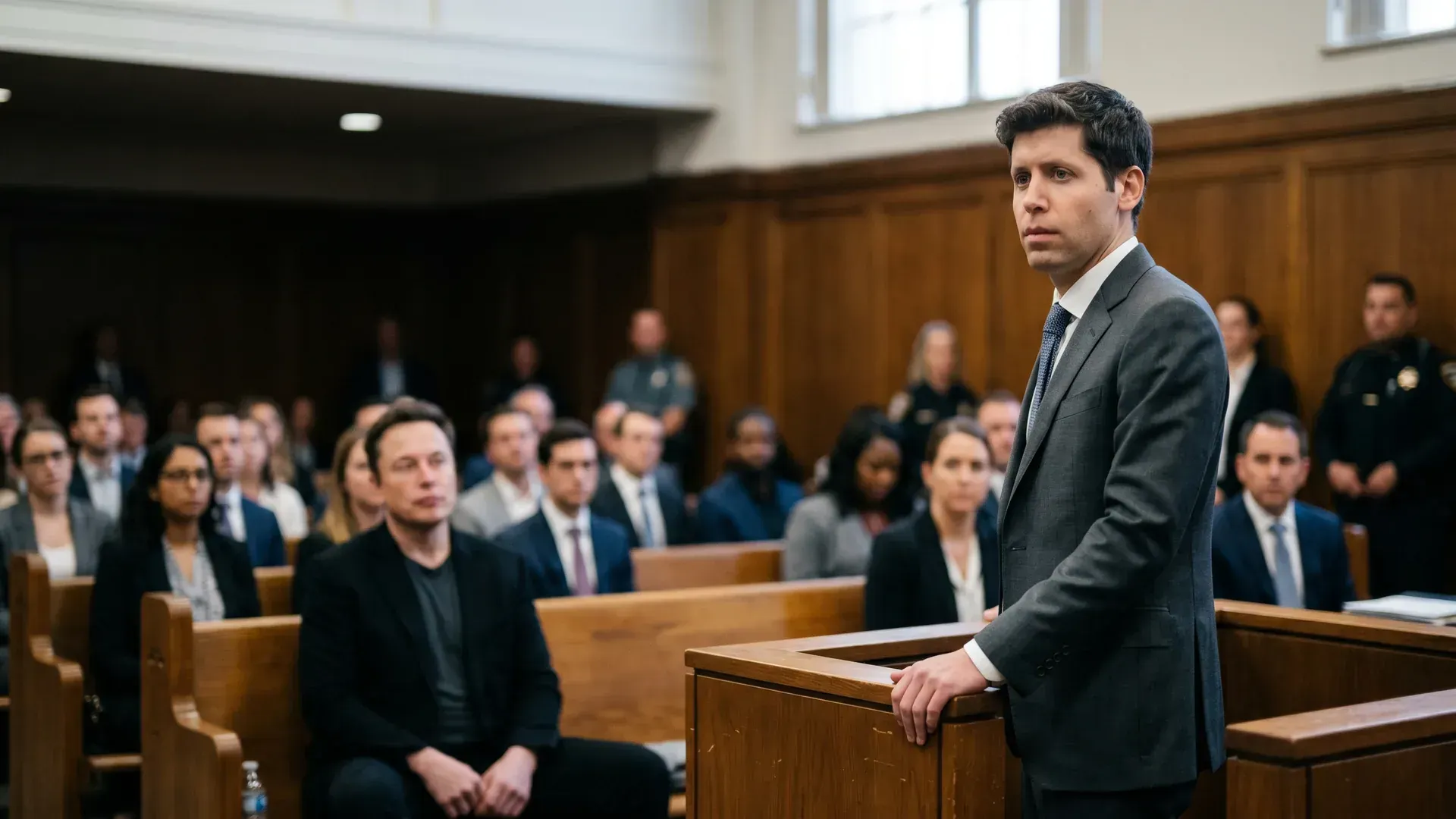

A California jury dismissed Elon Musk's lawsuit against OpenAI in less than two hours on May 18th. The reason wasn't that Musk was wrong about anything in particular. It was that he waited too long to sue — the statute of limitations had run out. So the core question at the center of the whole fight, whether OpenAI betrayed its founding mission when it restructured into a for-profit entity, never got a legal answer.
I don't think Musk is a credible messenger here. He launched his own AI company, xAI, in 2023. He's a direct competitor. His stated plan was to have any damages he won — somewhere between $79 and $134 billion — returned to OpenAI's nonprofit arm, which is a strange thing to claim with a straight face when you're also trying to remove the leadership and kneecap the organization. OpenAI's attorneys called the lawsuit "hypocritical," and on the motivations question, they're probably right.
What actually changed at OpenAI, and why it matters
OpenAI was founded in 2015 as a nonprofit AI research lab. The pitch was simple and genuinely idealistic — develop artificial general intelligence for the benefit of humanity, not shareholders. Musk was one of the co-founders. So was Sam Altman, Greg Brockman, and Ilya Sutskever, among others.
By 2019, that structure had a problem. Training frontier AI models costs billions of dollars in compute. A pure nonprofit can't raise that kind of capital or offer the equity compensation needed to compete for top engineers. So OpenAI created a hybrid: a for-profit subsidiary (OpenAI LP) that could take venture funding and offer equity, with a cap on investor returns. Profits beyond the cap were supposed to flow back to the nonprofit parent. The nonprofit, in theory, retained ultimate control.
Microsoft came in with $13 billion over several years. It provides the Azure cloud infrastructure that OpenAI's models actually run on. As of the October 2025 restructuring into a Public Benefit Corporation, Microsoft holds a 26.79% stake. OpenAI is now valued at approximately $852 billion, with analysts projecting a potential IPO could approach $1 trillion.
The nonprofit parent is still there, on paper. But the for-profit entity underneath it is worth nearly a trillion dollars.
What the Altman firing actually showed us
In November 2023, the OpenAI board — the nonprofit board, the one with the actual mission-first fiduciary duty — fired Sam Altman. They cited lack of confidence in his leadership. They didn't give a detailed public explanation, which created a vacuum that got filled with speculation almost immediately.
What happened next is the most instructive part of this whole story.
Employees revolted. Hundreds signed a letter threatening to leave if Altman wasn't reinstated. Microsoft made clear it would hire Altman and his team if they walked. Within days, Altman was back, the board was reshuffled, and OpenAI quietly changed its bylaws to require a two-thirds supermajority of non-employee directors to fire the CEO.
The nonprofit board tried to exercise its legal authority. The operational and financial stakeholders overrode it.
You can argue about whether the board was right to fire Altman. That's a separate question. The structural point is harder to argue with: when the mission-oriented governance layer and the financial stakeholders came into direct conflict, the financial stakeholders won. The nonprofit didn't lose its paperwork. It lost its leverage.
The safety researcher exodus is worth taking seriously
In 2024 and 2025, several key people from OpenAI's safety and alignment work left. Jan Leike, who led the "Superalignment" team — the group specifically focused on ensuring superintelligent AI remains controllable — departed and said publicly that he left in protest. A former safety staffer told reporters that "safety culture and processes have taken a backseat to shiny products." The Superalignment team itself was disbanded.
OpenAI hasn't given a detailed public explanation for why that team was shut down.
Ilya Sutskever, one of the co-founders and the person who helped initiate the November 2023 attempt to remove Altman, left in May 2024 to start something he described as "personally meaningful." His public statement was diplomatically vague. He said he was confident in OpenAI's leadership on his way out, which is exactly what you say when you've decided there's nothing more to do from inside.
I want to be careful here. I don't know what the internal fights looked like. I don't know what specific decisions the safety researchers were objecting to, or what proposals got rejected. The public statements have been careful. But when the people whose entire job is to slow things down and ask hard questions start leaving in protest, and their teams get disbanded, that's usually a signal worth tracking, not dismissing.
The IPO is when the structure either holds or breaks
OpenAI has said the nonprofit parent will retain control of the Public Benefit Corporation even after it goes public. The legal mechanism for how that works — how a nonprofit entity overrides the fiduciary duties a public company's board owes to shareholders — is genuinely untested at this scale.
A Public Benefit Corporation is a real legal structure. It's not nothing. But PBCs face quarterly earnings pressure, activist investors, and market expectations the same as any other public company. The "benefit" mandate has to be enforced by someone, and the enforcement question is where things get murky.
Has a nonprofit ever successfully maintained mission-driven control over a trillion-dollar public company when those incentives pulled in opposite directions? I don't know of a precedent. If you do, I'd genuinely like to hear it.
What this has to do with you, specifically
If you're a writer, designer, or developer using ChatGPT, DALL-E, or Codex to run your creative work, you're already inside this governance question whether you think about it or not.
The decisions that shape those tools — what gets prioritized, what safety trade-offs get made, what features get built versus what research gets funded, who gets access and at what price — are made by a company that is now worth nearly a trillion dollars and is heading toward a public offering. The nonprofit parent that's supposed to keep all of that accountable to a mission just watched its most significant governance test go the wrong way in 2023, and then quietly made it harder to repeat that test.
I'm not saying you should stop using these tools. I use them constantly. But I think there's a difference between using a tool and assuming the company building it shares your values. OpenAI's founding documents said the mission was AGI for humanity. The current structure says the investors get up to a 100x return before that mission kicks in, and the people whose job was to keep the long-term safety work on track have largely left.
That's not a reason to panic. It's a reason to pay attention to who controls the infrastructure you're building your work on, and to stay curious about what happens to that infrastructure when the IPO lands and the quarterly pressure starts.
The lawsuit being dismissed doesn't make any of this cleaner. It just means the courts aren't going to sort it out for us.