The Numbers Don't Lie
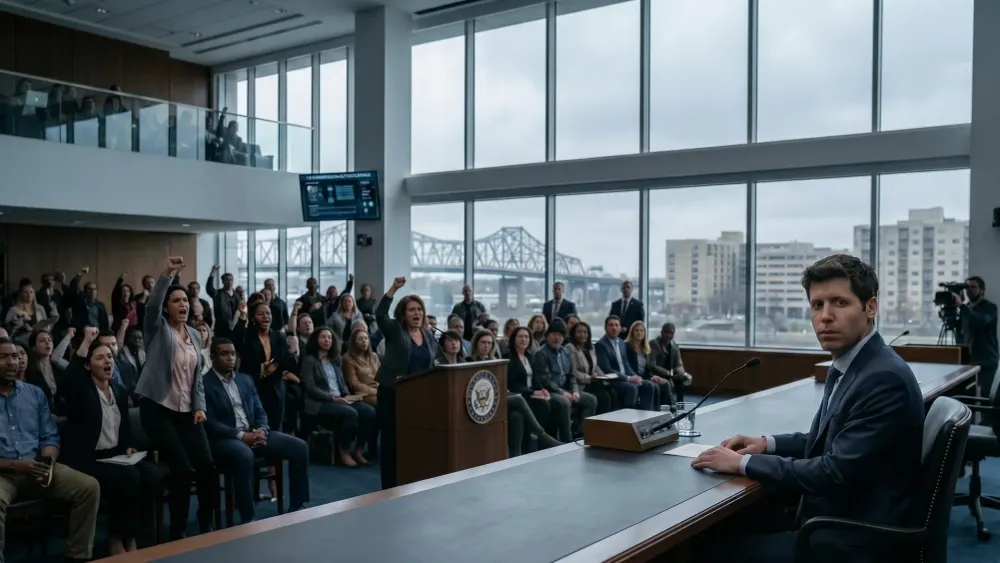
A new Benenson Strategy Group poll commissioned by the Center for AI Safety Action Fund reveals something the AI industry hoped wasn't true: the public really doesn't like them.
Seventy-two percent of Americans think AI development is moving too fast. Sixty-nine percent believe tech companies can't be trusted to develop AI responsibly. Most telling? Fifty-seven percent want the government to regulate AI more strictly, even though Americans generally hate government regulation of anything.
These aren't technophobe numbers. This is mainstream distrust.
The poll also found that 71% of Americans think AI will eliminate jobs, and 69% believe it will increase misinformation. When asked about AI's benefits, the numbers flip — only 39% think AI will improve their daily lives.
What The Industry Is Saying
Tech leaders are scrambling to explain the backlash. OpenAI's Sam Altman recently told investors that "public sentiment will improve as people see real benefits." Anthropic's Dario Amodei argues that "fear always precedes adoption of transformative technologies."
Meanwhile, Google's Sundar Pichai called for "more education" about AI benefits during a recent earnings call. The message from Silicon Valley is clear: the public just doesn't understand AI well enough to appreciate it.
This is where I think they're completely wrong.
The Public Understands Fine
The AI industry keeps acting like public skepticism is an education problem. People just need to understand how amazing this technology is! They need to see the benefits! They need better messaging!
But here's what I've observed from two years of tracking AI adoption: most people understand AI pretty well. They use ChatGPT. They've seen the image generators. They know their nephew got fired because his company replaced him with Claude.
The problem isn't understanding. The problem is trust.
When Sam Altman says AI will create more jobs than it eliminates, but his own company is testing marketplace systems where AI agents conduct business without human involvement, people notice the contradiction.
When tech companies promise AI will "augment human creativity" while simultaneously training models on millions of artists' work without permission or payment, creators notice.
When executives claim AI will democratize access to knowledge while building systems that require massive compute resources only large corporations can afford, people notice.
The Real Problem Is Honesty
I think the public backlash isn't really about AI at all. It's about being told one thing while experiencing another.
The industry narrative goes like this: AI will make everyone more productive and creative. It's a tool that empowers individuals. It's the great democratizer.
The reality people are living: 44% of new music uploads are now AI-generated, most of them fraudulent streams designed to game royalty systems. Companies are posting job requirements for "AI-native" workers while laying off thousands. The tools that were supposed to level the playing field are increasingly locked behind enterprise paywalls.
That's not an education gap. That's a credibility gap.
What This Means for Creators
If you're building something creative with AI, you're caught in the middle of this trust crisis. People are suspicious of AI-generated content not because it's technically inferior, but because they've been burned by promises that turned out to be marketing copy.
The companies selling AI tools have spent two years optimizing for hype instead of honest communication. Now creators using these tools inherit that skepticism.
But here's the opportunity: you can be the honest voice the industry isn't providing.
When I write about using Claude for research, I'm specific about what it's good at and where it fails. When I share AI-generated images, I tag them clearly. When I build workflows with AI tools, I explain what the human contribution actually is.
This isn't just ethical disclosure — it's competitive advantage. In a market flooded with human slop masquerading as AI innovation, genuine transparency stands out.
The Correction Is Coming
The Benenson poll numbers suggest we're heading toward a correction. Not a technical correction — the technology keeps improving. A trust correction.
Companies that have been selling AI as magical automation are going to face harder questions. Tools that promise to "replace human creativity" are going to encounter resistance. Platforms built on extracting value from creative work without compensation are going to face regulation.
This is actually good news for people building sustainable creative practices with AI. The hype merchants are going to get filtered out. The honest builders will have space to do actual work.
The public doesn't hate AI. They hate being sold a vision of the future that benefits everyone while watching a reality that mainly benefits a few large companies. The solution isn't better messaging — it's better practices.
If you're building with AI, build something that actually helps people. If you're selling AI tools, be honest about what they do and don't do. If you're creating AI content, own what's yours and label what isn't.
The trust crisis creates an opportunity for anyone willing to earn credibility instead of just claiming it.