


// SYSTEM: DIGEST // LIVE
AI WORKFLOW
OPINION
TUTORIALS
ChatGPT
ChatGPT
William Smith
William
CONVERSATIONS WITH CODE

AI Subscription Fatigue: The Projects You Never Meant to Build

A developer accidentally built 16 projects with Claude he never planned to create. The tools promising to save time had quietly become the source of his workload.

David Wilson sat down to write a quick script. He ended up with 16 unfinished projects demanding his attention. Sound familiar?

His story got picked up by technologist Simon Willison, who wrote about it on his blog, and the response was immediate. Developers and creatives recognized themselves in it. The confession resonated because the pattern is almost embarrassingly familiar: you open Claude to solve one small problem, and an hour later you're three architectural decisions deep into something you never planned to build.

Wilson called these tools a "thermonuclear ADHD amplifier." As someone with ADHD, this was incredibly relatable.

How a quick script becomes a portfolio of debt

AI tools make the next step feel almost free. You write a script, it works, and the AI immediately makes it obvious how you could extend it into something bigger. The cost of iteration drops so low that you keep going. Scope creep used to be slowed by the actual effort of writing code or copy. Now the effort is minimal, so the only thing stopping you is judgment — and judgment is exactly what gets eroded when a reward loop fires every thirty seconds.

What you end up with isn't a finished thing. It's a half-built thing with its own maintenance demands. And then another one. And another.

The research backs this up in ways that are a little uncomfortable to look at directly. Over 80% of AI projects fail to deliver their intended business value, according to RAND Corporation. MIT Sloan puts the number of generative AI pilots that never reach production at 95%. These aren't small companies making rookie mistakes — this is the baseline outcome across the industry.

The $66 question

The average American paying for AI tools is spending about $66 a month across four different subscriptions, according to data from Bango. That's not outrageous money on its own — but the reality of AI subscriptions hits differently when you pair it with the project debt pattern: you're essentially paying a monthly fee to generate work you can't finish.

Fifty-three percent of AI subscribers cancel and restart subscriptions as needed. Which sounds like smart management until you realize it's also a sign that people are cycling through these tools looking for the one that finally makes the problem go away.

I've done this. I don't think I'm unusual in having three or four active subscriptions at any given time — Claude for writing and thinking, Perplexity for research, something else for a specific task I convinced myself I needed a dedicated tool for. The switching between them carries its own cost. There's decent evidence that your AI productivity stack is making you slower through the cognitive penalty of context-switching alone — even when each individual tool is working fine.

What friction was actually doing for you

Wilson's observation about frictionless creation points at something worth sitting with. When he says "cheap reward with minimal input and no friction can only be a liability," he's describing something that creative professionals have always known intuitively but rarely articulate: the effort required to do something is part of how you decide whether it's worth doing.

Friction filters. When writing a piece of code or drafting a proposal required real time and energy, you thought harder before starting about whether it was actually a good idea. The cost of beginning was high enough that you'd run a quick internal audit first. Is this worth my afternoon? Do I actually need this?

AI tools have mostly eliminated that audit. The cost of beginning is now so low that you begin everything. And then you have 16 projects.

This isn't an argument against using these tools — I use them constantly, and I think they're genuinely useful for a lot of what I do. But I've noticed that my best AI-assisted work usually happens when I focus on bringing clear context to the tool — a specific problem I've already framed — not when I let the tool suggest the next problem to solve. The difference between those two modes is significant.

The people who are actually stepping back

The Gartner Hype Cycle placed generative AI in the "trough of disillusionment" recently, which is the kind of analyst-speak that usually means "the thing didn't solve everything we hoped." But in this case I think the framing is actually useful. The trough isn't where the technology dies — it's where people stop using it to avoid thinking and start using it intentionally.

Some people are canceling subscriptions outright. Others are consolidating — picking one or two tools and getting genuinely good at them instead of maintaining a sprawling stack. A smaller group is doing something more interesting: they're reintroducing friction deliberately. Keeping a list of projects before starting them. Requiring themselves to write a one-sentence description of the outcome before opening a chat window. Treating the AI like a collaborator who needs a brief, not a vending machine you can tap whenever an impulse fires.

That last approach is the one I've been experimenting with, with mixed results if I'm honest. The impulse to just start something is strong. The tools are designed to make starting feel good.

What "project debt" actually costs

The annual maintenance cost for software projects runs 15–30% of the initial development cost, according to Riseup Labs. That number was built around human-written code, but it applies to AI-generated code too — maybe more so, because AI-generated code is often written without the context and constraints that make maintenance easier. You didn't fully understand what you built, because you didn't fully build it.

Multiply that across 16 projects and you have a significant ongoing tax on your attention, even if you never touch most of them. They exist. They're in your mental inventory. They represent decisions you haven't made yet about whether to finish them, delete them, or let them quietly rot.

That's the part Wilson's story captures that the productivity discourse usually misses.

The practical question

If you're a freelancer or a small operator, the question isn't really whether to cancel your AI subscriptions. For most of us, these tools have become genuinely load-bearing parts of how we work, and 67% of subscribers in the Bango data still call AI their most important subscription category — even the ones who churn.

The question is what you're using them for, and whether you've thought about it recently.

The difference between when AI makes you faster versus slower often comes down to this: there's a version where you use Claude or Gemini as a thinking partner on work you've already decided to do. And there's a version where you open a chat window whenever you feel the itch to build something and let the tool talk you into a new project. Those are very different relationships with the same tool, and they produce very different outcomes.

Wilson's experience is worth taking seriously not because AI tools are bad but because the pattern he describes — the scope creep, the abandoned projects, the subscription fees paying for problems — is easy to drift into without noticing. I've drifted into it. The tools are good at making the drift feel productive.

The audit question I've been asking myself lately: if I had to pay per session instead of a flat monthly fee, would I have started this? It's not a perfect filter, but it slows things down just enough to be useful.

← Back to Digest

AI Subscription Fatigue: The Projects You Never Meant to Build

A developer accidentally built 16 projects with Claude he never planned to create. The tools promising to save time had quietly become the source of his workload.

AI Subscription Fatigue: The Projects You Never Meant to Build
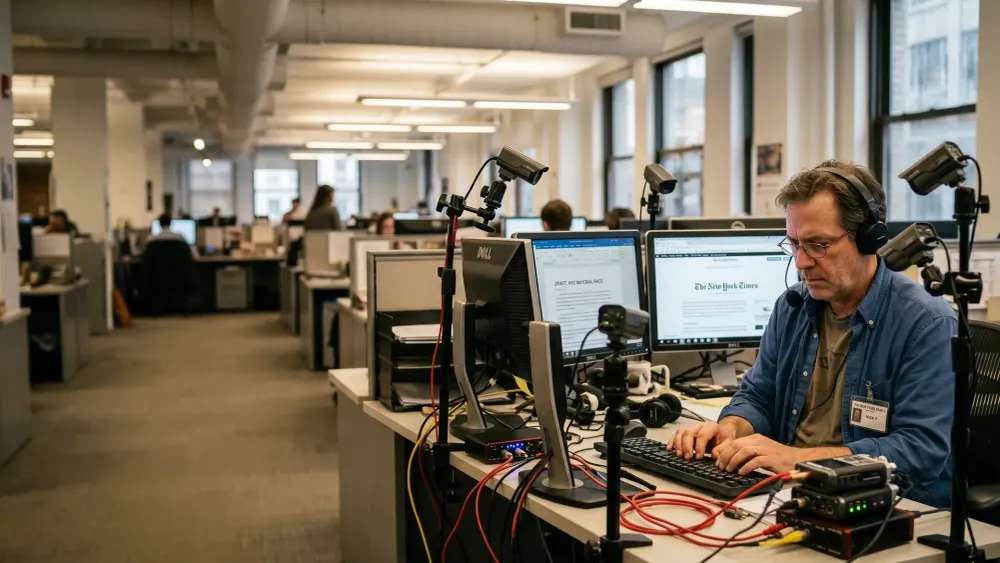
A man working on an article at the NY Times at his desk with monitoring equipment setup to record what he is doing, writing, etc.

David Wilson sat down to write a quick script. He ended up with 16 unfinished projects demanding his attention. Sound familiar?

His story got picked up by technologist Simon Willison, who wrote about it on his blog, and the response was immediate. Developers and creatives recognized themselves in it. The confession resonated because the pattern is almost embarrassingly familiar: you open Claude to solve one small problem, and an hour later you're three architectural decisions deep into something you never planned to build.

Wilson called these tools a "thermonuclear ADHD amplifier." As someone with ADHD, this was incredibly relatable.

How a quick script becomes a portfolio of debt

AI tools make the next step feel almost free. You write a script, it works, and the AI immediately makes it obvious how you could extend it into something bigger. The cost of iteration drops so low that you keep going. Scope creep used to be slowed by the actual effort of writing code or copy. Now the effort is minimal, so the only thing stopping you is judgment — and judgment is exactly what gets eroded when a reward loop fires every thirty seconds.

What you end up with isn't a finished thing. It's a half-built thing with its own maintenance demands. And then another one. And another.

The research backs this up in ways that are a little uncomfortable to look at directly. Over 80% of AI projects fail to deliver their intended business value, according to RAND Corporation. MIT Sloan puts the number of generative AI pilots that never reach production at 95%. These aren't small companies making rookie mistakes — this is the baseline outcome across the industry.

The $66 question

The average American paying for AI tools is spending about $66 a month across four different subscriptions, according to data from Bango. That's not outrageous money on its own — but the reality of AI subscriptions hits differently when you pair it with the project debt pattern: you're essentially paying a monthly fee to generate work you can't finish.

Fifty-three percent of AI subscribers cancel and restart subscriptions as needed. Which sounds like smart management until you realize it's also a sign that people are cycling through these tools looking for the one that finally makes the problem go away.

I've done this. I don't think I'm unusual in having three or four active subscriptions at any given time — Claude for writing and thinking, Perplexity for research, something else for a specific task I convinced myself I needed a dedicated tool for. The switching between them carries its own cost. There's decent evidence that your AI productivity stack is making you slower through the cognitive penalty of context-switching alone — even when each individual tool is working fine.

What friction was actually doing for you

Wilson's observation about frictionless creation points at something worth sitting with. When he says "cheap reward with minimal input and no friction can only be a liability," he's describing something that creative professionals have always known intuitively but rarely articulate: the effort required to do something is part of how you decide whether it's worth doing.

Friction filters. When writing a piece of code or drafting a proposal required real time and energy, you thought harder before starting about whether it was actually a good idea. The cost of beginning was high enough that you'd run a quick internal audit first. Is this worth my afternoon? Do I actually need this?

AI tools have mostly eliminated that audit. The cost of beginning is now so low that you begin everything. And then you have 16 projects.

This isn't an argument against using these tools — I use them constantly, and I think they're genuinely useful for a lot of what I do. But I've noticed that my best AI-assisted work usually happens when I focus on bringing clear context to the tool — a specific problem I've already framed — not when I let the tool suggest the next problem to solve. The difference between those two modes is significant.

The people who are actually stepping back

The Gartner Hype Cycle placed generative AI in the "trough of disillusionment" recently, which is the kind of analyst-speak that usually means "the thing didn't solve everything we hoped." But in this case I think the framing is actually useful. The trough isn't where the technology dies — it's where people stop using it to avoid thinking and start using it intentionally.

Some people are canceling subscriptions outright. Others are consolidating — picking one or two tools and getting genuinely good at them instead of maintaining a sprawling stack. A smaller group is doing something more interesting: they're reintroducing friction deliberately. Keeping a list of projects before starting them. Requiring themselves to write a one-sentence description of the outcome before opening a chat window. Treating the AI like a collaborator who needs a brief, not a vending machine you can tap whenever an impulse fires.

That last approach is the one I've been experimenting with, with mixed results if I'm honest. The impulse to just start something is strong. The tools are designed to make starting feel good.

What "project debt" actually costs

The annual maintenance cost for software projects runs 15–30% of the initial development cost, according to Riseup Labs. That number was built around human-written code, but it applies to AI-generated code too — maybe more so, because AI-generated code is often written without the context and constraints that make maintenance easier. You didn't fully understand what you built, because you didn't fully build it.

Multiply that across 16 projects and you have a significant ongoing tax on your attention, even if you never touch most of them. They exist. They're in your mental inventory. They represent decisions you haven't made yet about whether to finish them, delete them, or let them quietly rot.

That's the part Wilson's story captures that the productivity discourse usually misses.

The practical question

If you're a freelancer or a small operator, the question isn't really whether to cancel your AI subscriptions. For most of us, these tools have become genuinely load-bearing parts of how we work, and 67% of subscribers in the Bango data still call AI their most important subscription category — even the ones who churn.

The question is what you're using them for, and whether you've thought about it recently.

The difference between when AI makes you faster versus slower often comes down to this: there's a version where you use Claude or Gemini as a thinking partner on work you've already decided to do. And there's a version where you open a chat window whenever you feel the itch to build something and let the tool talk you into a new project. Those are very different relationships with the same tool, and they produce very different outcomes.

Wilson's experience is worth taking seriously not because AI tools are bad but because the pattern he describes — the scope creep, the abandoned projects, the subscription fees paying for problems — is easy to drift into without noticing. I've drifted into it. The tools are good at making the drift feel productive.

The audit question I've been asking myself lately: if I had to pay per session instead of a flat monthly fee, would I have started this? It's not a perfect filter, but it slows things down just enough to be useful.

// LEXICON_CITY_DISPATCH_REQ
// STATUS: CONNECTION_STABLE
// SOURCE: CENTRAL_DISPATCH_HQ

SHERMAN UPLINK: "I'm at HQ holding down Central Dispatch. Enter your query below to pull relevant data records and I'll see what data cards we've recovered!"