
// SYSTEM: DIGEST // LIVE
AI WORKFLOW
OPINION
TUTORIALS
ChatGPT
ChatGPT
William Smith
William
CONVERSATIONS WITH CODE

Vagabond Diary: What a photographer brings to AI art that prompts can't

Charles Lopez shot for GQ before turning to AI. His work still looks like 1985 film photography. The background isn't obsolete—it's the whole point.

There's a French photographer named Charles Lopez who goes by Vagabond Diary. He shot travel and nature work for GQ, Daniel Wellington, Quechua — the kind of editorial and brand commissions that take years to build. Then he started integrating AI into his practice, and now he makes images that look like they were shot on pushed Kodak stock sometime in the late 1980s, except they're scenes that a camera couldn't have captured.

I've been an admirer of his art for a while and I keep coming back to the same question: why does this feel like photography?
Most AI-generated images telegraph what they are

By 2026, most of us have developed a pretty good eye for generative imagery.

There's a specific kind of tonal incoherence — the style holds but the feeling shifts frame to frame. You can recognize it. The light is technically correct but emotionally vacant. The composition follows rules but doesn't feel chosen. Everything is rendered and nothing is seen.

Lopez's work doesn't do that.

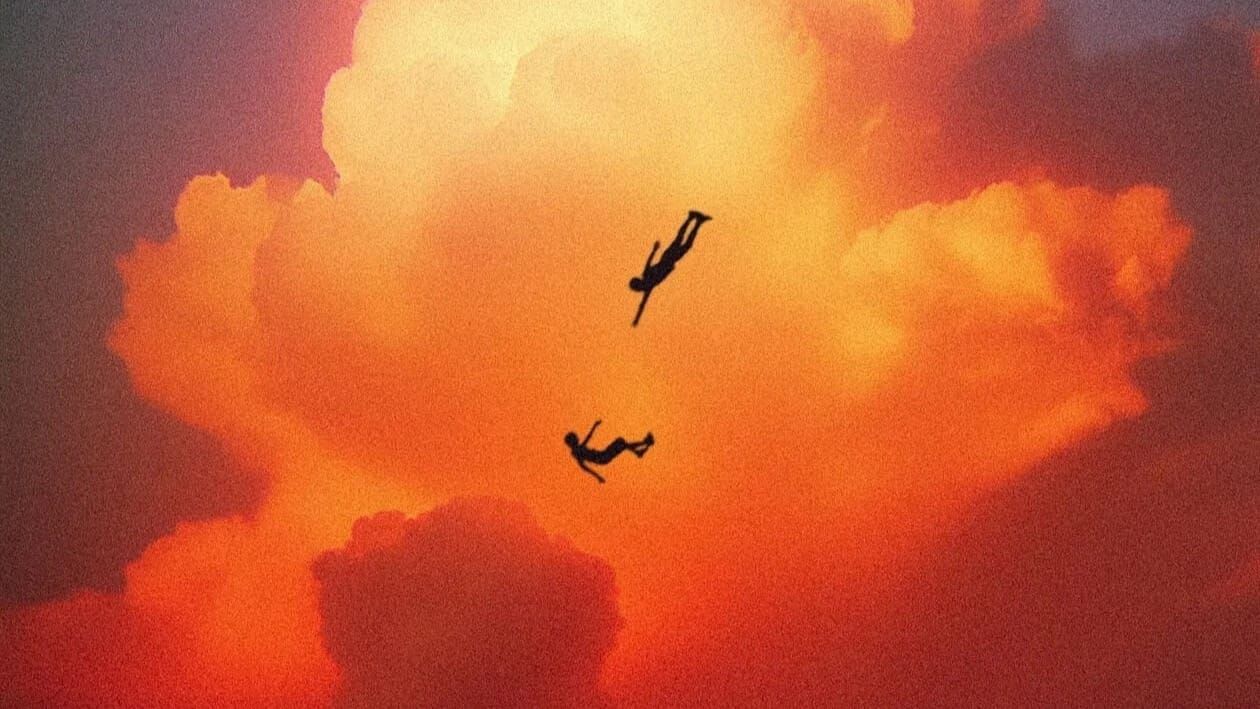
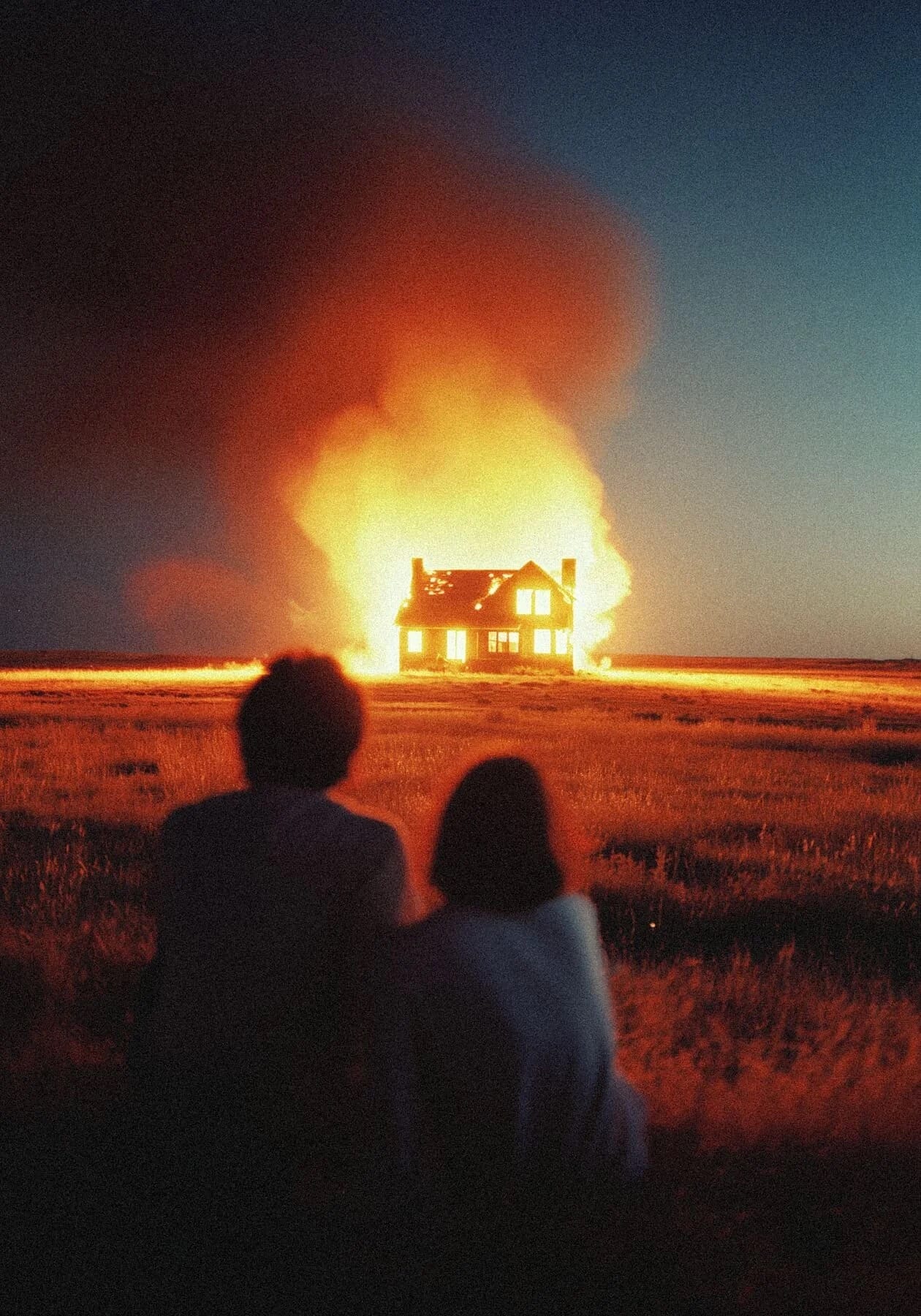
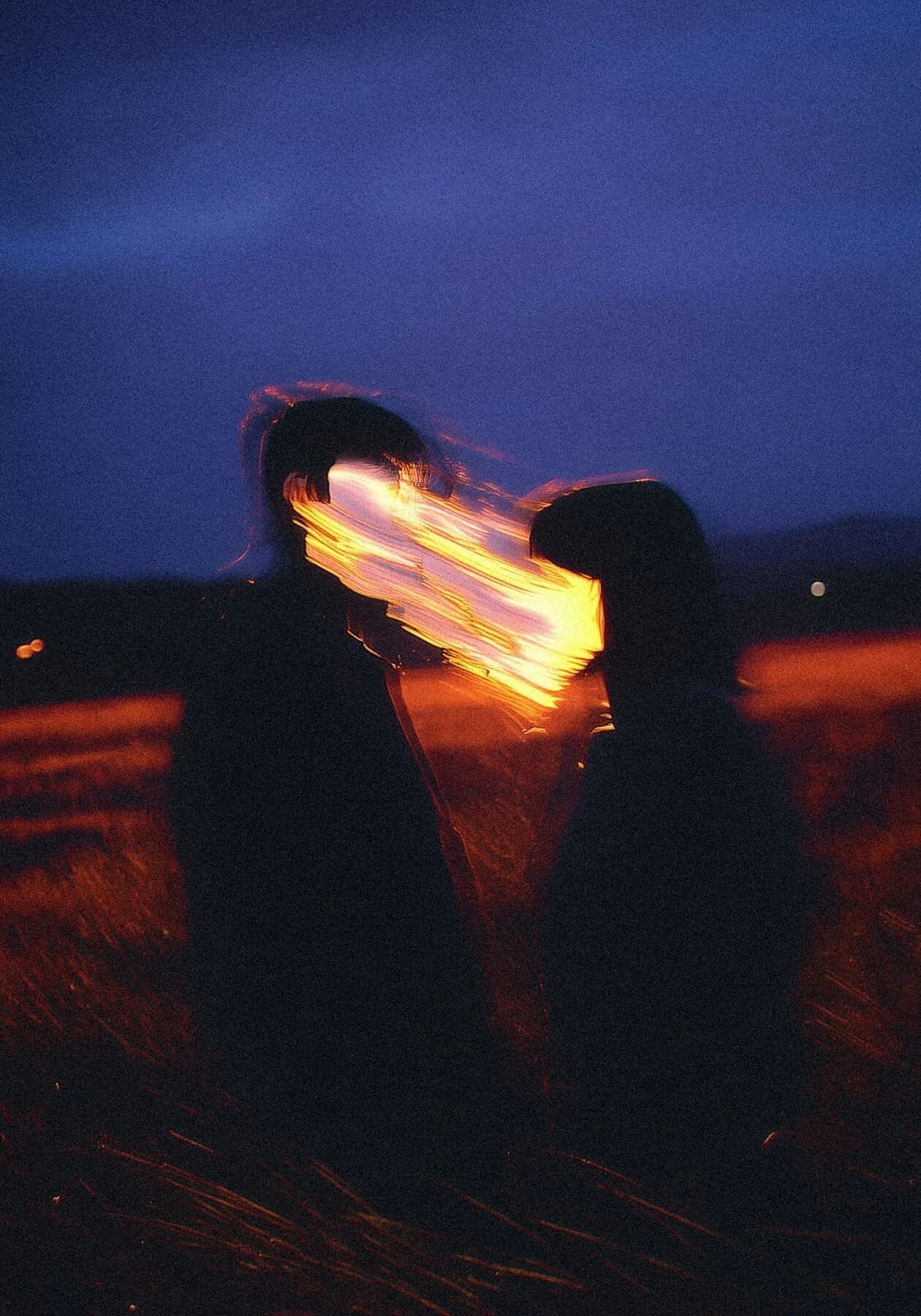
His images have the weight of someone who spent years deciding where to stand before pressing a shutter. Two figures touching. A lone person swallowed by landscape. Light breaking through atmosphere in a way that feels earned rather than computed. The color temperature is warm and slightly pushed, the grain is present, the contrast sits in that sweet spot you get from film that's been handled. Senso AI, the agency that represents him, describes the work as "suspended in time, balanced between softness and tension." That's agency copy, but it's not wrong — there's a persistent melancholy in these images that holds across pieces.

That emotional continuity is what separates his work from most generative output. And I think it comes directly from his background.

What a photographer's eye actually gives you

Here's the thing about spending years as a working photographer: you develop a vocabulary of decisions that becomes instinct. You know how light falls on skin at different times of day. You know what a 35mm frame does to a face versus what an 85mm does. You know when a composition is too clean and needs a foreground element to anchor it. You know what longing looks like in a body's posture.

None of that knowledge disappears when you switch from a camera to a generative model.

Lopez isn't describing images to an AI and accepting what comes back. He's applying a photographer's judgment to every stage of the process — concept, generation, selection, post-processing. The analog warmth isn't a filter he applied at the end. It's a series of decisions that someone who has spent years working with actual film stock would know how to make.

This is worth sitting with if you're a creator thinking about whether AI tools have a place in your practice. The question usually gets framed as "will AI replace photographers?" But Lopez is doing something more interesting than that — he's using his photographic knowledge as the thing that makes his AI work coherent. The background isn't obsolete. It's the whole point.

The technical gap in what we know

Lopez's actual workflow is almost entirely undocumented. I don't know what models he's running. I don't know whether he's feeding his own photography archive into the process or working from text prompts or some combination. I don't know how many iterations a single piece goes through before he calls it done.

What I know is the conceptual description Senso AI gives: he "amplifies reality through his visual processes" to "reveal scenes impossible to photograph, without ever losing emotion as the central anchor."

That's true as far as it goes, but it doesn't tell you anything you could actually use.

This opacity is common in AI art at the moment, and I understand the instinct behind it. Workflow documentation in a field this new feels like giving away something before you've fully figured out what you have. And there's a real tension between talking about your process technically and having the work be received on its own terms — the more you explain the machinery, the more people look for the seams.

But the gap matters, because what Lopez is doing is genuinely worth understanding. The fact that his images maintain emotional continuity across pieces suggests either very rigorous curation (he's generating a lot and showing very little) or a workflow that's built around narrative coherence from the start. Either approach is interesting. Both would be worth documenting.

The business model is quieter than you'd expect

Lopez sells prints through vagabondiary.com starting at €39. He's represented by Senso AI, an agency that specifically works with AI artists. His primary distribution is Instagram.

That's it. No platform monetization play. No brand partnership announcements. No "AI art course" upsell. Just gallery-priced prints sold directly.

For anyone building a creative practice around AI-generated work, this is worth paying attention to. The discourse around AI art in 2026 is still largely stuck on platform dynamics — who's posting where, what the algorithm rewards, how to build follower counts. Lopez seems mostly uninterested in that conversation. He's positioned the work as collectible, priced it like art rather than content, and let the prints carry the business.

The €39 entry point is smart. It's low enough to not feel like a gallery gatekeeping move, but the work is presented in a way that positions it as something you'd frame rather than something you'd screenshot. That framing matters more than most creators give it credit for.

Why the "AI artist" label is working against most people in this space

Senso AI's positioning for Lopez is careful about language. They call him a "visual artist who weaves together multiple techniques." They don't lead with AI. The emphasis is on narrative and emotion, with the tools described as method rather than subject.

I think this is right, and I think most AI artists are making the opposite mistake.

When you lead with the tool, you're inviting people to evaluate the tool rather than the work. You're also anchoring yourself to a category that carries a lot of baggage right now — the copyright debates, the ethics discourse, the "is it really art" arguments that mostly generate heat without light. Lopez sidesteps all of that by just presenting images and letting people respond to them.

Now, you could argue that transparency about AI use matters and that artists have a responsibility to disclose their methods. I don't disagree with that in principle. But disclosure and leading with the tool are different things. You can be honest about your process without making the process the headline.

The work is the headline.
What this means if you're a creator thinking about AI tools

The pattern I keep seeing in the people doing interesting work with generative AI is that they're not starting from the AI. They're starting from something they already know — a photographic sensibility, a writing voice, a design vocabulary — and using the tools to go somewhere that method alone couldn't take them.

Lopez couldn't photograph the scenes he's making now. A camera can't capture a memory that doesn't exist. But his camera work is what makes the AI-generated images feel like photographs rather than illustrations. The years of shooting landscapes for editorial clients didn't become irrelevant when he changed his tools. They became the foundation.

That's a different relationship with AI than "I use it to go faster" or "I use it because everyone else is." It's using the tools to make something that your existing practice was pointing toward but couldn't reach.

I don't know what that looks like for your specific practice. But if you're a creator sitting on years of domain knowledge wondering whether AI has anything to offer you, Vagabondiary is worth looking at. Not for the workflow — that's still mostly undocumented — but for what's possible when someone brings real craft to these tools instead of just prompting and hoping.

The work is at vagabondiary.com. The prints start at €39.

Generated Images

Seven variants below — three standard compositions, one documentary (foreground bokeh), and three dynamic-angle "spatial" compositions for parallax video. To request a fix on any one, add a checkbox under ## Image Touch-ups like: - [ ] spatial-square: remove the random hand on the right

landscape — 1920×1080

landscape
← Back to Digest

Vagabond Diary: What a photographer brings to AI art that prompts can't

Charles Lopez shot for GQ before turning to AI. His work still looks like 1985 film photography. The background isn't obsolete—it's the whole point.

Vagabond Diary: What a photographer brings to AI art that prompts can't
A large, modern-design AEGIS Corporation street poster is prominently displayed on a rain-dampened brick wall in a Lexicon City industrial district.

There's a French photographer named Charles Lopez who goes by Vagabond Diary. He shot travel and nature work for GQ, Daniel Wellington, Quechua — the kind of editorial and brand commissions that take years to build. Then he started integrating AI into his practice, and now he makes images that look like they were shot on pushed Kodak stock sometime in the late 1980s, except they're scenes that a camera couldn't have captured.

I've been an admirer of his art for a while and I keep coming back to the same question: why does this feel like photography?

Most AI-generated images telegraph what they are

By 2026, most of us have developed a pretty good eye for generative imagery.

There's a specific kind of tonal incoherence — the style holds but the feeling shifts frame to frame. You can recognize it. The light is technically correct but emotionally vacant. The composition follows rules but doesn't feel chosen. Everything is rendered and nothing is seen.

Lopez's work doesn't do that.

His images have the weight of someone who spent years deciding where to stand before pressing a shutter. Two figures touching. A lone person swallowed by landscape. Light breaking through atmosphere in a way that feels earned rather than computed. The color temperature is warm and slightly pushed, the grain is present, the contrast sits in that sweet spot you get from film that's been handled. Senso AI, the agency that represents him, describes the work as "suspended in time, balanced between softness and tension." That's agency copy, but it's not wrong — there's a persistent melancholy in these images that holds across pieces.

That emotional continuity is what separates his work from most generative output. And I think it comes directly from his background.

What a photographer's eye actually gives you

Here's the thing about spending years as a working photographer: you develop a vocabulary of decisions that becomes instinct. You know how light falls on skin at different times of day. You know what a 35mm frame does to a face versus what an 85mm does. You know when a composition is too clean and needs a foreground element to anchor it. You know what longing looks like in a body's posture.

None of that knowledge disappears when you switch from a camera to a generative model.

Lopez isn't describing images to an AI and accepting what comes back. He's applying a photographer's judgment to every stage of the process — concept, generation, selection, post-processing. The analog warmth isn't a filter he applied at the end. It's a series of decisions that someone who has spent years working with actual film stock would know how to make.

This is worth sitting with if you're a creator thinking about whether AI tools have a place in your practice. The question usually gets framed as "will AI replace photographers?" But Lopez is doing something more interesting than that — he's using his photographic knowledge as the thing that makes his AI work coherent. The background isn't obsolete. It's the whole point.

The technical gap in what we know

Lopez's actual workflow is almost entirely undocumented. I don't know what models he's running. I don't know whether he's feeding his own photography archive into the process or working from text prompts or some combination. I don't know how many iterations a single piece goes through before he calls it done.

What I know is the conceptual description Senso AI gives: he "amplifies reality through his visual processes" to "reveal scenes impossible to photograph, without ever losing emotion as the central anchor."

That's true as far as it goes, but it doesn't tell you anything you could actually use.

This opacity is common in AI art at the moment, and I understand the instinct behind it. Workflow documentation in a field this new feels like giving away something before you've fully figured out what you have. And there's a real tension between talking about your process technically and having the work be received on its own terms — the more you explain the machinery, the more people look for the seams.

But the gap matters, because what Lopez is doing is genuinely worth understanding. The fact that his images maintain emotional continuity across pieces suggests either very rigorous curation (he's generating a lot and showing very little) or a workflow that's built around narrative coherence from the start. Either approach is interesting. Both would be worth documenting.

The business model is quieter than you'd expect

Lopez sells prints through vagabondiary.com starting at €39. He's represented by Senso AI, an agency that specifically works with AI artists. His primary distribution is Instagram.

That's it. No platform monetization play. No brand partnership announcements. No "AI art course" upsell. Just gallery-priced prints sold directly.

For anyone building a creative practice around AI-generated work, this is worth paying attention to. The discourse around AI art in 2026 is still largely stuck on platform dynamics — who's posting where, what the algorithm rewards, how to build follower counts. Lopez seems mostly uninterested in that conversation. He's positioned the work as collectible, priced it like art rather than content, and let the prints carry the business.

The €39 entry point is smart. It's low enough to not feel like a gallery gatekeeping move, but the work is presented in a way that positions it as something you'd frame rather than something you'd screenshot. That framing matters more than most creators give it credit for.

Why the "AI artist" label is working against most people in this space

Senso AI's positioning for Lopez is careful about language. They call him a "visual artist who weaves together multiple techniques." They don't lead with AI. The emphasis is on narrative and emotion, with the tools described as method rather than subject.

I think this is right, and I think most AI artists are making the opposite mistake.

When you lead with the tool, you're inviting people to evaluate the tool rather than the work. You're also anchoring yourself to a category that carries a lot of baggage right now — the copyright debates, the ethics discourse, the "is it really art" arguments that mostly generate heat without light. Lopez sidesteps all of that by just presenting images and letting people respond to them.

Now, you could argue that transparency about AI use matters and that artists have a responsibility to disclose their methods. I don't disagree with that in principle. But disclosure and leading with the tool are different things. You can be honest about your process without making the process the headline.

The work is the headline.

What this means if you're a creator thinking about AI tools

The pattern I keep seeing in the people doing interesting work with generative AI is that they're not starting from the AI. They're starting from something they already know — a photographic sensibility, a writing voice, a design vocabulary — and using the tools to go somewhere that method alone couldn't take them.

Lopez couldn't photograph the scenes he's making now. A camera can't capture a memory that doesn't exist. But his camera work is what makes the AI-generated images feel like photographs rather than illustrations. The years of shooting landscapes for editorial clients didn't become irrelevant when he changed his tools. They became the foundation.

That's a different relationship with AI than "I use it to go faster" or "I use it because everyone else is." It's using the tools to make something that your existing practice was pointing toward but couldn't reach.

I don't know what that looks like for your specific practice. But if you're a creator sitting on years of domain knowledge wondering whether AI has anything to offer you, Vagabondiary is worth looking at. Not for the workflow — that's still mostly undocumented — but for what's possible when someone brings real craft to these tools instead of just prompting and hoping.

The work is at vagabondiary.com. The prints start at €39.

Generated Images

Seven variants below — three standard compositions, one documentary (foreground bokeh), and three dynamic-angle "spatial" compositions for parallax video. To request a fix on any one, add a checkbox under ## Image Touch-ups like: - [ ] spatial-square: remove the random hand on the right

landscape — 1920×1080

landscape
// LEXICON_CITY_DISPATCH_REQ
// STATUS: CONNECTION_STABLE
// SOURCE: CENTRAL_DISPATCH_HQ

SHERMAN UPLINK: "I'm at HQ holding down Central Dispatch. Enter your query below to pull relevant data records and I'll see what data cards we've recovered!"